 flip
flipPomegranate, Figs and Walnuts with Honey
Pomegranate, Figs and Walnuts with Honey
Why this dish? The pomegranate is one of Hera's emblematic fruits: she is often depicted holding one in her hand in statues, a symbol of fertility and marriage. This small assortment of fruits, nibbled on pilgrimage paths or at the end of a banquet, honors the goddess's sacred fruit.
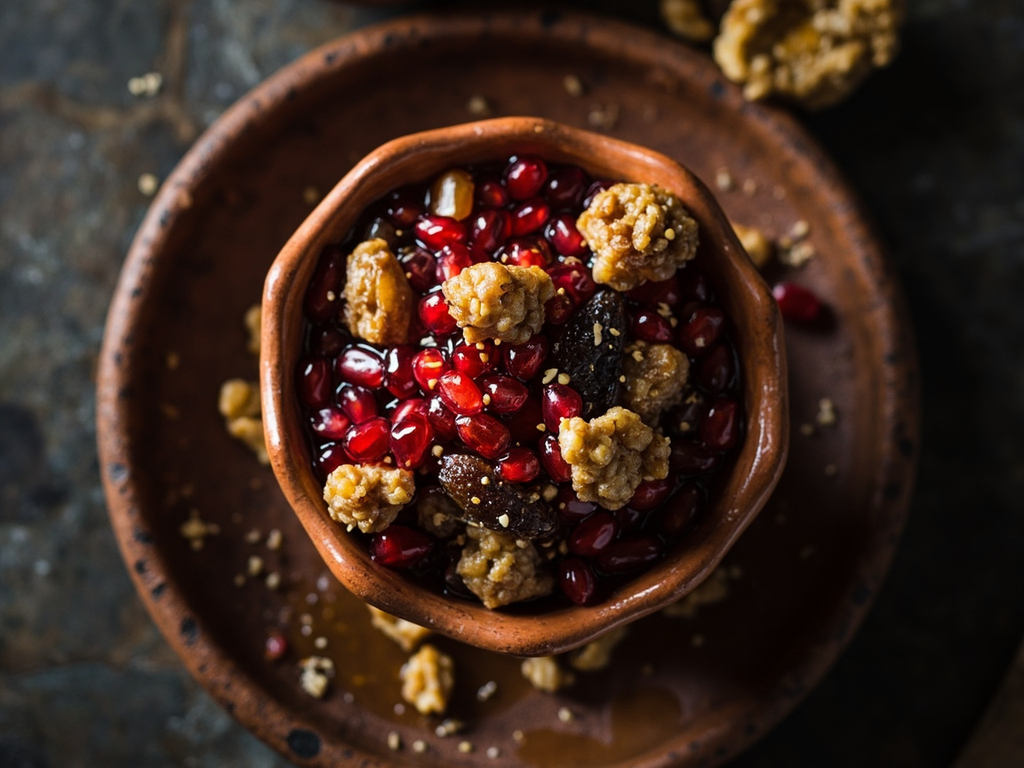
Tangy pomegranate seeds, soft dried figs, and crushed walnuts, all bound with a drizzle of honey and sometimes a pinch of sesame. A lively, sweet-sour snack, eaten with the fingers.
Behold this fruit I hold in my hand on all my statues: the pomegranate, red as blood and full of a thousand seeds, sign of the fruitful union I guard. Open it, mix its seeds with figs ripened in the sun and a few walnuts, pour a little honey over them. This is what one slips into a fold of tunic for the road, or nibbles when the banquet ends. Sour and sweet at once — like marriage, mortal, like all that endures.
- •Pomegranate — one (tangy base)
- •Dried figs — a handful (sweet softness)
- •Walnuts — a handful (crunch)
- •Honey — a drizzle (sweet binder)
Pomegranate, Figs and Walnuts with Honey
Tangy pomegranate seeds, soft dried figs, and crushed walnuts, all bound with a drizzle of honey and sometimes a pinch of sesame. A lively, sweet-sour snack, eaten with the fingers.
Why this dish? The pomegranate is one of Hera's emblematic fruits: she is often depicted holding one in her hand in statues, a symbol of fertility and marriage. This small assortment of fruits, nibbled on pilgrimage paths or at the end of a banquet, honors the goddess's sacred fruit.
Behold this fruit I hold in my hand on all my statues: the pomegranate, red as blood and full of a thousand seeds, sign of the fruitful union I guard. Open it, mix its seeds with figs ripened in the sun and a few walnuts, pour a little honey over them. This is what one slips into a fold of tunic for the road, or nibbles when the banquet ends. Sour and sweet at once — like marriage, mortal, like all that endures.
Ingredients (period version)
- Pomegranate — one (tangy base)
- Dried figs — a handful (sweet softness)
- Walnuts — a handful (crunch)
- Honey — a drizzle (sweet binder)
Ingredients
- Pomegranate — 1 (seeds removed) (tangy base)
- Dried figs — 8, cut into quarters (sweet softness)
- Walnut halves — 60 g, crushed (crunch)
- Honey — 2 tbsp (sweet binder)
- Toasted sesame seeds — 1 tsp (flavor (optional))
Method
- Seed the pomegranate, collecting the seeds well (tap the cut half, skin side up, over a bowl).
- Cut the dried figs into small quarters and roughly crush the walnuts.
- Gently mix everything in a bowl.
- Drizzle with honey, sprinkle with toasted sesame seeds, and mix one last time.
- Serve fresh, in a small bowl, or wrap in a leaf to take away.
How it was made : The Greeks often ended the meal with tragemata: dried and fresh fruits, nuts, and honey sweets nibbled during drinking. Figs, walnuts, and pomegranates were common Mediterranean fruits; the pomegranate carried strong symbolic weight linked to marriage, fertility, and the underworld.
The contemporary twist : Presented in verrines on a bed of thick Greek yogurt: a quick 'Garden of Hera' dessert, tangy and fresh.
Sources : Athenaeus, The Deipnosophists (tragemata) · Andrew Dalby, Food in the Ancient World from A to Z
Hera · Charactorium