 flip
flipMoretum — Garlic and Herb Cheese Spread
Moretum — Garlic and Herb Cheese Spread
Why this dish? Before the senatorial purple, there was Arpinum and its lands. Moretum is the Italian peasant's snack: cheese, garlic, garden herbs pounded together and spread on bread, enough to sustain fieldwork. For Cicero, who always claimed his municipal roots against the great families of Rome, it is the taste of provincial frugality.
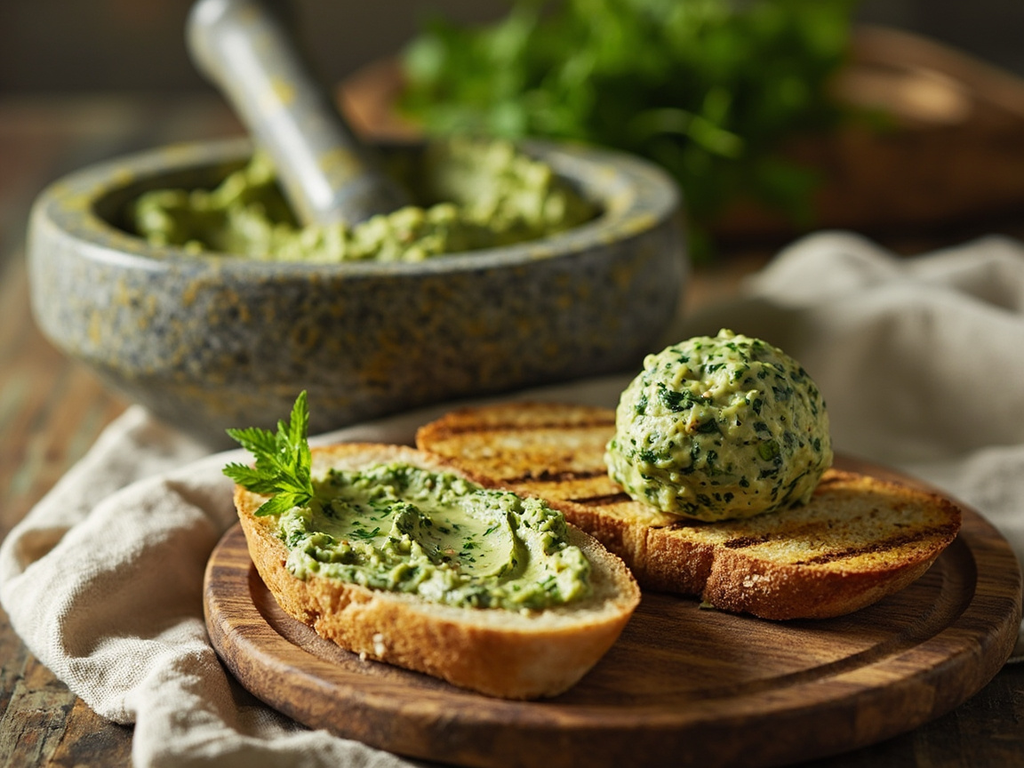
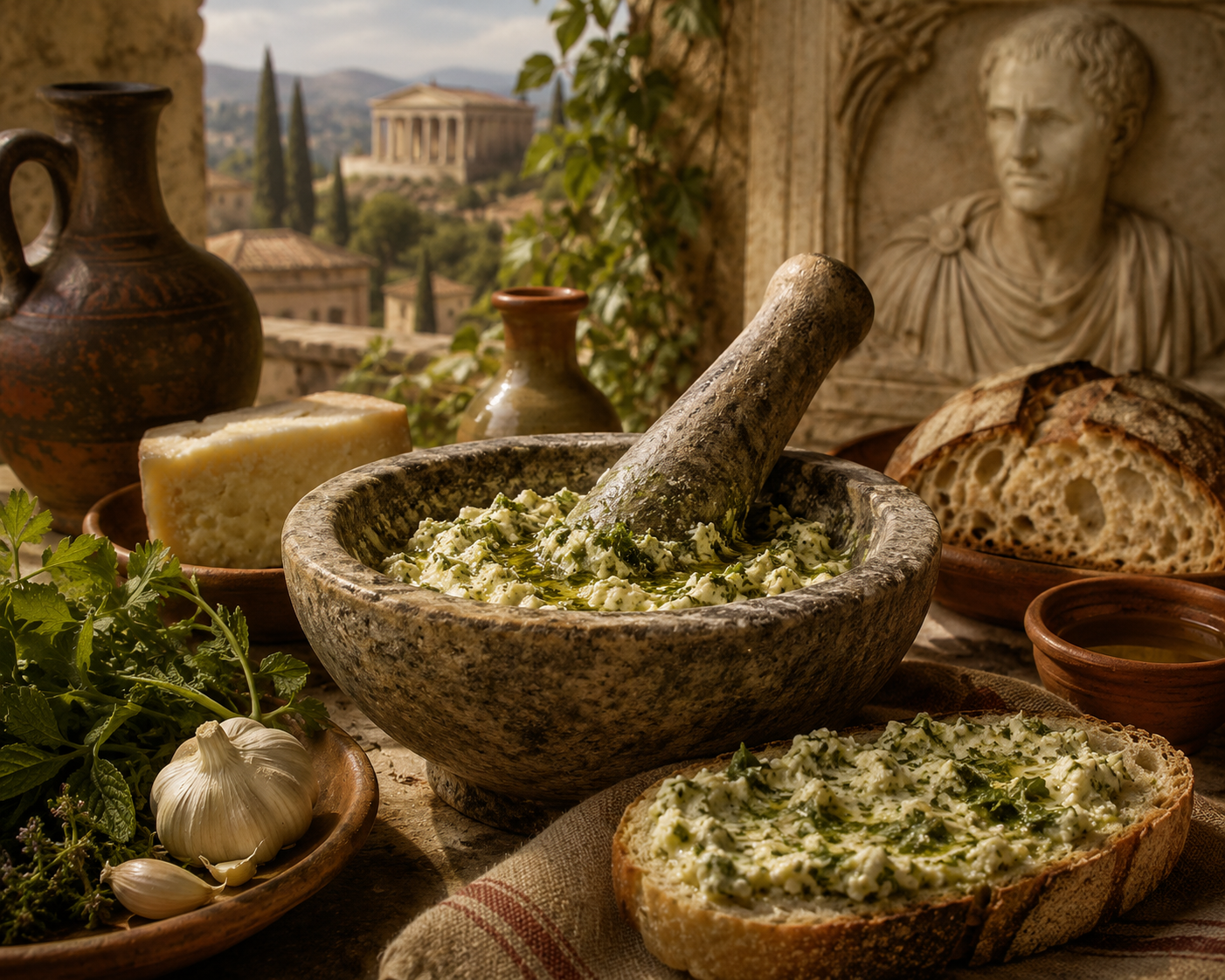
A rustic and pungent paste: fresh cheese pounded in a mortar with garlic, green herbs, a little salt, oil, and vinegar. Spread on bread as a bracing snack.
You think me entirely a man of Rome? You forget where I come from. In our countryside of Arpinum, the man returning from the fields grinds in the mortar garlic, cheese, and the bitter herbs of the garden, moistens with a drizzle of oil and vinegar, and spreads it on a crust of bread. It is rough, it is honest, it stings the palate like a well-spoken truth — and I know no dish that better revives a weary man.
- •Aged sheep's cheese — a good piece (base)
- •Garlic — a few cloves (pungency)
- •Green herbs (celery, coriander, rue in small amount) — a handful (bitter freshness)
- •Olive oil — a drizzle (binder)
- •Vinegar — a dash (acidity)
- •Salt — a pinch (seasoning)
Moretum — Garlic and Herb Cheese Spread
A rustic and pungent paste: fresh cheese pounded in a mortar with garlic, green herbs, a little salt, oil, and vinegar. Spread on bread as a bracing snack.
Why this dish? Before the senatorial purple, there was Arpinum and its lands. Moretum is the Italian peasant's snack: cheese, garlic, garden herbs pounded together and spread on bread, enough to sustain fieldwork. For Cicero, who always claimed his municipal roots against the great families of Rome, it is the taste of provincial frugality.
You think me entirely a man of Rome? You forget where I come from. In our countryside of Arpinum, the man returning from the fields grinds in the mortar garlic, cheese, and the bitter herbs of the garden, moistens with a drizzle of oil and vinegar, and spreads it on a crust of bread. It is rough, it is honest, it stings the palate like a well-spoken truth — and I know no dish that better revives a weary man.
Ingredients (period version)
- Aged sheep's cheese — a good piece (base)
- Garlic — a few cloves (pungency)
- Green herbs (celery, coriander, rue in small amount) — a handful (bitter freshness)
- Olive oil — a drizzle (binder)
- Vinegar — a dash (acidity)
- Salt — a pinch (seasoning)
Ingredients
- Pecorino or feta — 150 g (base)
- Garlic — 1 to 2 cloves (pungency)
- Coriander + celery leaves + parsley — 1 good handful (herbs)
- Extra-virgin olive oil — 3 tbsp (binder)
- Wine vinegar — 1 tsp (acidity)
- Salt — to taste (seasoning)
- Country bread — for serving (support)
Method
- Pound the garlic in a mortar with a pinch of salt until a paste forms (or chop very finely).
- Add the crumbled cheese and chopped herbs, pound/mash to combine.
- Drizzle in the oil and vinegar, working until a spreadable but still textured paste forms.
- Taste and adjust salt and acidity. Serve fresh, spread on toasted bread.
How it was made : The poem *Moretum* (Appendix Vergiliana) describes in detail a peasant preparing this mixture in a mortar at dawn: garlic, cheese, herbs, salt, oil, and vinegar. It is the distant ancestor of pestos and cheese spreads, a mortar-based cuisine predating the blender.
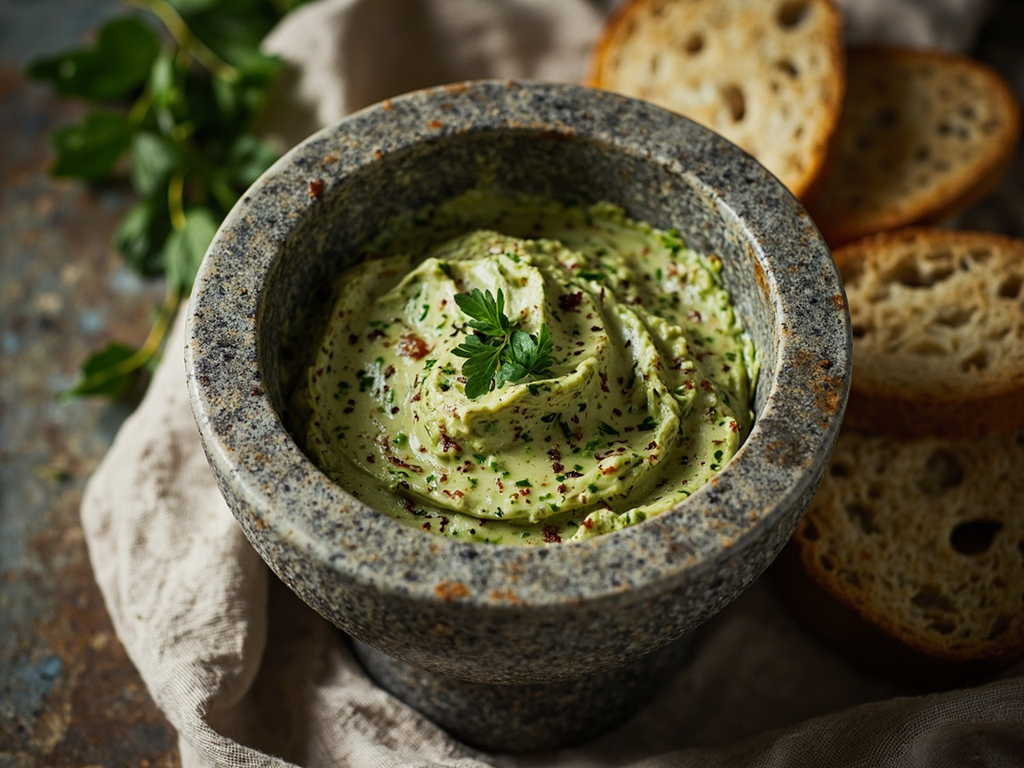
The contemporary twist : Serve in a bowl as an aperitif with breadsticks and a drizzle of raw oil: a garlicky 'cheese pesto' that packs a punch.
Sources : *Moretum* (Appendix Vergiliana)
Cicero · Charactorium