 flip
flipShip's Biscuit and Salt Pork for the Crossing
Ship's Biscuit and Salt Pork for the Crossing
Why this dish? In 1519, Cortés set sail from Cuba with eleven ships. No fresh food survives such crossings: twice-baked biscuit and salted pork fed his men all the way to the shores of Veracruz.
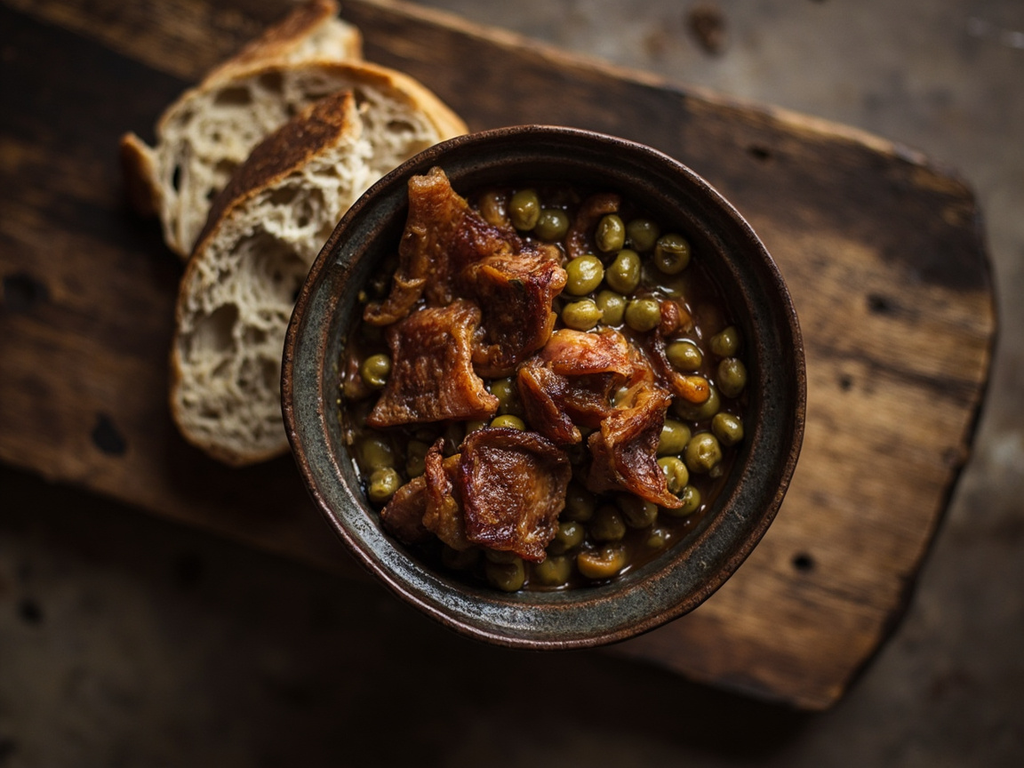
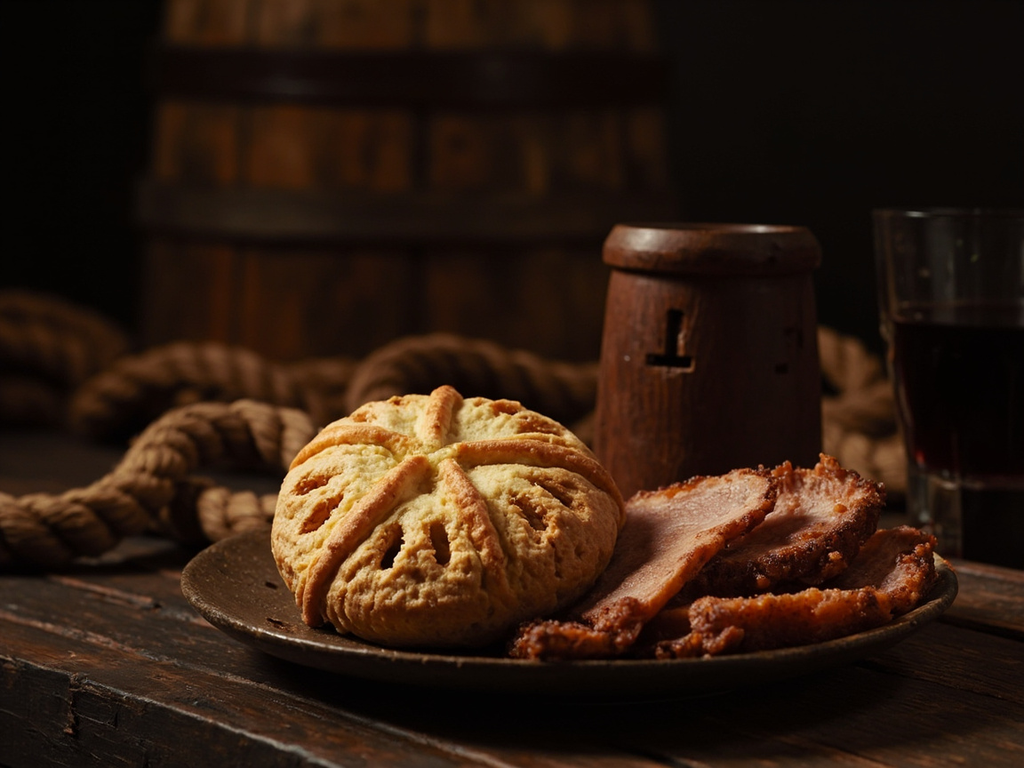
A hard, durable biscuit baked twice, stored for weeks at sea. It is dipped in wine or broth to soften it, served with a slice of pan-fried salt pork.
When I set sail from Cuba in the year 1519, no fresh fruit survived such a crossing. Our bread was baked twice so that it became hard as stone and did not spoil during the long weeks at sea. Dipped in a little wine or broth, accompanied by a slice of salt pork, it sustained a soldier of the King. It was no feast, but without this ship's biscuit, we would never have seen the shores of New Spain.
- •Wheat flour — as needed (base of the biscuit)
- •Water — as needed (binder)
- •Salt — a good handful (flavor and preservation)
- •Salted pork (tocino) — according to ration (fat and protein for travel)
- •Wine — a splash (to dip and soften)
Ship's Biscuit and Salt Pork for the Crossing
A hard, durable biscuit baked twice, stored for weeks at sea. It is dipped in wine or broth to soften it, served with a slice of pan-fried salt pork.
Why this dish? In 1519, Cortés set sail from Cuba with eleven ships. No fresh food survives such crossings: twice-baked biscuit and salted pork fed his men all the way to the shores of Veracruz.
When I set sail from Cuba in the year 1519, no fresh fruit survived such a crossing. Our bread was baked twice so that it became hard as stone and did not spoil during the long weeks at sea. Dipped in a little wine or broth, accompanied by a slice of salt pork, it sustained a soldier of the King. It was no feast, but without this ship's biscuit, we would never have seen the shores of New Spain.
Ingredients (period version)
- Wheat flour — as needed (base of the biscuit)
- Water — as needed (binder)
- Salt — a good handful (flavor and preservation)
- Salted pork (tocino) — according to ration (fat and protein for travel)
- Wine — a splash (to dip and soften)
Ingredients
- Wheat flour (T65) — 500 g (base)
- Water — 200 ml (binder)
- Salt — 10 g (seasoning)
- Salted pork belly or bacon — 150 g (pan-fried garnish)
- Red wine or broth — 1 glass (to dip the biscuit)
Method
- Mix flour, salt, and water into a very firm, low-hydration dough. Knead thoroughly.
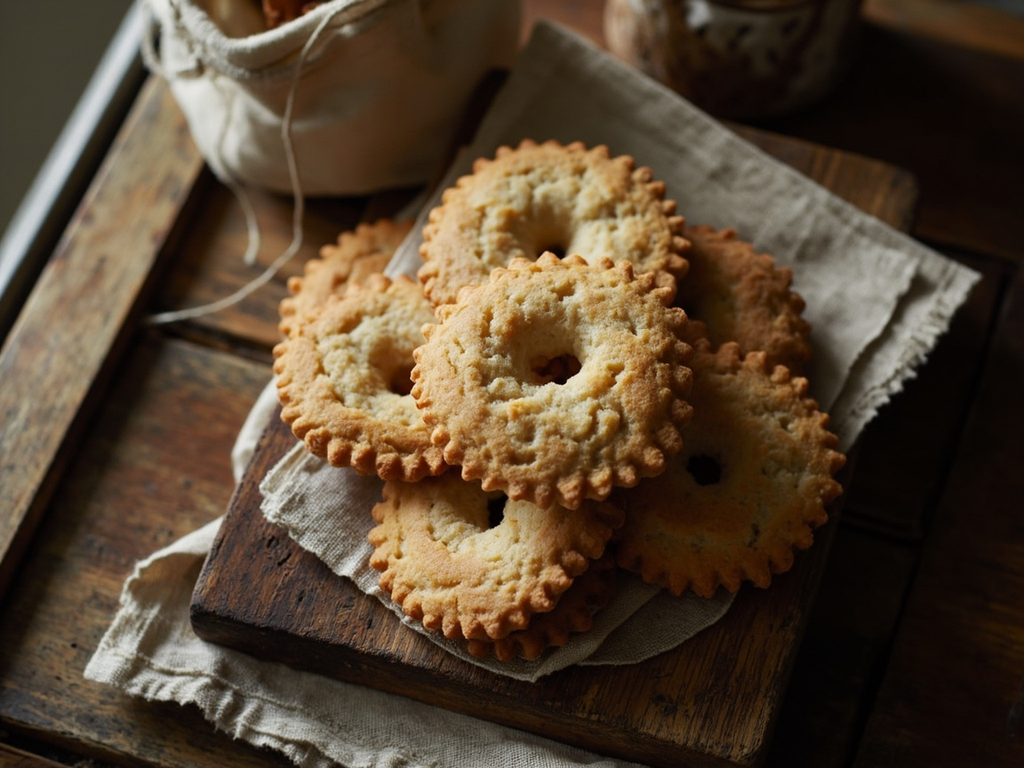
- Roll the dough to 1.5 cm thick, cut into rounds, and prick holes with a skewer (so they dry through).
- Bake first at 200°C for about 20 minutes, until lightly colored.
- Lower the oven to 120°C and let dry for 1 to 2 hours, until the biscuit is hard and completely dry. It will keep for weeks in a dry place.
- To serve: pan-fry slices of salted pork, dip the biscuit in warm wine or broth to soften, and eat together.
How it was made : The bizcocho (from bis coctus, 'twice cooked') was the staple of all Iberian navies. Stored in barrels, it had to stay dry; if damp, it would mold or become infested with weevils, which sailors would dislodge by tapping the biscuit on the table. Salt pork and wine completed this survival ration.
The contemporary twist : Serve the biscuit as a 'mariner's tapa': a shard of bizcocho, a slice of grilled ibérico pork, and a glass of Castilian wine.
Sources : Bernal Díaz del Castillo, Historia verdadera de la conquista de la Nueva España
Hernán Cortés · Charactorium