 flip
flipKūmara in the hāngī, steamed by the earth
Kūmara in the hāngī, steamed by the earth
Why this dish? Hinetītama is the maiden of dawn, born of Tāne the god of forests. The kūmara, cultivated under the light of Te Ao Mārama, the World of Light where she lived before descending, is the sun-food par excellence: it is cooked in the earth, between the world above and Rarohenga, the underworld where she would become queen.
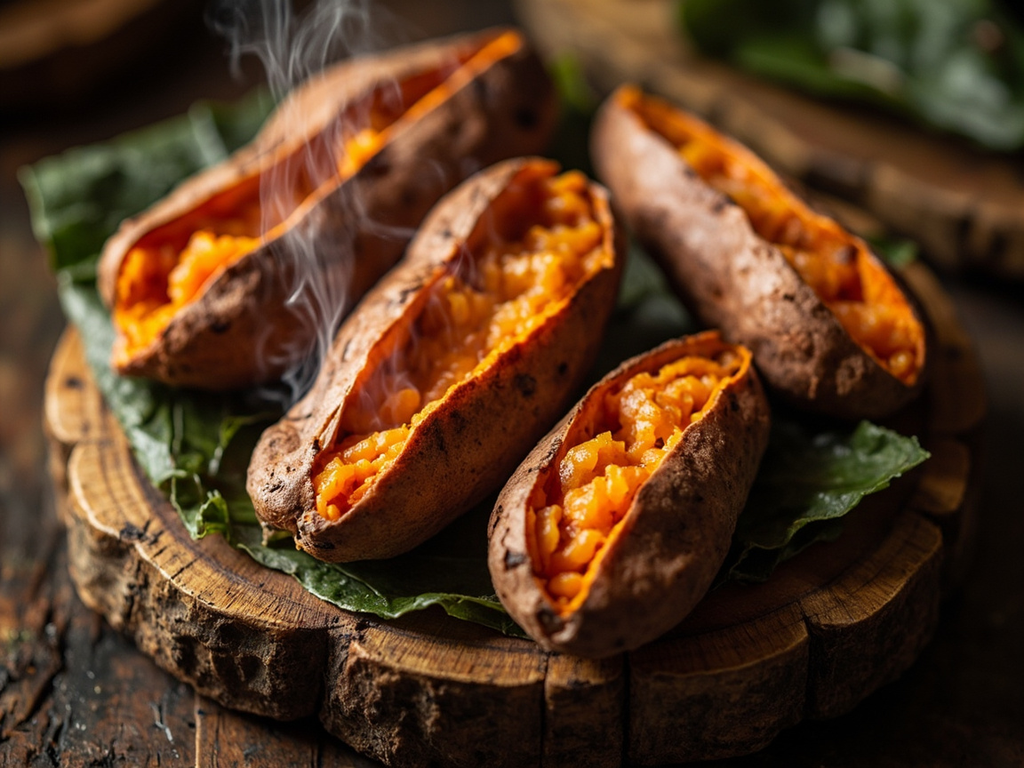
Whole kūmara gently steamed in an oven dug into the ground, on a bed of hot stones covered with damp leaves. The flesh becomes tender, almost caramelized, with a scent of smoke and earth.
Listen well, you who come from the daylight. Before I became the guardian of night, I knew the warmth of the sun on my father Tāne's gardens. Dig the earth, make the stones glow like embers of stars, lay the kūmara on the green leaves, then cover everything and let the steam rise in silence. Do not open too soon: the earth cooks at its own pace, as night follows day. When you lift the earth, the scent that rises is an offering to the ancestors as much as a meal for the living.
- •Kūmara (sweet potato) — as many as mouths to feed (main food)
- •Volcanic stones — a good bed (heat source)
- •Fresh green leaves (harakeke, fern) — several armfuls (steam bed, protection)
- •Spring water — a few sprinkles (produces steam)
Kūmara in the hāngī, steamed by the earth
Whole kūmara gently steamed in an oven dug into the ground, on a bed of hot stones covered with damp leaves. The flesh becomes tender, almost caramelized, with a scent of smoke and earth.
Why this dish? Hinetītama is the maiden of dawn, born of Tāne the god of forests. The kūmara, cultivated under the light of Te Ao Mārama, the World of Light where she lived before descending, is the sun-food par excellence: it is cooked in the earth, between the world above and Rarohenga, the underworld where she would become queen.
Listen well, you who come from the daylight. Before I became the guardian of night, I knew the warmth of the sun on my father Tāne's gardens. Dig the earth, make the stones glow like embers of stars, lay the kūmara on the green leaves, then cover everything and let the steam rise in silence. Do not open too soon: the earth cooks at its own pace, as night follows day. When you lift the earth, the scent that rises is an offering to the ancestors as much as a meal for the living.
Ingredients (period version)
- Kūmara (sweet potato) — as many as mouths to feed (main food)
- Volcanic stones — a good bed (heat source)
- Fresh green leaves (harakeke, fern) — several armfuls (steam bed, protection)
- Spring water — a few sprinkles (produces steam)
Ingredients
- Orange-fleshed sweet potatoes — 6 medium (main food)
- Water — 100 ml (steam)
- Banana leaves or parchment paper — 2-3 leaves (wrapping (failing an earth oven))
- Sea salt — 1 pinch (light seasoning)
Method
- Wash the sweet potatoes without peeling, keep the skin to protect the flesh.
- Wrap them in banana leaves (or parchment paper then foil) with a few tablespoons of water to create steam.
- Place in a steamer basket or on a rack over simmering water, lid closed, 45 to 60 min until a knife tip inserts without resistance.
- For the spirit of hāngī: finish 10 min in a hot oven (220 °C) for light caramelization and a smoky note if you add a pinch of smoked wood.
- Open, let the steam escape, salt lightly and serve piping hot.
How it was made : The hāngī is an ancestral Polynesian oven: stones are heated in a pit for hours, then covered with damp vegetation, then food, then earth. The cooking is done by steam from the stones, sometimes for half a day. It is still today the cooking method for great occasions (weddings, tangihanga).
The contemporary twist : Serve the kūmara split open, flesh side up, with a drizzle of smoked oil and a few toasted seeds — a nod to the earth oven in a rustic wooden bowl.
Sources : Hiroa, Te Rangi (Peter Buck), The Coming of the Maori, 1949 · Andrew Crowe, A Field Guide to the Native Edible Plants of New Zealand
Hinetītama · Charactorium