 flip
flipHenqet – Thick Barley Bread Beer
Henqet – Thick Barley Bread Beer
Why this dish? Beer was the national drink, issued as rations to workers, offered to the gods, and drunk at every table. As pharaoh restoring temples, Horemheb financed by decree the offerings of bread and beer to the deities—it is in his edicts that we see the state regulating these staples. *Henqet* is not a festive alcohol but the vital liquid that irrigated the entire society he administered.
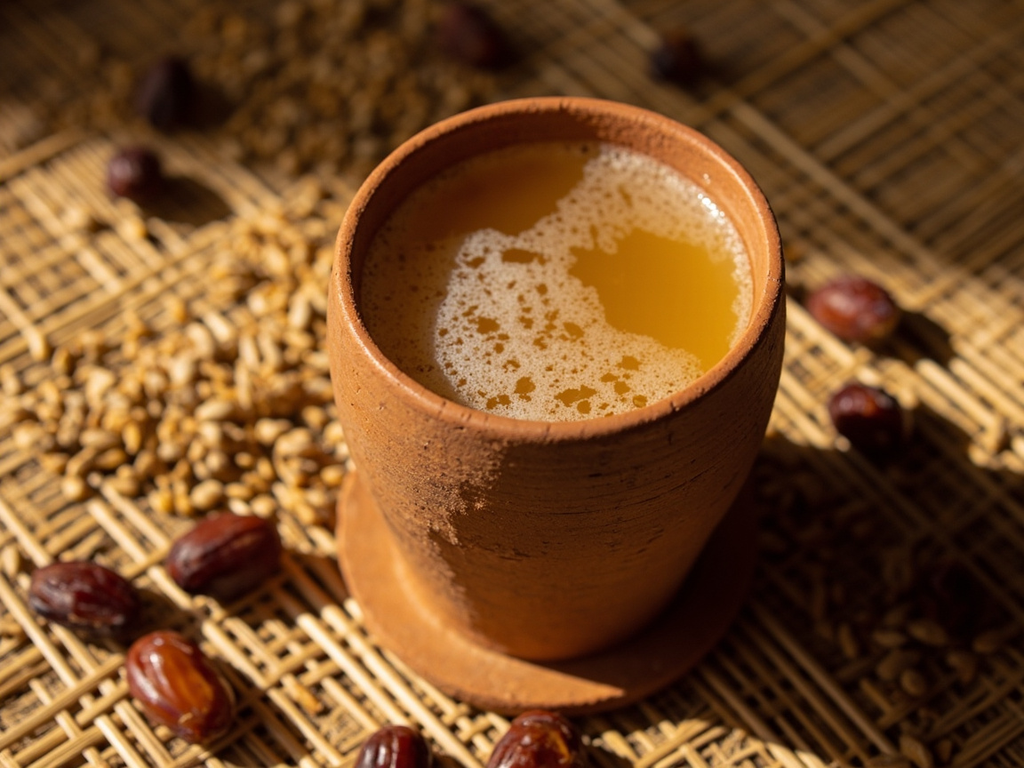
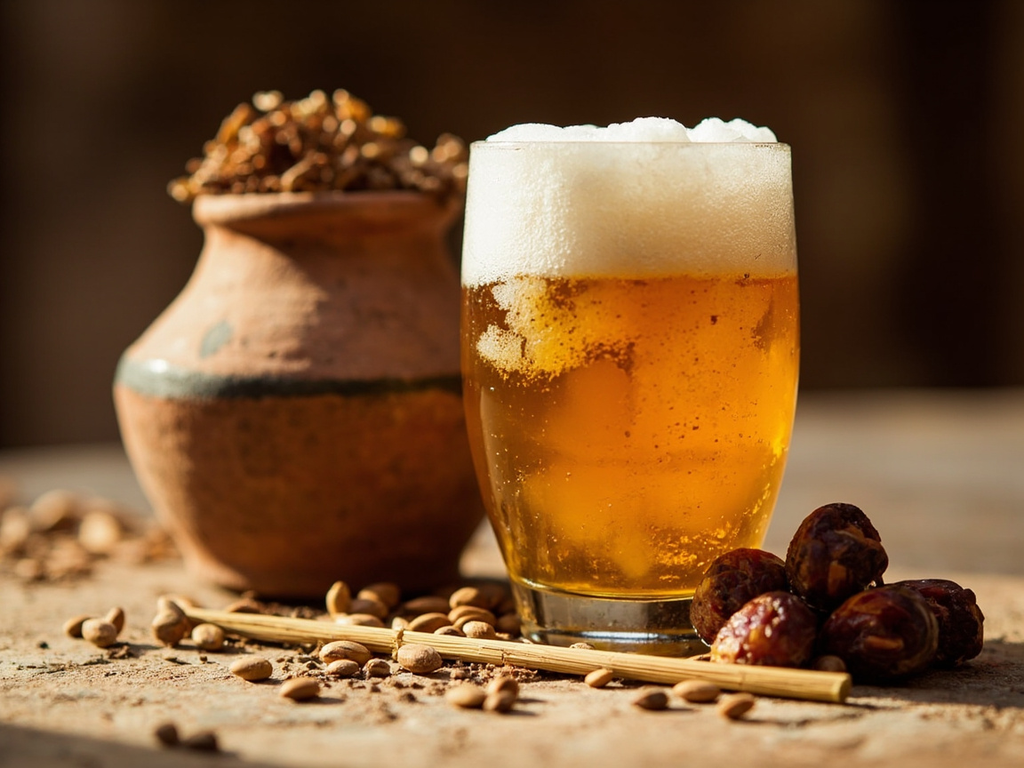
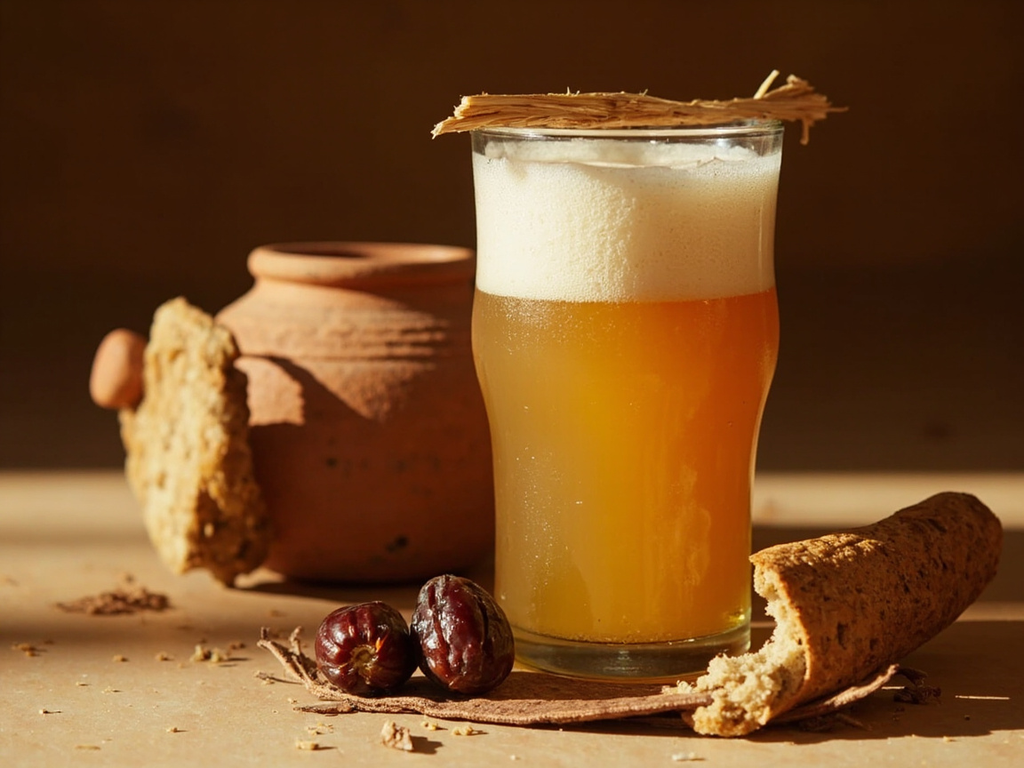
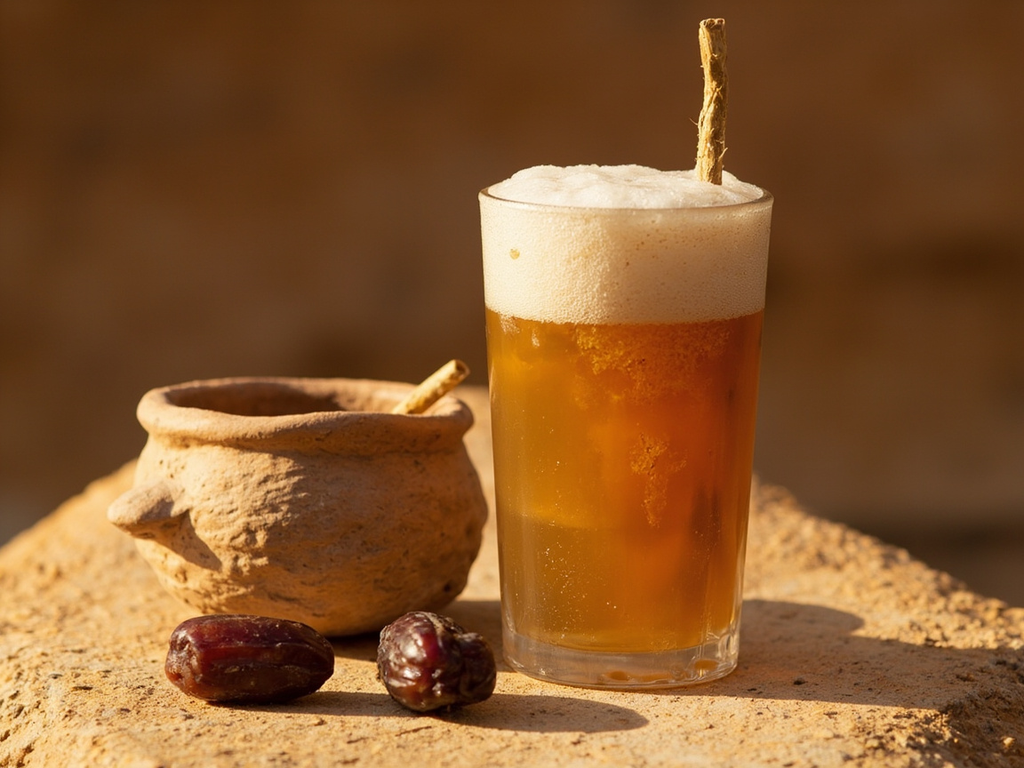
A cloudy, thick, slightly sour beer brewed from fermented barley bread rather than hopped. As nourishing as it is refreshing, halfway between a drink and a cereal broth.
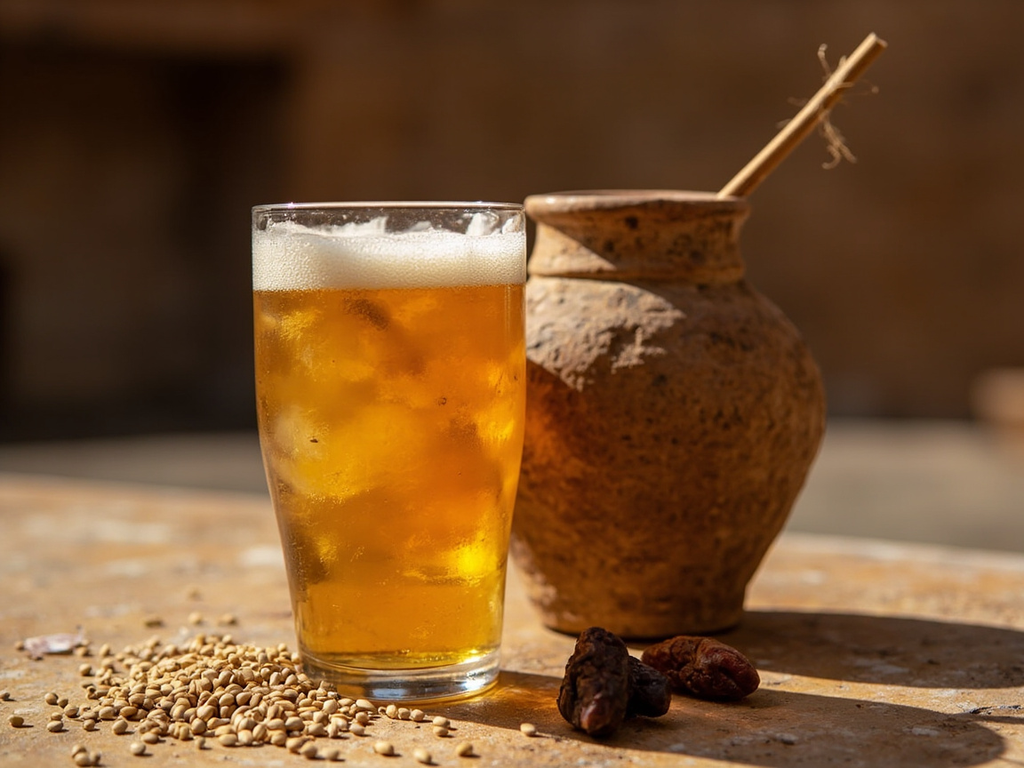
Do not take this jug for mere pleasure, stranger: *henqet* is bread made liquid, the wage of my workers and the offering that delights Hathor. I had thousands of jugs poured to the temples that the heretic had left silent. It is thick, yes—one drinks it with a reed straw to leave the grain at the bottom. Drink a cup and you will understand why no work site rises without it.
- •Half-baked barley bread — several loaves (source of sugars and yeasts)
- •Malted barley grains (sprouted) — a measure (fermentable sugar)
- •Dates — a handful (sugar and flavor)
- •Filtered river water — as needed (liquid base)
Henqet – Thick Barley Bread Beer
A cloudy, thick, slightly sour beer brewed from fermented barley bread rather than hopped. As nourishing as it is refreshing, halfway between a drink and a cereal broth.
Why this dish? Beer was the national drink, issued as rations to workers, offered to the gods, and drunk at every table. As pharaoh restoring temples, Horemheb financed by decree the offerings of bread and beer to the deities—it is in his edicts that we see the state regulating these staples. *Henqet* is not a festive alcohol but the vital liquid that irrigated the entire society he administered.
Do not take this jug for mere pleasure, stranger: *henqet* is bread made liquid, the wage of my workers and the offering that delights Hathor. I had thousands of jugs poured to the temples that the heretic had left silent. It is thick, yes—one drinks it with a reed straw to leave the grain at the bottom. Drink a cup and you will understand why no work site rises without it.
Ingredients (period version)
- Half-baked barley bread — several loaves (source of sugars and yeasts)
- Malted barley grains (sprouted) — a measure (fermentable sugar)
- Dates — a handful (sugar and flavor)
- Filtered river water — as needed (liquid base)
Ingredients
- Whole-grain barley or spelt bread, lightly toasted — 300 g (source of sugars)
- Crushed barley malt (or malt syrup) — 150 g (fermentable sugar)
- Pitted dates — 6 (sugar and flavor)
- Water — 2 L (liquid base)
- Baker's yeast or wild yeast — 1 packet (fermentation)
Method
- Crumble the bread into warm water with the malt and crushed dates; let macerate 1 hour.
- Gently warm the mixture (without boiling) for 30 minutes to release sugars, then strain roughly.
- Cool to lukewarm, add yeast, cover with a cloth.
- Let ferment 2–3 days in a cool place (the drink remains cloudy and low in alcohol).
- Serve fresh, unfiltered, traditionally with a straw. (Note: homemade version not stabilized, consume quickly.)
How it was made : Egyptian beer had nothing to do with modern hopped beer: it was brewed from crumbled and fermented barley or emmer bread, yielding a thick, nourishing, low-alcohol drink. Miniature models of breweries placed in tombs and residue analysis of jars have confirmed this. It was drunk through a straw to avoid grain sediment.
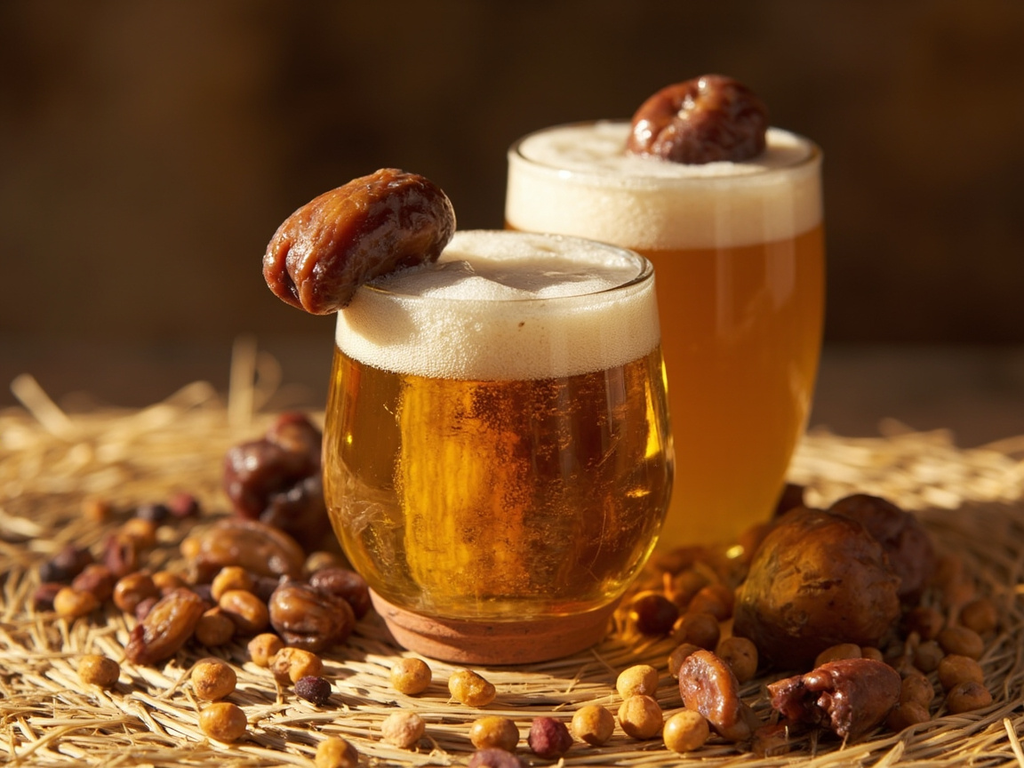
The contemporary twist : Served in a raw stoneware glass with a reed straw and a few date chips, it becomes a 'neolithic beer' for experimental microbreweries.
Sources : Delwen Samuel, 'Investigation of Ancient Egyptian Baking and Brewing Methods' (Science, 1996) · Pierre Tallet, Histoire de la cuisine et de la gastronomie égyptiennes
Horemheb · Charactorium