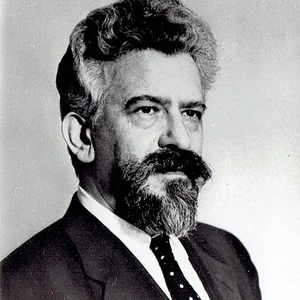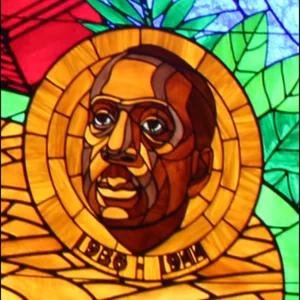

Howard Thurman (1899-1981) was an African American theologian, pastor, and author. A thinker of the Black Church and of nonviolence, he profoundly influenced the leaders of the American civil rights movement, including Martin Luther King Jr.
Howard Thurman(1899 — 1981)
Howard Thurman
États-Unis
6 min read
Frequently asked questions
Famous Quotes
« Don't ask what the world needs. Ask what makes you come alive, and go do it. Because what the world needs is people who have come alive.»
Key Facts
- Born in 1899 in Daytona Beach (Florida), he grew up in the segregated American South
- In 1935-1936, he met Gandhi in India, which deepened his reflection on nonviolence
- In 1944, he co-founded the Church for the Fellowship of All Peoples in San Francisco, the first major interracial church in the United States
- In 1949, he published Jesus and the Disinherited, a work that influenced Martin Luther King Jr.
- He died in 1981 in San Francisco, leaving behind a major body of work in theology and spirituality
Works & Achievements
A foundational journey that convinced him non-violence could nourish the African American struggle for justice.
The first major American congregation that was openly interracial and interfaith, a model of unity beyond all barriers.
A pioneering study of the spirituality of the Negro spirituals, read as a theology of hope for the oppressed.
His masterwork: a reading of the Gospel for the disinherited that inspired the leaders of the civil rights movement.
A collection of meditations that established him as one of the great spiritual masters of twentieth-century America.
The first appointment of an African American as dean of chapel at a major, predominantly white university.
A reflection on the fundamental human longing for community and unity beyond all divisions.
The story of his life, from Daytona Beach to San Francisco, a major testament to African American spirituality.
Anecdotes
Howard Thurman was raised by his grandmother Nancy Ambrose, who had been born into slavery and could not read. She would ask him to read the Bible aloud to her, but forbade him the epistles of Paul — except chapter 13 of the first letter to the Corinthians — because a white preacher had used them to justify slavery. This prohibition deeply shaped his thinking.
A poor child of Daytona Beach, he had to leave town to attend school in Jacksonville, since there was no high school for Black students. At the train station, he did not have the money to ship his trunk; an anonymous Black stranger paid for it without giving his name. Thurman told the story of this anonymous act of solidarity for the rest of his life.
In 1936, he led an African American delegation to India and met Gandhi. The Mahatma asked them to sing the negro spiritual “Were You There When They Crucified My Lord?” and predicted that nonviolence might reach the world through Black Americans.
In 1944, in San Francisco, he co-founded the Church for the Fellowship of All Peoples, one of the very first congregations in the United States to be both interracial and interfaith, at a time when churches remained strictly segregated by skin color.
His book “Jesus and the Disinherited” (1949) became a traveling companion to Martin Luther King Jr., who is said to have kept a copy in his bag throughout the civil rights struggle.
Primary Sources
The question that always arises is this: what does the religion of Jesus say to those who have their backs against the wall?
All around me prevailed the conviction that I was nothing but an object, without worth of my own. My grandmother taught me the opposite: that I was a child of God.
Keep alive within you the image of the dream. The man who has no inner dream, what does he have to stand upon?
The spirituals face life head-on; they speak of death, hope, and deliverance with an honesty that does not waver.
Key Places
Thurman's birthplace, where he grew up in a Black neighborhood under segregation, raised by his grandmother, a former slave.
Historically Black university where he earned his degree, graduating as valedictorian of his class in 1923.
Here he served as dean of Rankin Chapel and as a professor, spreading his theology to a generation of Black students.
Interracial and interfaith church he co-founded in 1944, a pioneering experiment in multicultural community.
Here he became dean of Marsh Chapel in 1953, the first African American to serve as dean at a major predominantly white university.
City where he died in 1981, after years devoted to writing and spiritual direction.
Typical Objects

The Bible that the young Thurman read aloud to his illiterate grandmother. It became the foundation of his spiritual life and his theology.

The black liturgical garment worn by the pastor during services. Thurman wore it at the Boston University chapel as well as in San Francisco.

The instrument with which he wrote his dozens of books, sermons, and meditations. Writing was his principal means of influence.

The recordings of African American spiritual songs that he studied and commented on, notably in “Deep River.” He saw in them a popular theology of hope.

The bag in which a pastor or professor carried his books and notes. It is said that Martin Luther King kept “Jesus and the Disinherited” in his.

The piece of furniture from which he addressed the faithful and his students. His eloquence in the pulpit made his reputation at Howard and Boston.
School Curriculum
Vocabulary & Tags
Key Vocabulary
Tags
Daily Life
Morning
Thurman often began his day with a long period of silence and meditation, which he considered essential for “centering” the mind. This was followed, at dawn, by reading and writing, before his university work.
Afternoon
The afternoon was devoted to teaching, meetings with students, and preparing sermons. As dean of the chapel, he received many visitors seeking spiritual guidance.
Evening
Evenings brought together family life, reading, and correspondence. He loved listening to music, especially spirituals, and continuing his written meditations.
Food
His diet was that of a twentieth-century American academic, also drawing on the Black Southern cooking of his childhood in Florida. Simple meals shared with family or within his church community.
Clothing
On weekdays, he wore the dark suit and tie of the academic and pastor of his era. For worship services, he donned the black preaching robe.
Housing
He lived in official residences and city homes in Atlanta, Washington, Boston, and later San Francisco, depending on his academic and pastoral positions.
Historical Timeline
Period Vocabulary
Liens externes & ressources
Références
Œuvres
Pèlerinage d'amitié en Inde et rencontre avec Gandhi
1935-1936
Church for the Fellowship of All Peoples (cofondation)
1944
Deep River
1945
Jesus and the Disinherited
1949
Meditations of the Heart
1953
Doyen de la chapelle de Boston University
1953
The Search for Common Ground
1971