 flip
flipMjöðr — mead of the gods, fermented honey
Mjöðr — mead of the gods, fermented honey
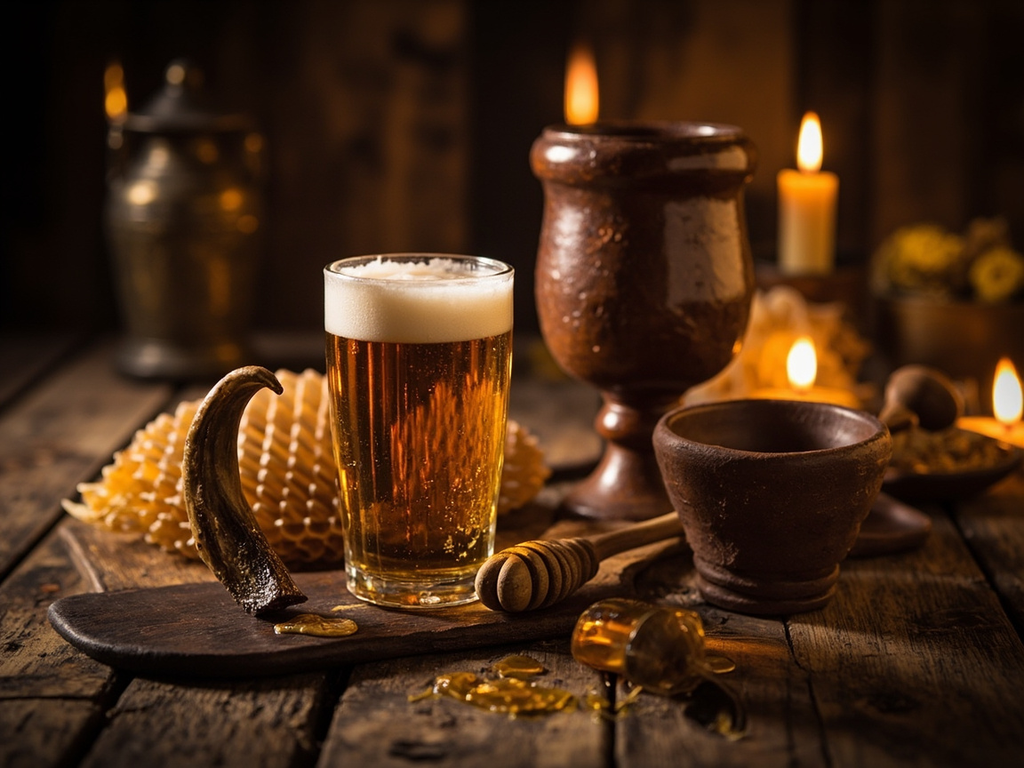
Why this dish? Idunn's profile names divine mead among her foods. Mead is THE drink of the Æsir in Norse mythology, poured into horns at Asgard's banquets. For a goddess of vitality, this fermented honey-water is the beverage of celebration and long life.
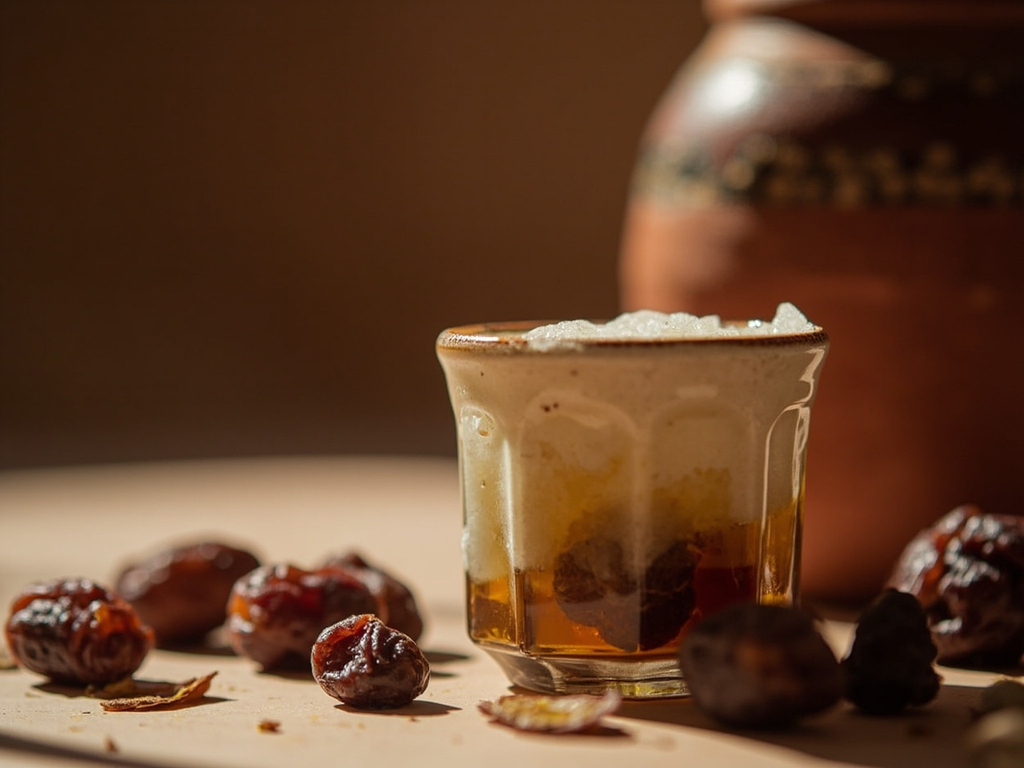
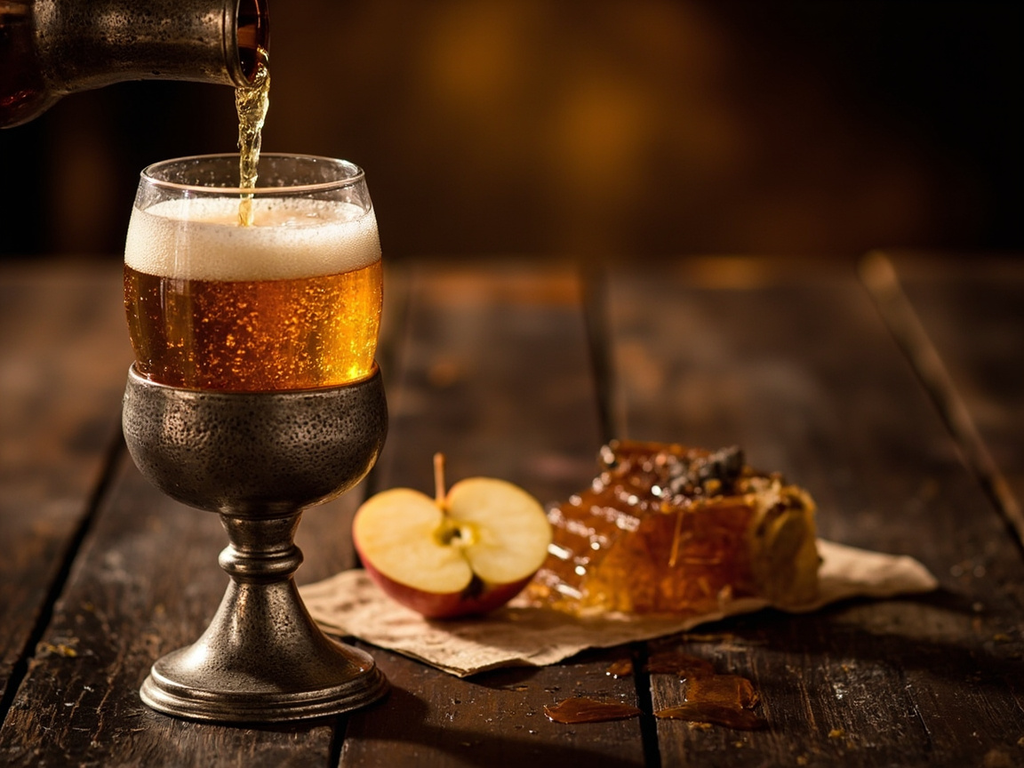
Honey dissolved in water and left to ferment into a golden, lively, slightly sparkling drink, between apple and flower. The sacred drink raised in a horn to toast the gods.
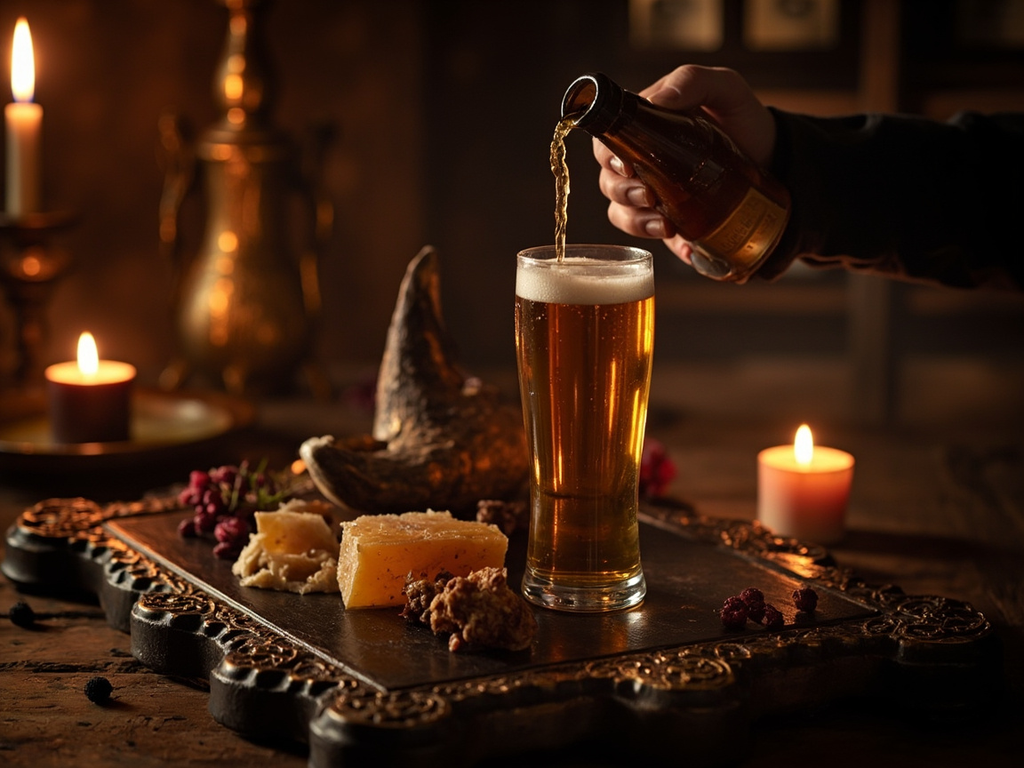
Raise the horn, and do not set it down until you have emptied it for the Æsir! What you drink is the honey of a whole summer made alive by time. I mix the honey with spring water, I let the hidden spirit that makes dough rise and ale sing work within, and I wait—for mead, like youth, cannot be hurried. Drink it at evening gatherings, but without excess: it is a gift of the gods, not an abyss.
- •Wild honey — a good part to three of water (fermentable sugar, signature)
- •Spring water — three parts (base)
- •Natural leaven / beer froth (gist) — enough (ferment)
- •Berries or apple (optional) — a handful (flavor and wild ferments)
Mjöðr — mead of the gods, fermented honey
Honey dissolved in water and left to ferment into a golden, lively, slightly sparkling drink, between apple and flower. The sacred drink raised in a horn to toast the gods.
Why this dish? Idunn's profile names divine mead among her foods. Mead is THE drink of the Æsir in Norse mythology, poured into horns at Asgard's banquets. For a goddess of vitality, this fermented honey-water is the beverage of celebration and long life.
Raise the horn, and do not set it down until you have emptied it for the Æsir! What you drink is the honey of a whole summer made alive by time. I mix the honey with spring water, I let the hidden spirit that makes dough rise and ale sing work within, and I wait—for mead, like youth, cannot be hurried. Drink it at evening gatherings, but without excess: it is a gift of the gods, not an abyss.
Ingredients (period version)
- Wild honey — a good part to three of water (fermentable sugar, signature)
- Spring water — three parts (base)
- Natural leaven / beer froth (gist) — enough (ferment)
- Berries or apple (optional) — a handful (flavor and wild ferments)
Ingredients
- Multifloral honey — 1 kg (fermentable sugar, signature)
- Non-chlorinated water — 3 litres (base)
- Mead yeast or fresh baker's yeast — 1 packet / 5 g (ferment)
- Apple wedges or handful of raisins — 100 g (nutrients and flavor)
Method
- Warm 1 litre of water (without boiling) and dissolve the honey in it completely.
- Pour into a large clean container (demijohn or jar), top up with the remaining cold water, and add the apple wedges.
- When the mixture is at room temperature (lukewarm, not hot), add the yeast.
- Cover with a cloth or airlock and let ferment away from light for 2–4 weeks: it bubbles, it foams, then it calms down.
- Siphon off the clear liquid leaving the sediment behind, bottle it.
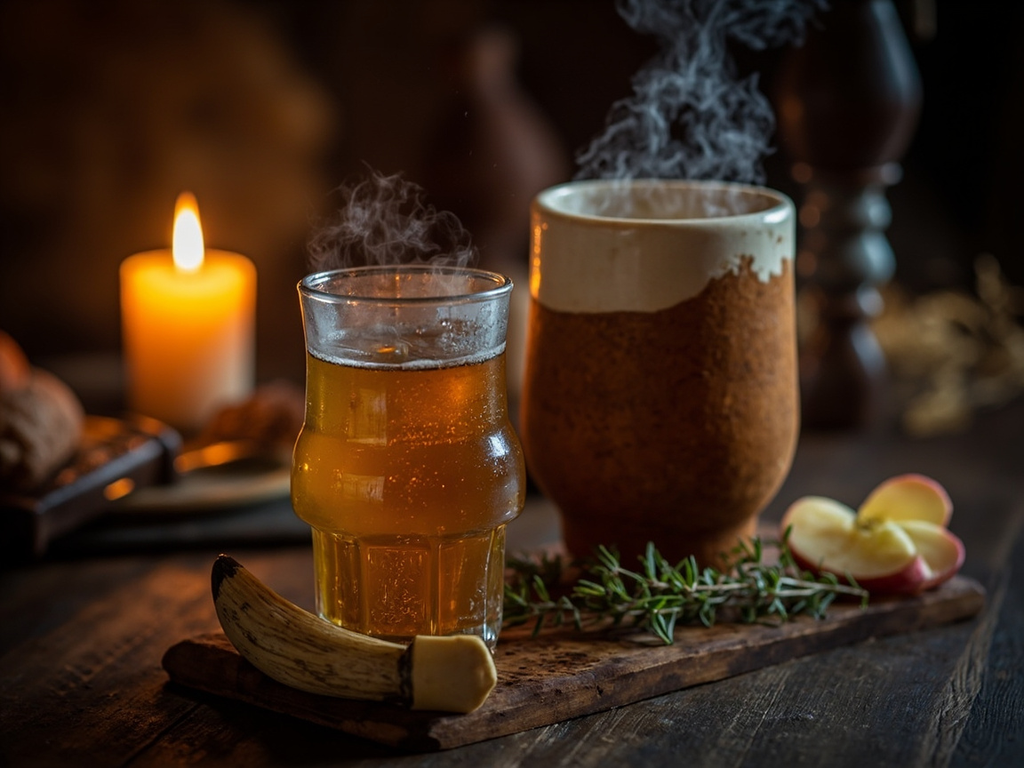
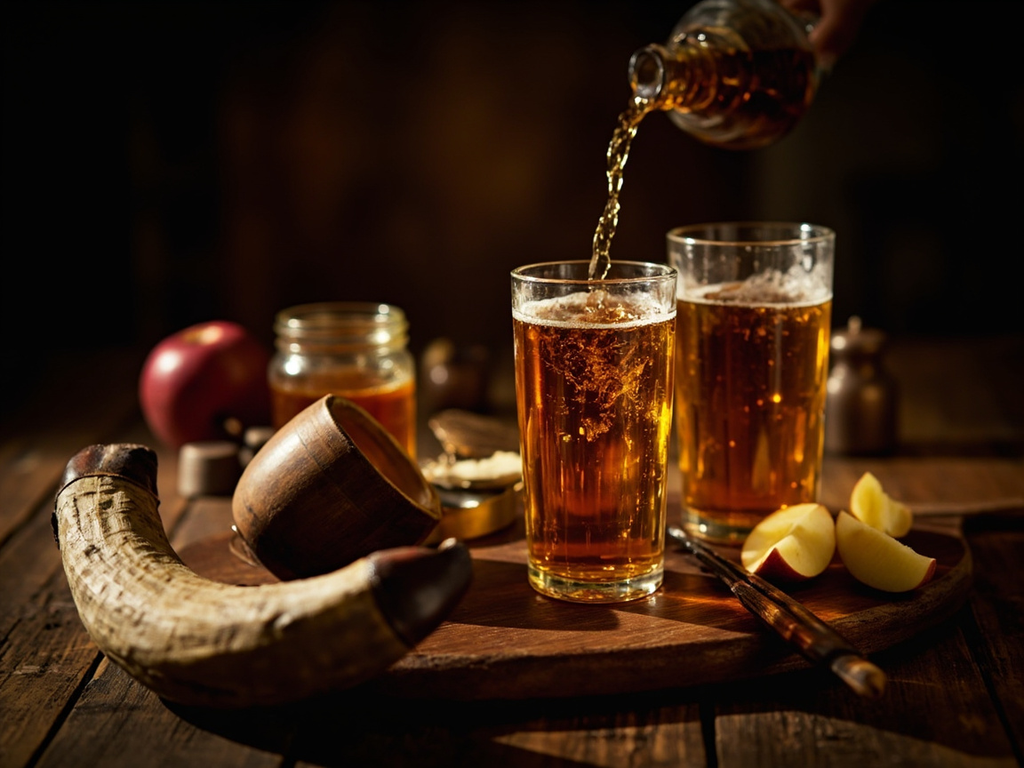
- Let it mature in a cool place for a few weeks before serving chilled in a horn or cup. (Alcoholic beverage: for adults only.)
How it was made : Mead was the prestige drink of the Norse world, above everyday barley ale. Honey was dissolved in water and fermentation started thanks to wild yeasts from fruit, wooden vats, or froth from a previous brew. Drunk from horns at feasts (veizla) and sacrifices (blót), it sealed oaths and alliances. Mythology makes it the 'poetic mead' stolen by Odin, a sign of its sacred status.
The contemporary twist : Serve it chilled in a stemmed goblet shaped like a horn, with a thin slice of dried apple perched on the rim—a bridge between Idunn's orchard and the cup.
Sources : Snorri Sturluson, Edda, Skáldskaparmál (the mjöðr, poetic mead) · Daniel Serra & Hanna Tunberg, An Early Meal: A Viking Age Cookbook, 2013
Idunn · Charactorium