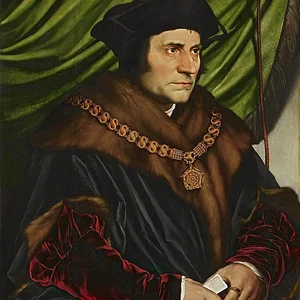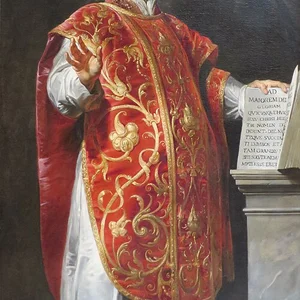
Portrait de Ignatius of Loyola

Ignatius of Loyola

Ignatius of Loyola

1491 — 1556

Espagne, couronne de Castille

SpiritualityReligieux/seRenaissance16th century (Renaissance and early modern period)

Spanish soldier and religious figure (1491–1556), Ignatius of Loyola founded the Society of Jesus in 1540, a religious order central to the Catholic Counter-Reformation. Canonized in 1622, he embodies the Church's response to Protestant reforms.

Émotions disponibles (6)

N

Neutre

par défaut

I

Inspiré

P

Pensif

S

Surpris

T

Triste

F

Fier

Key Facts

  • 1491: Born in Azpeitia, Guipúzcoa (Spain)
  • 1521: Wounded during the siege of Pamplona; religious conversion during his convalescence
  • 1540: Foundation of the Society of Jesus approved by Pope Paul III
  • 1556: Died in Rome on July 31
  • Authored the Spiritual Exercises, a manual of meditation and discernment for Jesuits

Works & Achievements

Spiritual Exercises (Ejercicios Espirituales) (Written 1522-1524, approved 1548)

A meditation manual structured in four weeks, guiding the practitioner through an examination of conscience, contemplation of the life of Christ, and spiritual discernment. Translated into dozens of languages, it remains the founding text of Ignatian spirituality.

Constitutions of the Society of Jesus (1550-1556)

The fundamental text defining the organization, vows, mission, and governance of the Jesuit order. Innovative in its emphasis on obedience to the Pope and apostolic flexibility, this document shaped centuries of Catholic religious life.

Autobiography (Pilgrim's Tale) (Dictated 1553-1555, published 1731)

A third-person account of his life up to his settlement in Rome, dictated to his secretary. A primary historical source on his conversion, his pilgrimages, and the founding of the Society.

Correspondence (Epistolae et Instructiones) (1524-1556)

A corpus of some 6,800 letters addressed to his companions, princes, popes, and faithful around the world. A tool of governance and spiritual direction, they reveal Ignatius's strategic and pastoral thinking.

Foundation of the Roman College (future Pontifical Gregorian University) (1551)

The first major Jesuit institution of higher learning in Rome, offering free access to studies. It foreshadowed the network of hundreds of colleges that the Jesuits would develop throughout Europe and the world.

Foundation of the Society of Jesus (1540 (bull Regimini militantis Ecclesiae))

The creation of the religious order that would become the vanguard of the Catholic Counter-Reformation. The Jesuits would play a decisive role in education, missions in Asia and the Americas, and the defense of Catholic orthodoxy against Protestantism.

Anecdotes

In 1521, during the siege of Pamplona, Ignatius of Loyola was gravely wounded in the leg by a cannonball. Confined to bed for many months of convalescence, he asked for chivalric novels to pass the time, but was only brought lives of the saints and a life of Christ. This reading radically transformed his worldview and triggered his spiritual conversion.

During his convalescence, Ignatius noticed that worldly thoughts brought him fleeting joy followed by sadness, while religious thoughts left him with a lasting peace. This intuitive observation would become the foundation of his method of the 'discernment of spirits', at the heart of the Spiritual Exercises.

In 1523, Ignatius undertook a pilgrimage to Jerusalem, begging his way from Spain. He crossed the Mediterranean on a merchant ship and arrived in the Holy Land, but the Franciscan guardians of the Holy Sites forbade him to stay, fearing for his safety. He had to return to Europe, convinced that he first needed to study in order to serve God more effectively.

In Paris, where he began studying in 1528, Ignatius shared his room on the Rue Saint-Jacques with two students who would become his first companions: Francis Xavier and Pierre Favre. These three men, joined by others, together took their first vows at Montmartre on August 15, 1534, laying the foundations for what would become the Society of Jesus.

Ignatius had suffered from gallstones for years and died on July 31, 1556 so quietly that his secretary did not have time to request a papal blessing for him. The man who had founded a worldwide order of several hundred members died almost alone, in the utmost simplicity — a reflection of his ideal of evangelical poverty.

Primary Sources

Spiritual Exercises (Ejercicios Espirituales) (1548 (papal approval), written from 1522)
Man is created to praise, reverence, and serve God our Lord, and by this means to save his soul. The other things on the face of the earth are created for man, and to help him in attaining the end for which he is created.
Autobiography (The Pilgrim's Tale, dictated to Luis Gonçalves da Câmara) (1553-1555)
Until the age of twenty-six, he was a man given over to the vanities of the world; he took particular delight in the exercise of arms, with a great and vain desire to win glory.
Constitutions of the Society of Jesus (1550-1556)
The end of this Society is to devote itself, with God's grace, to the salvation and perfection of the souls of its own members, and by the same means to labour strenuously for the salvation and perfection of the souls of one's neighbours.
Letters and Instructions (Epistolae et Instructiones) (1524-1556)
Work as if everything depended on you, and pray as if everything depended on God.

Key Places

Loyola, Spanish Basque Country (birthplace castle)

Ignatius was born around 1491 in this lordly castle in the Bidasoa valley. He returned there to convalesce after Pamplona, and it was in the family library that he read the lives of the saints that triggered his conversion.

Manresa, Catalonia (cave of Saint Ignatius)

Ignatius spent nearly a year in this Catalan town (1522-1523), living as a hermit in a cave on the banks of the Cardener. It was there that he received the mystical illuminations that nourished the composition of the Spiritual Exercises.

Paris, Montmartre and Collège Sainte-Barbe

Ignatius studied in Paris from 1528 to 1535, where he met his first companions, including Francis Xavier and Peter Faber. The Chapel of the Martyrs of Montmartre is where the group took their first vows on August 15, 1534.

Rome, Casa Professa del Gesù

Ignatius settled permanently in Rome from 1537 and governed the Society of Jesus from this house until his death in 1556. The Church of the Gesù, built after his death, is the architectural symbol of the Jesuit order in the world.

Jerusalem, Holy Sites

Ignatius completed his pilgrimage to the Holy Land in 1523, dreaming of staying there to convert Muslims. The Franciscans prevented him from doing so, which convinced him to return to Europe to study before serving the Church.

Typical Objects

The Book of Spiritual Exercises

A small manual of meditation and prayer written by Ignatius, used to guide four-week spiritual retreats. It is the central work of his life and the foundation of Ignatian spirituality.

The knight's breastplate and sword

Symbols of the military life Ignatius led before his wound at Pamplona. He symbolically laid them at the feet of the Virgin of Montserrat in 1522, marking his break with the world of arms.

The rosary and the breviary

Objects of daily devotion that Ignatius constantly carried with him during his years of pilgrimage and study. They embody his diligent practice of prayer and meditation.

The papal bull Regimini militantis Ecclesiae

An official document signed by Pope Paul III in 1540, approving the Society of Jesus. This parchment is the legal and spiritual birth certificate of the Jesuit order.

The secretary's quill and letter register

Ignatius wrote or dictated approximately 6,800 letters throughout his life, administering from Rome a worldwide network of missions. Written correspondence was the essential governing tool of his order.

The pilgrim's staff

A symbolic attribute of Ignatius's many journeys, from Spain to Jerusalem and then across all of Europe to study and found his order. It represents the theme of spiritual pilgrimage at the heart of his spirituality.

School Curriculum

Cycle 4 (5e-3e)Histoire
Cycle 4 (5e-3e)HistoireLa Contre-Réforme catholique au XVIe siècle
Cycle 4 (5e-3e)HistoireLa réaction de l'Église face aux réformes protestantes
Cycle 4 (5e-3e)HistoireLes ordres religieux au service de l'Église
Cycle 4 (5e-3e)HistoireL'évolution religieuse en Espagne à la Renaissance
Cycle 4 (5e-3e)HistoireLes personnages clés de la réforme catholique

Vocabulary & Tags

Key Vocabulary

Counter-ReformationSociety of Jesus (Jesuits)JesuitsReligious conversionReligious orderSpiritual discernmentSpiritual ExercisesProtestant Reformation

Tags

Ignace de LoyolaFigure religieusereforme-protestanteRéforme protestanteContre-RéformeCompagnie de Jésus (Société de Jésus)JésuitesConversion religieuseOrdre religieuxDiscernement spirituelExercices spirituelsXVIe siècle (Renaissance et début de l'époque moderne)

Daily Life

Morning

Ignatius rises before dawn for an hour of personal mental prayer, then celebrates or attends Mass. The morning is then devoted to spiritual direction of the novices and to reading mission reports arriving by post from Spain, Portugal, or the Indies.

Afternoon

The afternoon is mainly dedicated to dictating letters to his secretaries — sometimes as many as twenty a day — and to meetings with Roman dignitaries, cardinals, ambassadors, or students seeking advice. Despite his fragile health, Ignatius receives many visitors in his small workroom.

Evening

The evening brings the community together for the collective examination of conscience, a time of spiritual reflection that Ignatius recommends twice a day. Shared spiritual reading precedes a short but restful night; Ignatius often extends his personal prayer well into the late hours, contemplating the stars from the terrace of the professed house.

Food

Ignatius eats very plainly, often constrained by his chronic digestive troubles and gallstones. He follows a light diet of broths, vegetables, and bread, avoiding red meat; he drinks little wine and sometimes imposes fasts on himself despite the protests of his doctors, who fear for his health.

Clothing

Ignatius and his companions wear a long black cassock without ornamentation, symbolizing detachment from worldly wealth. A broad-brimmed black hat and a simple leather belt complete the habit; no hood, unlike traditional monks, as the Jesuits are 'apostolic' religious men engaged in the world.

Housing

In Rome, Ignatius occupies a small cell adjoining the church of Santa Maria della Strada, modest and sparsely furnished: a camp bed, a desk, a document cabinet. All luxury is banished, but the professed house does house a growing library and several workrooms for the secretaries.

Historical Timeline

1517Martin Luther affiche ses 95 thèses à Wittenberg, lançant la Réforme protestante qui déchire l'Occident chrétien.
1519Charles Quint est élu empereur du Saint-Empire ; la monarchie espagnole domine l'Europe et les nouveaux territoires américains.
1521Ignace de Loyola est blessé au siège de Pampelune ; Luther est excommunié et placé au ban de l'Empire par l'édit de Worms.
1522Ignace rédige les premières ébauches des Exercices spirituels à Manrèse, après une retraite de plusieurs mois.
1524Début de la Guerre des Paysans en Allemagne, alimentée par les idées réformatrices ; révoltes violemment réprimées.
1534Ignace et ses premiers compagnons prononcent leurs vœux à Montmartre (Paris) ; Henri VIII rompt avec Rome et crée l'Église anglicane.
1540Le pape Paul III approuve officiellement la Compagnie de Jésus par la bulle Regimini militantis Ecclesiae.
1542Rétablissement de l'Inquisition romaine par Paul III pour lutter contre l'hérésie protestante en Italie.
1545Ouverture du concile de Trente, pierre angulaire de la Contre-Réforme catholique, auquel les jésuites participent activement.
1548Publication officielle des Exercices spirituels d'Ignace, approuvés par le pape Paul III.
1549François Xavier, compagnon d'Ignace, arrive au Japon pour y fonder les premières missions jésuites en Asie.
1551Fondation du Collège romain (future université pontificale), premier grand établissement scolaire jésuite à Rome.
1555La paix d'Augsbourg consacre la division religieuse de l'Allemagne selon le principe 'cuius regio, eius religio'.
1556Mort d'Ignace de Loyola à Rome le 31 juillet ; la Compagnie de Jésus compte déjà plus d'un millier de membres dans le monde entier.

Period Vocabulary

Society of Jesus (Societas Jesu)Religious order founded by Ignatius in 1540, whose members are called Jesuits. The term 'company' deliberately evokes the military vocabulary dear to Ignatius, the order being conceived as a disciplined troop in the service of the pope.
Spiritual ExercisesA programme of meditations and prayers structured over four weeks, designed by Ignatius to help any Christian order their life according to the will of God. They constitute the fundamental pedagogical method of Jesuit spirituality.
Counter-Reformation (or Catholic Reformation)Movement of renewal and defence of the Catholic Church in response to the Protestant Reformation, officially framed by the Council of Trent (1545–1563). The Jesuits are one of its principal actors, through their education and missions.
Discernment of spiritsIgnatian method for distinguishing inspirations coming from God from those coming from evil or from oneself, by observing the interior movements of joy, peace, or sadness they provoke. A central concept of the Spiritual Exercises.
Ad maiorem Dei gloriam (AMDG)Latin motto of the Society of Jesus meaning 'For the greater glory of God'. It summarises the Ignatian ideal according to which every human action, even ordinary ones, must be directed towards divine glory.
Novice / NovitiateA two-year period of formation and probation required of every candidate entering the Society of Jesus, before pronouncing their first vows. The novitiate obligatorily includes the Spiritual Exercises in their entirety.
Fourth vow (of obedience to the pope)A special vow unique to professed Jesuits, by which they commit to going on mission wherever the pope sends them. This particular vow distinguishes the Society of Jesus from other religious orders and explains its role as the 'armed arm' of the papacy.
Papal bullA solemn official document issued by the pope, sealed with a lead seal (bulla in Latin). The bull Regimini militantis Ecclesiae of 1540 officially approved the founding of the Society of Jesus by Paul III.
PilgrimageA journey to a holy place undertaken as an act of devotion or penance. Ignatius undertook several formative pilgrimages: to Montserrat, to Manresa, to Jerusalem. The metaphor of the pilgrim permeates his entire spirituality and autobiography.
HeresyA religious doctrine considered contrary to the dogmas of the Catholic Church. In the 16th century, the term refers primarily to the Lutheran and Calvinist positions that the Counter-Reformation, and therefore the Jesuits, sought to combat.

Gallery

Ignatius of Loyola (militant)

Ignatius of Loyola (militant)

Virgin Mary with Infant Jesus and Her Fifteen Mysteries, Loyola and Francis Xavier Kyoto University Museum

Virgin Mary with Infant Jesus and Her Fifteen Mysteries, Loyola and Francis Xavier Kyoto University Museum

Triumph of St. Ignatius of Loyola, ceiling fresco by Andrea Pozzo

Triumph of St. Ignatius of Loyola, ceiling fresco by Andrea Pozzo

St. Ignatius by del Conte

St. Ignatius by del Conte

Saint Ignace de Loyola et saint François-Xavier, Baciccio, XVIIe, musée des Augustins, Toulouse

Saint Ignace de Loyola et saint François-Xavier, Baciccio, XVIIe, musée des Augustins, Toulouse

Église Saint-Ignace-de-Loyola

Église Saint-Ignace-de-Loyola

Église Saint-Ignace-de-Loyola 002

Église Saint-Ignace-de-Loyola 002

Sculpture Ignace de Loyola d'André Besqueut - MS 1583 0018 (FR631136102)

Sculpture Ignace de Loyola d'André Besqueut - MS 1583 0018 (FR631136102)

Roma - San Pietro in Vaticano 8387

Roma - San Pietro in Vaticano 8387


St Ignatius Loyola wearing leg splints, by De Favray.

St Ignatius Loyola wearing leg splints, by De Favray.

Visual Style

Esthétique inspirée du Maniérisme espagnol et de la peinture romaine du XVIe siècle : clair-obscur dramatique, tons austères de noir, ocre et rouge cardinalice, intérieurs de chapelles en pierre contrastant avec la vastité des missions mondiales.

#1C1008
#8B3A1C
#C8A45A
#2C3E50
#7D9B76
AI Prompt
Spanish Renaissance and early Mannerist style, reminiscent of El Greco and Titian. Dark, austere interior spaces with dramatic chiaroscuro lighting, deep blacks and warm ochres, intense faces showing spiritual resolve. Architectural settings featuring barrel-vaulted stone chapels, Baroque Roman interiors with gilded altarpieces, Spanish castles and Italian Renaissance cloisters. Figures dressed in black robes with white collars, carrying books and crucifixes. Distant landscapes of the Basque mountains and the Mediterranean sea. Rich crimson cardinals' vestments contrast with the Jesuits' plain black habits. Cartographic globes and maps suggesting worldwide missionary ambition.

Sound Ambience

L'atmosphère sonore d'une maison religieuse romaine du XVIe siècle : cloches liturgiques, prières en latin, plumes sur le parchemin et chant grégorien entrecoupés des bruits de la ville éternelle.

AI Prompt
Sixteenth century Rome: distant church bells ringing the canonical hours across the city, Latin prayers murmured in a stone chapel, quill scratching on parchment as letters are dictated, hushed voices of novices in a cloister corridor, the creak of a heavy wooden door opening onto a cobblestone courtyard, occasional street noise from merchants and carts below, Gregorian chant rising from an adjacent choir, the soft rustle of a dark robe moving across flagstones, a candleflame flickering in the stillness of a small study room.

Portrait Source

Wikimedia Commons — domaine public

Aller plus loin

Œuvres

Exercices spirituels (Ejercicios Espirituales)

Rédigés 1522-1524, approuvés 1548

Autobiographie (Récit du Pèlerin)

Dictée 1553-1555, publiée 1731

Correspondance (Epistolae et Instructiones)

1524-1556

Fondation du Collège romain (future Université pontificale grégorienne)

1551

Fondation de la Compagnie de Jésus

1540 (bulle Regimini militantis Ecclesiae)