Demons and Demonology
Lucifer, Beelzebub, Asmodeus, Lilith and the great demons of Christian, Jewish and Islamic traditions — from the Book of Enoch to the Ars Goetia.
32 characters

32 characters
Angra Mainyu
Angra Mainyu, also known as Ahriman, is the evil deity of Zoroastrianism, opposed to Ahura Mazda. The embodiment of evil, deceit, and destruction, he stands at the heart of the cosmic dualism in the ancient Persian religion founded by Zarathustra.
Apophis
Apophis is the great serpent of chaos in Egyptian mythology, the embodiment of darkness and absolute disorder. The eternal enemy of the sun god Ra, he attempts each night to swallow the solar barque during its journey through the underworld. The Egyptians performed daily rituals to ward off his attacks and preserve cosmic order.
Asmodeus
A demon of lust and wrath in Judeo-Christian and Persian traditions, Asmodeus is one of the oldest demonic figures in religious literature. He appears notably in the Book of Tobit, a deuterocanonical text, under the name Asmodaeus.
Azazel
Demonic figure from Hebrew traditions and fallen angel of the Book of Enoch. In Leviticus, he is associated with the scapegoat ritual. According to Enochic tradition, he taught humans the metallurgy of weapons and the art of cosmetics.
Baal
Supreme god of the Canaanite pantheon, master of rain, storms, and fertility. His cult was practiced across the ancient Near East from the 2nd millennium BCE and came into conflict with Hebrew monotheism. Demonized by the Abrahamic traditions, he became a demonic figure in medieval texts.
Belial
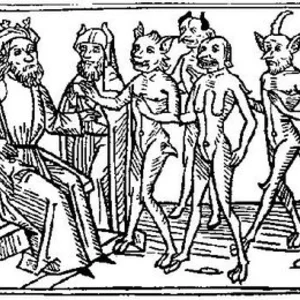
Belial is a demonic figure from ancient Hebrew and Jewish traditions, whose name means 'worthless' or 'wickedness'. He appears in the Dead Sea Scrolls as a prince of darkness opposed to the Archangel Michael. He is considered one of the four crowned princes of Hell in medieval demonology.
Dagon
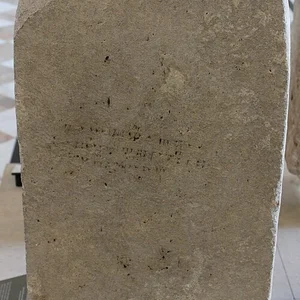
Dagon is a Semitic deity worshipped by the Philistines and Canaanites, associated with fertility and the harvest. His cult is attested throughout the ancient Near East, notably at Ugarit and Gaza. He was later reinterpreted as a demonic figure in Christian literature and in John Milton's Paradise Lost.

Daji
A nine-tailed fox spirit who transformed herself into the concubine of King Zhou, the last ruler of the Shang dynasty (11th century BCE). A demonic figure in Chinese mythology, she embodies seductive evil and tyranny. Her legendary cruelty helped bring about the fall of the Shang dynasty, which was defeated by King Wu of Zhou.
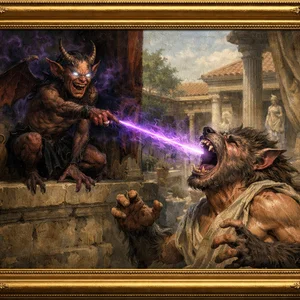
Empousa
A demonic creature of Greek mythology, servant of Hecate. Endowed with one leg of bronze and one leg of a donkey, she transforms herself to seduce lone travelers before devouring them.
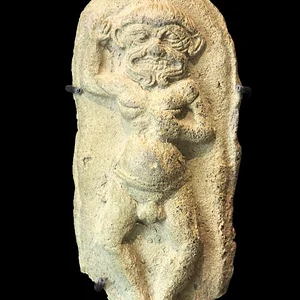
Humbaba
Humbaba (or Huwawa) is a monstrous creature from Mesopotamian mythology, the guardian of the Cedar Forest on behalf of the god Enlil. He appears in the Epic of Gilgamesh, where he is defeated and killed by Gilgamesh and Enkidu.
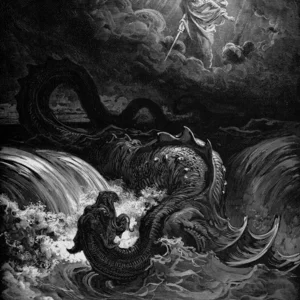
Leviathan
A sea monster from biblical texts and the mythologies of the ancient Near East, Leviathan embodies primordial chaos and the forces of evil. Described as a gigantic sea serpent, it appears notably in the Book of Job and the Psalms. During the Middle Ages, it became the guardian of the gates of Hell in the Christian tradition.
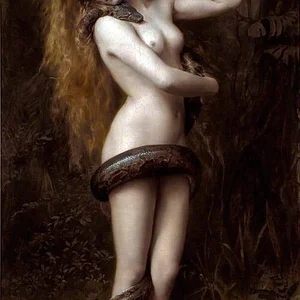
Lilith
A demonic figure rooted in Mesopotamian mythology (Lilitu), Lilith was incorporated into Jewish tradition as Adam's first wife, before Eve. Refusing to submit, she leaves the Garden of Eden and becomes a nocturnal demon threatening newborns and sleeping men.
Mahishasura
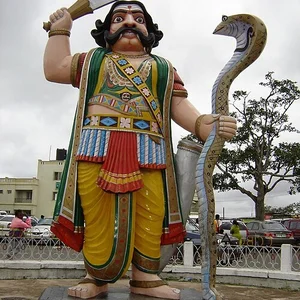
Mahishasura is a buffalo-demon (asura) from Hindu mythology who, after obtaining invincibility against any man or god, conquered the three worlds and drove the gods from paradise. The goddess Durga, created from the combined energy of all the gods, ultimately defeated him after nine days of battle.
Mara
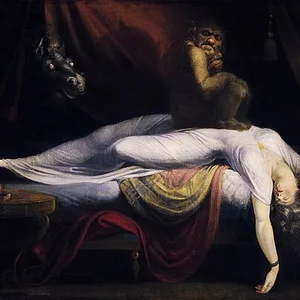
In Buddhist tradition, Mara is the supreme demon of desire and illusion. He attempted to prevent Siddhartha Gautama from attaining Enlightenment by subjecting him to temptations and trials beneath the Bodhi tree. He personifies the forces of attachment and ignorance that bind beings to the cycle of rebirth.
Moloch
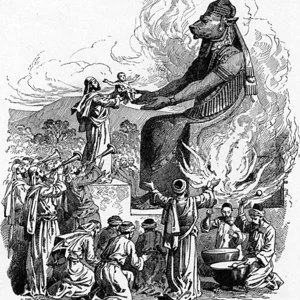
A Canaanite Semitic deity associated with child sacrifice, Moloch is mentioned in the Bible as an abhorrent idol. Depicted as a bull or a bronze statue, he became in Judeo-Christian and literary tradition the symbol of idolatrous cruelty.
Pazuzu
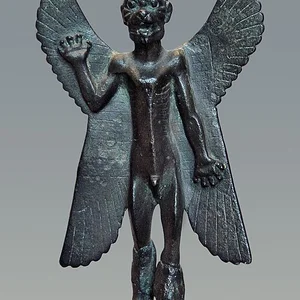
Pazuzu is a Mesopotamian demon of the evil wind, depicted with a canine face, raptor wings, and a hybrid body. Paradoxically, he was invoked as a protector against Lamashtu, the demon of childbirth. His image adorned amulets to protect pregnant women and newborns.
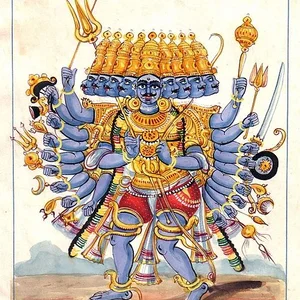
Ravana
Ravana is the ten-headed demon king of Lanka in the Hindu epic the Ramayana. As the principal antagonist, he abducts Sita, the wife of Rama, triggering a cosmic war. Despite his demonic nature, he is recognized as a scholar, accomplished musician, and devoted worshipper of Shiva.
Abaddon
A biblical figure from the Book of Revelation, Abaddon is the angel-king of the bottomless pit, whose Hebrew name means 'destruction.' He commands the devastating locusts during the fifth seal and embodies the ambiguous boundary between destroying angel and demonic power.
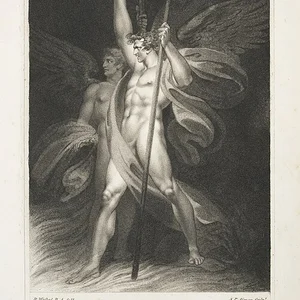
Beelzebub
An ancient Philistine deity (Baal-Zebub, "Lord of the Flies"), worshipped at Ekron. Reinterpreted in the Judeo-Christian tradition as one of the princes of demons, a central figure in medieval demonology.
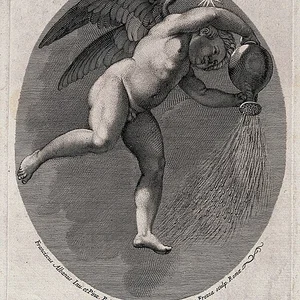
Lucifer
Latin name meaning 'Light-bearer', originally referring to the morning star (Venus). In Christian tradition, it designates the fallen angel cast from Heaven by God for his pride, becoming the figure of absolute Evil.
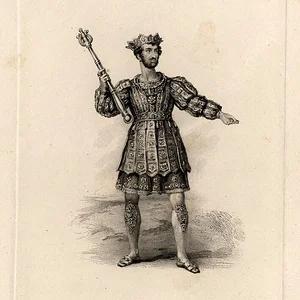
Mammon
Mammon is a demonic figure from the New Testament, a personification of material wealth and greed. Taken up in medieval literature and by Milton in Paradise Lost, he embodies the temptation of earthly riches over spiritual values.
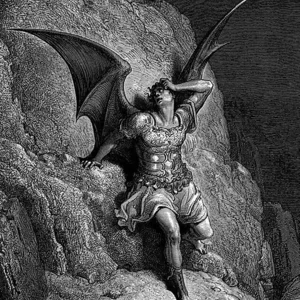
Samael
Samael is a malevolent angel in Jewish tradition, often identified with the Angel of Death and the Accuser (Satan). A central figure in Kabbalah and the Talmud, he embodies evil and opposition to the divine.
Astaroth
Astaroth is a grand duke of Hell from medieval demonology, considered a corrupted form of the Phoenician goddess Astarte. Described in the Goetia as riding a dragon and holding a serpent, he embodies vanity and sloth. His name illustrates the process by which medieval Christian theology demonized the deities of ancient religions.
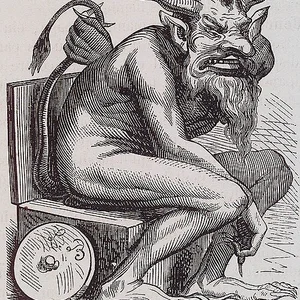
Belphegor
Belphegor is a demon from Hebrew and medieval Christian traditions, associated with the deadly sin of sloth. Considered one of the seven princes of Hell, he tempts humans with promises of wealth and ingenious inventions. His name derives from Baal-Peor, a Moabite deity mentioned in the Bible.
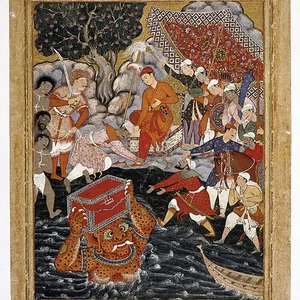
Ifrit
The ifrit is a powerful category of jinn in Islamic tradition, created from smokeless fire. Known for their cunning and danger, they appear in the Quran and One Thousand and One Nights. These supernatural beings hold a central place in medieval Muslim folklore and cosmology.

Incubus
A male demon from medieval demonology, the incubus was believed to have intercourse with women while they slept. It embodied the fear of sexuality and sin in medieval Christian thought. Its female counterpart is the succubus.
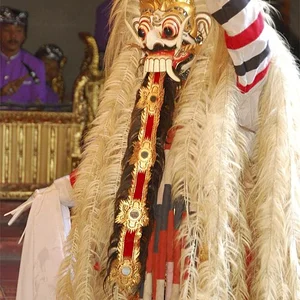
Rangda
Rangda is the demon queen of Balinese mythology, embodiment of evil and the dark forces. She leads an army of witches called Leyaks and is locked in eternal opposition with Barong, the protective spirit of good. This cosmic battle lies at the heart of Balinese spirituality and ritual theater.
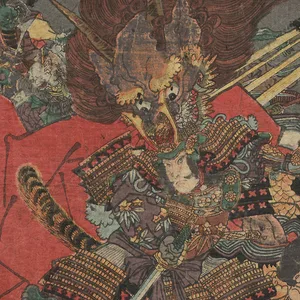
Shuten-doji
Shuten-doji is the king of oni (demons) in Japanese mythology, known for kidnapping and devouring young women from the capital from his fortress on Mount Ōe. He was defeated and beheaded by the hero Minamoto no Raikō and his four lieutenants through a ruse involving poisoned sake.

Succubus
The succubus is a female demon from medieval demonology, believed to visit men in their sleep to unite with them and drain their vital energy. Ubiquitous in the theological and demonological treatises of the Middle Ages, it embodies religious anxieties about sexuality and evil.
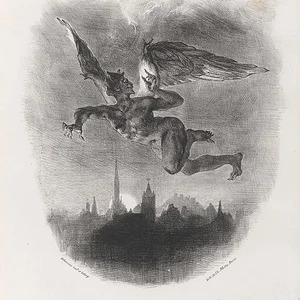
Mephistopheles
The demon of the Faustian pact, Mephistopheles is the Devil's agent tasked with seducing the scholar Faust. Made famous by Marlowe in Doctor Faustus (1592) and then by Goethe in Faust (1808), he embodies intellectual temptation and the corruption of the soul through the thirst for knowledge.
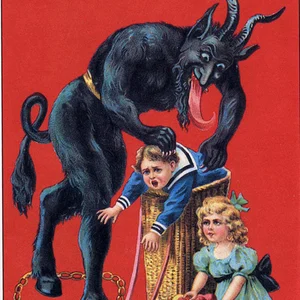
Krampus
A demonic half-man, half-goat creature from Germanic Alpine folklore, Krampus is the punishing companion of Saint Nicholas. While Saint Nicholas rewards well-behaved children, Krampus punishes the naughty ones by whipping them with birch branches or carrying them away in his basket.

Madeleine Bavent
A Carmelite nun at the convent of Louviers, Madeleine Bavent was at the center of a demonic possession affair and witchcraft accusations in 1647. Her trial, emblematic of the excesses of the witch hunts, led to the execution of Father Thomas Boulle and the condemnation of several members of the religious community.