 flip
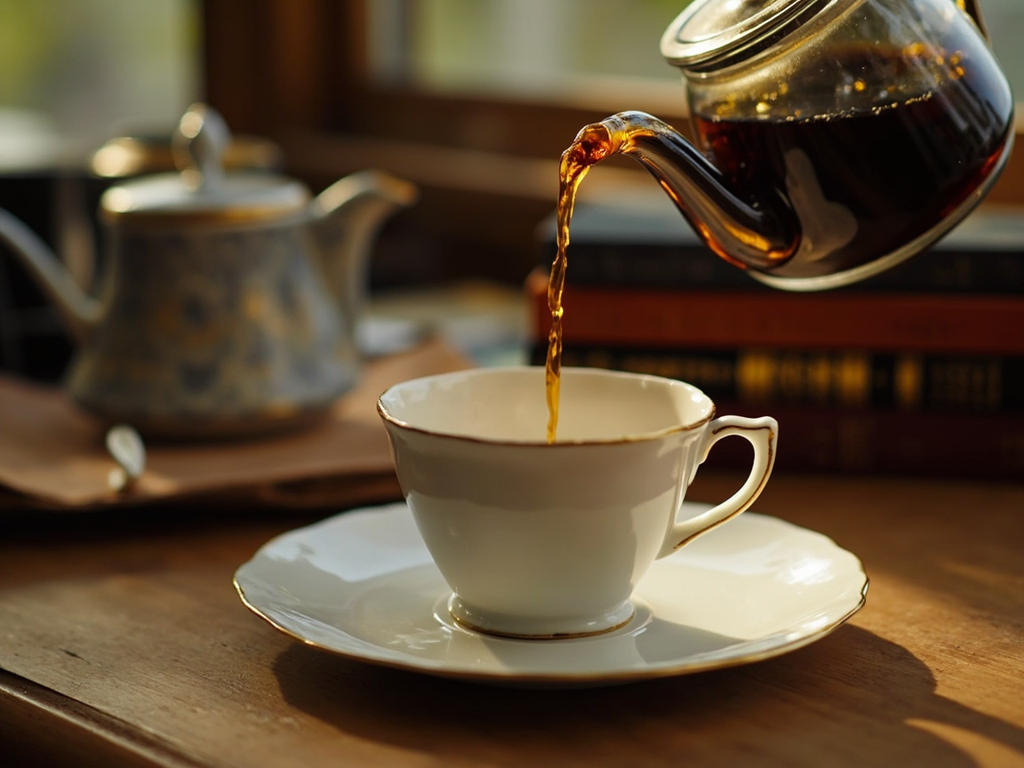
flipA proper pot of tea (black tea with milk, made properly)
A proper pot of tea (black tea with milk, made properly)
Why this dish? She loved tea, of course, like any Briton of her time. Tea was for Iris Murdoch, as for her Oxford contemporaries, the central social ritual: the moment to pause, to exchange, to share thoughts around a steaming teapot.
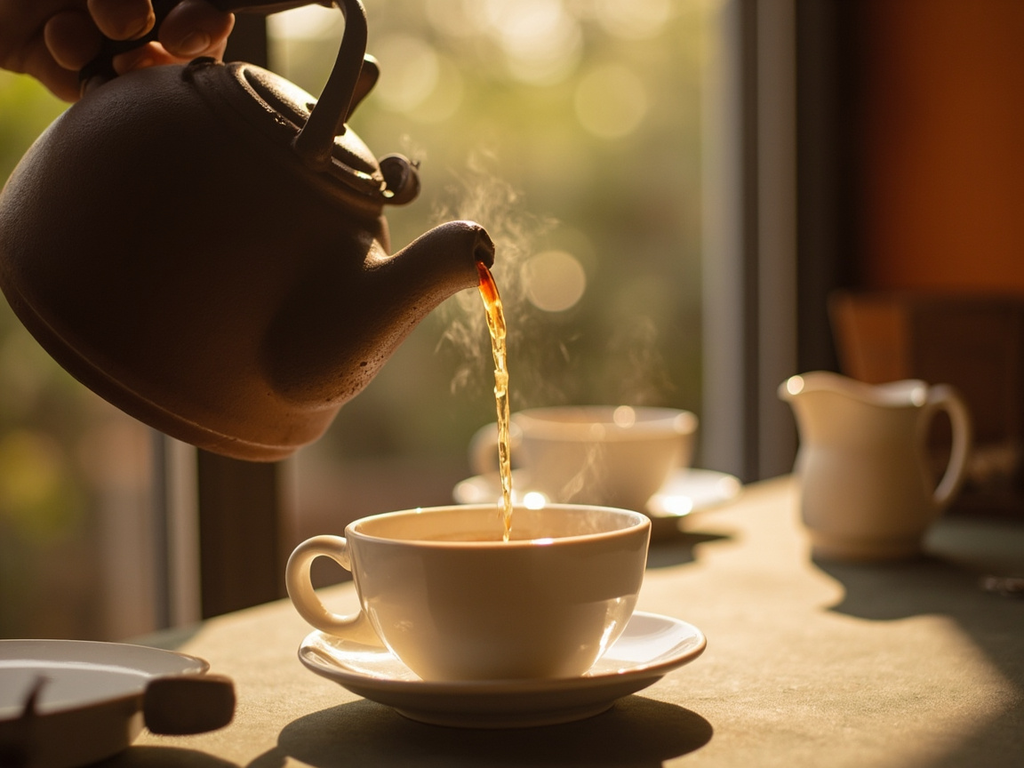
A teapot of strong black tea, brewed hot and served with a splash of milk. The tannic, slightly bitter drink, softened by milk, that punctuates every British day.
One cannot insist too much: tea is prepared with care, or not at all. I first scald the teapot, put in a spoonful of leaves per cup, and pour the water at the precise moment it boils — not a second later, else all is ruined. You let it steep a few minutes, strong and honest, then each adds milk to their liking — and you will argue long, believe me, about whether to pour the milk before or after. It is around this teapot, more than any other table, that my best conversations have been held.
- •Black tea leaves (Assam or Ceylon) — one spoonful per cup plus one for the pot (tannic infusion)
- •Freshly boiled water — according to number of cups (infusion)
- •Milk — a splash per cup (softens bitterness)
- •Sugar — optional, to taste (sweetness)
A proper pot of tea (black tea with milk, made properly)
A teapot of strong black tea, brewed hot and served with a splash of milk. The tannic, slightly bitter drink, softened by milk, that punctuates every British day.
Why this dish? She loved tea, of course, like any Briton of her time. Tea was for Iris Murdoch, as for her Oxford contemporaries, the central social ritual: the moment to pause, to exchange, to share thoughts around a steaming teapot.
One cannot insist too much: tea is prepared with care, or not at all. I first scald the teapot, put in a spoonful of leaves per cup, and pour the water at the precise moment it boils — not a second later, else all is ruined. You let it steep a few minutes, strong and honest, then each adds milk to their liking — and you will argue long, believe me, about whether to pour the milk before or after. It is around this teapot, more than any other table, that my best conversations have been held.
Ingredients (period version)
- Black tea leaves (Assam or Ceylon) — one spoonful per cup plus one for the pot (tannic infusion)
- Freshly boiled water — according to number of cups (infusion)
- Milk — a splash per cup (softens bitterness)
- Sugar — optional, to taste (sweetness)
Ingredients
- Black tea leaves, Assam or Ceylon — 1 tsp per cup + 1 for the pot (tannic infusion)
- Filtered water — 200 ml per cup (infusion)
- Whole milk — 1–2 tbsp per cup (softens bitterness)
- Sugar — optional (sweetness)
Method
- Boil fresh water (never reheated twice).
- Scald the teapot with a little hot water, then empty it: it must be hot.
- Put the tea leaves in the teapot, one spoonful per cup plus one for the pot.
- Pour the water as soon as it reaches a rolling boil, directly onto the leaves.
- Let steep for 3–5 minutes depending on desired strength.
- Pour through a strainer into cups, add milk (and sugar if desired). Serve piping hot.
How it was made : In the 20th century, loose-leaf tea brewed in a teapot was the norm, long before tea bags. George Orwell, in his essay 'A Nice Cup of Tea' (1946), codified eleven rules, including the use of genuinely boiling water and the eternal debate of milk-first or milk-last. Strong tea with milk was the national drink, consumed several times a day.
The contemporary twist : Offer a blind tasting between a bold Assam and a more floral Darjeeling to rediscover that not all black teas are equal.
Sources : George Orwell, 'A Nice Cup of Tea', Evening Standard, 1946 · Constance Spry, The Constance Spry Cookery Book, 1956
Iris Murdoch · Charactorium