
Ix Chel is a goddess of Maya mythology, venerated as a figure of the moon, medicine, weaving, and fertility. According to oral traditions and colonial written sources (Maya codices), she embodied both the creative power and the destruction associated with water and lunar cycles.
Ixchel
Ix Chel
9 min read
Frequently asked questions
Key Facts
- Ix Chel is attested in surviving Maya codices (Dresden Codex, Madrid Codex), written sources from the Post-Classic period (c. 11th–15th century)
- Her main sanctuary was located on the island of Cozumel (present-day Mexico), a pilgrimage site for women wishing to have children
- She is sometimes depicted as an old woman holding a serpent and overturning a water vessel — a symbol of floods and destruction
- In some traditions, she is associated with Itzamna, the supreme god, as his wife or companion
- Her cult illustrates the central role of women in passing down medical and craft knowledge within Maya society
Works & Achievements
A set of astronomical tables associated with Ix Chel, enabling Maya priests to calculate lunar eclipses across cycles of 405 lunations. They stand as evidence of the mathematical sophistication of Maya civilization.
The temple of Ix Chel on Cozumel, destroyed by the Spanish in 1519, functioned as an oracle: pilgrims posed their questions and priests responded from within the hollow statue of the goddess. It served as a center of medical knowledge and divination.
Sections of the Madrid Codex dedicated to healing rituals and obstetric practices placed under the protection of Ix Chel. These almanacs guided the ah men in choosing auspicious days for medical care and childbirth.
A body of prayers and invocatory chants addressed to Ix Chel, passed down orally from healer to healer. Some fragments were collected by ethnologists in the 20th century, representing a rare record of a living tradition.
Depictions of Ix Chel associated with the backstrap loom on painted stelae and ceramics from the Classic period. They codified sacred textile techniques passed down to women under the protection of the goddess.
Anecdotes
Ix Chel was the most venerated moon goddess of the Yucatán Peninsula. Her main sanctuary, located on the island of Cozumel, was one of the most important pilgrimage sites in all of Mesoamerica: thousands of Maya women crossed the sea by canoe to ask her for fertility and a safe pregnancy.
The Dresden Codex, a Maya manuscript dating to around the 12th century, contains extremely precise lunar tables that could be used to predict eclipses. Maya astronomers linked these calculations to Ix Chel, whose body embodied the lunar cycle — waxing, full, then waning.
Ix Chel had a dual nature: in her young form, she was a benevolent goddess of love and weaving; in her old form, she became a fearsome figure associated with floods and destructive rains. She was then depicted wearing a serpent as a headdress and carrying an overturned vessel pouring out the waters of the flood.
The goddess was considered the patron of midwives and healers. Maya physicians (called ah men) would invoke Ix Chel before any consultation. She was credited with knowledge of medicinal plants and remedies for illnesses connected to water: fevers, epidemics, and complications of pregnancy.
A myth recorded in several colonial-era sources tells that Ix Chel was once the wife of the sun god Itzamna. After a quarrel, she was forced to wander the night sky alone, which would explain why the moon shines with a softer, more subdued light than the sun.
Primary Sources
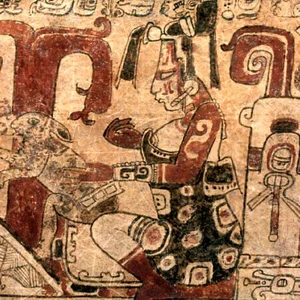
The lunar tables of the Dresden Codex depict the moon goddess — identified as Ix Chel — associated with the 260- and 365-day cycles, with glyphs indicating lunar phases and auspicious periods for fertility and healing rituals.
Several ritual almanacs in the Madrid Codex depict a female figure associated with weaving and the moon, receiving offerings linked to fertility and medicine, interpreted by scholars as Ix Chel.
"They had a goddess they called Ix Chel, to whom women made pilgrimages to Cozumel [...] for they held her to be the goddess of medicine and childbirth."
This prophetic book of the Yucatec Maya mentions lunar deities and the cosmic cycles associated with Ix Chel within the framework of katun prophecies, linking the moon to the collective destinies of Maya communities.
The ritual chants of the h-men (healer-shamans) of Yucatán, passed down orally through the 20th century, invoke Ix Chel as the "Rainbow Lady" and protector of women in labor, preserving a tradition that reaches back to the Classic period.
Key Places
The main sanctuary of Ix Chel and one of the greatest pilgrimage sites in Mesoamerica. Maya women crossed the sea by canoe to leave offerings and consult the goddess's oracles before marriage or childbirth.
This small island, whose Spanish name ('Island of Women') recalls the female statues found there by the conquistadors, was home to a temple dedicated to Ix Chel. Archaeologists uncovered statuettes of the goddess during 19th-century excavations.
A major Maya city of the Postclassic period where astronomical knowledge tied to lunar cycles — embodied by Ix Chel — was woven into the architecture. The Observatory (El Caracol) was used to track the movements of the moon and Venus.
A coastal Maya city of the Postclassic period, Tulum served as a commercial and ceremonial port along the pilgrimage route to Cozumel. Depictions of the diving goddess — sometimes associated with Ix Chel — adorn its temples.
A Terminal Classic Maya city where lunar symbolism is especially prominent in the architecture, most notably in the Governor's Palace, which is oriented toward the rising of Venus. The cult of Ix Chel was integrated into its astronomical practices.
Typical Objects
Ix Chel is the divine patroness of weaving, a foundational art of Maya civilization. Bone spindles and wooden shuttles were left as offerings at her sanctuary on Cozumel by women seeking skill and protection.
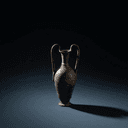
In her destructive aspect, Ix Chel is often depicted in Maya codices holding an overturned vessel from which torrents of water pour — a symbol of the floods and torrential rains she could unleash upon the world.

The goddess is frequently shown wearing a coiled rattlesnake as a headdress, a symbol of her power over water and her connection to the underworld and the cyclical regeneration of life.
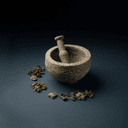
As goddess of medicine, Ix Chel was associated with knowledge of healing plants. Maya healers (ah men) used stone mortars and pestles to prepare remedies, which they placed under her ritual protection.
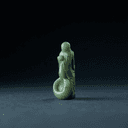
Small female figurines carved from green jade — the sacred stone representing water and life — were used as votive offerings deposited at the Cozumel sanctuary. They symbolized Ix Chel in her lunar, benevolent aspect.

Spondylus shells, harvested from the Caribbean Sea near Cozumel, were a symbol of fertility and water associated with Ix Chel. They served as offerings and ritual trumpets during ceremonies held in her honor.
School Curriculum
Vocabulary & Tags
Key Vocabulary
Tags
Daily Life
Morning
At dawn, the priestesses and ah men (healer-shamans) opened the temple of Ix Chel by fumigating the stone altars with copal incense. They consulted almanacs to determine whether the day was favorable for healings, births, or textile rituals, based on the position of the moon in the tzolk'in calendar.
Afternoon
The afternoon was devoted to consultations with pilgrims who had crossed the sea to seek the goddess's oracle. The priestesses received offerings — jade, spondylus shells, clay figurines — and delivered responses from within the hollow statue of Ix Chel. In the villages, women wove on backstrap looms while invoking the goddess through song.
Evening
At nightfall, when the moon rose over the Caribbean Sea, astronomer-priests observed its phase from the temple terraces. They recorded their observations on amate bark paper screens, feeding the lunar tables used to predict eclipses and plan upcoming ceremonies.
Food
The inhabitants of the coastal cities dedicated to Ix Chel subsisted primarily on corn (tortillas, tamales), black beans, squash, and chili peppers. Fish, crustaceans, and shellfish from the Caribbean Sea rounded out their daily diet. Cacao, reserved for rituals and the elite, was consumed during ceremonies held in honor of the goddess.
Clothing
The priestesses of Ix Chel wore a white huipil of hand-woven cotton, decorated with geometric embroidery inspired by the goddess's sacred motifs. They adorned themselves with green jade necklaces — a stone symbolizing water and fertility — and shells. During ceremonies, they wore feathered headdresses and body paint in Maya blue, the sacred color associated with sacrifice and the divine.
Housing
The priestesses and healers lived in limestone structures near the temple, within the sacred precincts of Cozumel or Uxmal. The common dwellings of worshippers were oval houses of stone and wattle-and-daub with thatched roofs, arranged around a central courtyard where domestic altars held small fired-clay figurines of Ix Chel.
Historical Timeline
Period Vocabulary
Visual Style
Style codex maya classique : figures planes en jade et turquoise, coiffe au serpent, huipil blanc aux motifs géométriques tissés, fond de ciel nocturne ou de temple, palette de pigments naturels mésoaméricains.
Sound Ambience
Ambiance sonore du sanctuaire côtier de Cozumel : mer des Caraïbes, chants rituels féminins, conques marines et percussions cérémonielles, jungle tropicale environnante.
Liens externes & ressources
Références
Œuvres
Tables lunaires du Codex de Dresde
XIIe–XIIIe siècle
Sanctuaire-oracle de Cozumel
~IXe–XVIe siècle
Almanacs de guérison et de fertilité (Codex de Madrid)
XIVe–XVe siècle
Corpus des chants rituels des h-men (tradition orale)
Origines classiques, transmission continue
Iconographie des rouleaux de tisserand (stèles et céramiques)
IIIe–IXe siècle