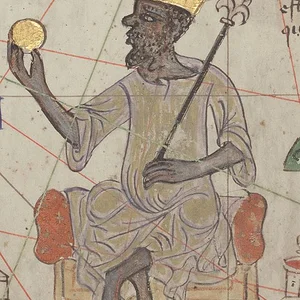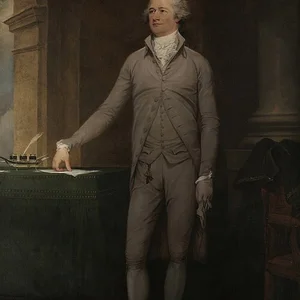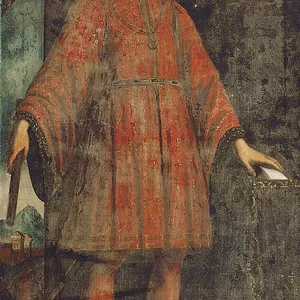

A French merchant and financier of the 15th century, Jacques Cœur became the chief treasurer (*grand argentier*) of King Charles VII. The builder of a vast trading empire reaching toward the Levant, he was one of the wealthiest men in the kingdom before falling from grace.
Jacques Cœur(1395 — 1456)
Jacques Cœur
Royaume de France
6 min read
Frequently asked questions
Famous Quotes
« To valiant hearts nothing is impossible»
Key Facts
- Born around 1400 in Bourges, the son of a furrier and merchant
- Became chief treasurer (*grand argentier*) of King Charles VII around 1438–1439
- Developed a vast maritime trading network with the Levant (Montpellier, Marseille)
- Had the Palais Jacques-Cœur built in Bourges (around 1443–1451)
- Arrested in 1451, condemned and stripped of his possessions; died in 1456 during an expedition against the Turks
Works & Achievements
A sumptuous residence regarded as a masterpiece of civil Gothic architecture, a testament to his immense fortune.
A network of trading posts and ships linking France to the East, the main source of his wealth.
Management of the kingdom's coinage, the starting point of his financial influence.
In charge of the court's finances and purchases, he became one of the most powerful men in France.
Considerable loans to the king that made it possible to drive out the English and hasten the end of the Hundred Years' War.
Anecdotes
Jacques Cœur had his motto carved into his palace in Bourges: “À vaillans cuers riens impossible” (to valiant hearts, nothing is impossible). It was also a play on his name, which can be found sculpted all over the walls along with hearts and scallop shells.
Having become King Charles VII's “grand argentier” (royal treasurer), Jacques Cœur lent enormous sums to finance the reconquest of Normandy from the English in 1449-1450. He was said at the time to be the richest man in the kingdom, wealthier even than many princes.
In 1451, the king suddenly had Jacques Cœur arrested. He was even falsely accused of having poisoned Agnès Sorel, the king's mistress. His possessions were confiscated: his enemies and the king, who owed him a great deal of money, profited from his downfall.
On the façade of his palace in Bourges, Jacques Cœur had false windows sculpted, from which a man and a woman seem to lean out, as if watching the street. This amusing detail can still be seen today.
Once convicted, Jacques Cœur managed to escape from prison and took refuge with the pope in Rome. He died in 1456 on the island of Chios, in the Aegean Sea, while taking part in a naval expedition against the Turks.
Primary Sources
To valiant hearts nothing is impossible.
The chronicler, a contemporary of the events, recounts the immense fortune of Jacques Cœur and the injustice of his downfall, brought about by the envy of his enemies and the king's debts toward him.
The grand treasurer is declared guilty, banished from the kingdom, and his possessions confiscated for the benefit of the royal Treasury.
Hearts and scallop shells form a play on images based on his name: “Jacques Cœur” (Jacques “Heart”).
Key Places
Birthplace of Jacques Cœur, where he had his famous palace built. Bourges was then a capital of the kingdom of Charles VII.
A major trading center where Jacques Cœur set up trading posts linking France to the Mediterranean ports.
The port from which Jacques Cœur's merchant galleys set sail for the Levant.
After his escape, Jacques Cœur took refuge with the pope, who welcomed him and gave him employment.
An Aegean Sea island where Jacques Cœur died in 1456 during a naval expedition against the Turks.
Typical Objects

A gold coin minted under Charles VII. Jacques Cœur, master of the Mint, oversaw the production of this currency that was the source of his power.

A large ship powered by oars and sails, used for trade in the Mediterranean. Jacques Cœur's galleys brought back silk and spices from the Levant.

A book in which the merchant recorded purchases, sales and debts. Essential for managing a vast commercial empire and the king's finances.

A pan balance used to weigh coins, precious metals and goods. An everyday tool of the trader and the money changer.

A precious fabric imported from the East, highly sought after by the nobility. The silk trade made up part of Jacques Cœur's fortune.

Pepper, ginger and cinnamon brought back from the East, sold for their weight in gold in the West. They seasoned the dishes of the wealthiest.

Jacques Cœur's coat of arms, adorned with three hearts and scallop shells, a play on his name. They decorate his palace in Bourges.
School Curriculum
Vocabulary & Tags
Key Vocabulary
Daily Life
Morning
Up early, Jacques Cœur would go over his ledgers and the correspondence arriving from his trading houses in Montpellier or Marseille. He received agents and partners to keep track of the arrival of ships and the state of his business.
Afternoon
A man of the court as much as a merchant, he attended the King's Council or settled the court's payments as grand argentier. He negotiated loans, spice sales, and deals with the great lords of the realm.
Evening
In the evening, he entertained guests in his townhouse or palace, surrounded by tapestries and precious tableware. Business was still conducted there over a refined meal, a mark of his rank.
Food
Rich, his table offered meats, fish, fine wines, and dishes seasoned with costly spices brought from the East. These rare delicacies displayed his fortune as much as they fed his guests.
Clothing
He wore garments of fine cloth and silk, lined with fur and sometimes adorned with his coat of arms. His attire rivaled that of the nobles, something many held against him.
Housing
He lived in vast residences, including the famous Palais Jacques-Cœur in Bourges, with its carved halls warmed by great fireplaces. Comfort, art, and symbols of success all came together there.
Historical Timeline
Period Vocabulary
Liens externes & ressources
Références
Œuvres
Palais Jacques-Cœur à Bourges
vers 1443-1451
Compagnie de commerce avec le Levant
années 1440
Direction des Monnaies royales
à partir de 1436
Charge de grand argentier de Charles VII
1439
Financement de la reconquête de la Normandie
1449-1450