 flip
flipPortable Soup, the Traveller's Glue
Portable Soup, the Traveller's Glue
Why this dish? "Portable soup" featured in Cook's provisions: a meat broth reduced until it became a dry paste hard as horn, which kept for years and was reconstituted with hot water. It was slipped into the packs of detachments sent to explore or survey coasts far from the ship.
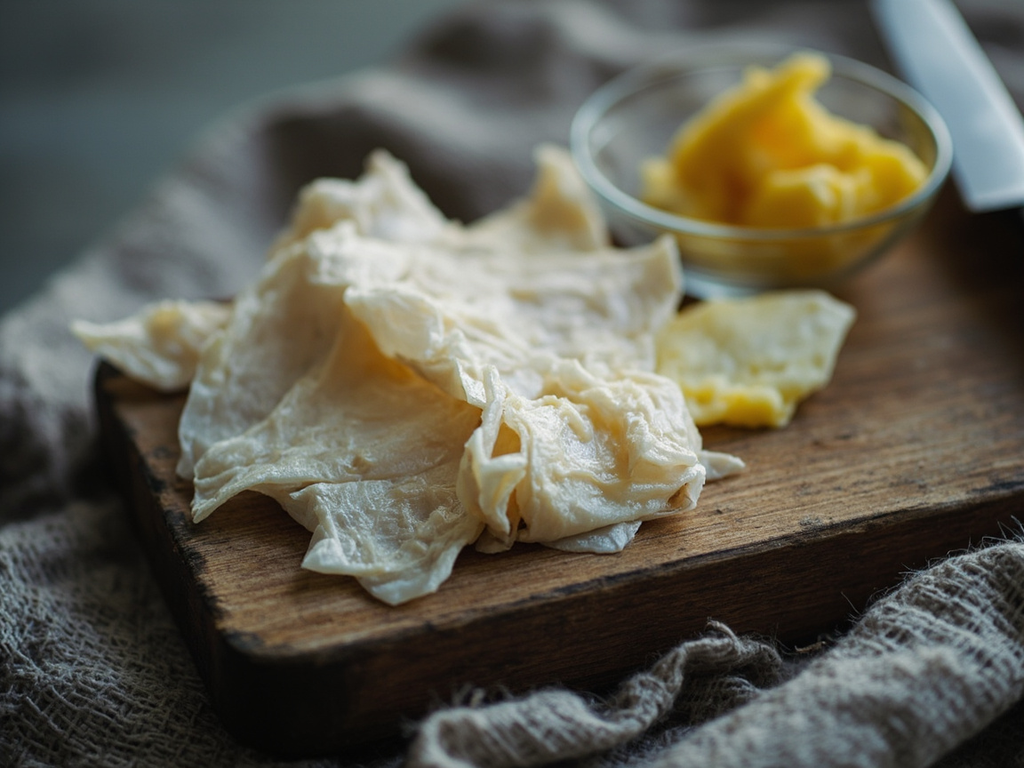
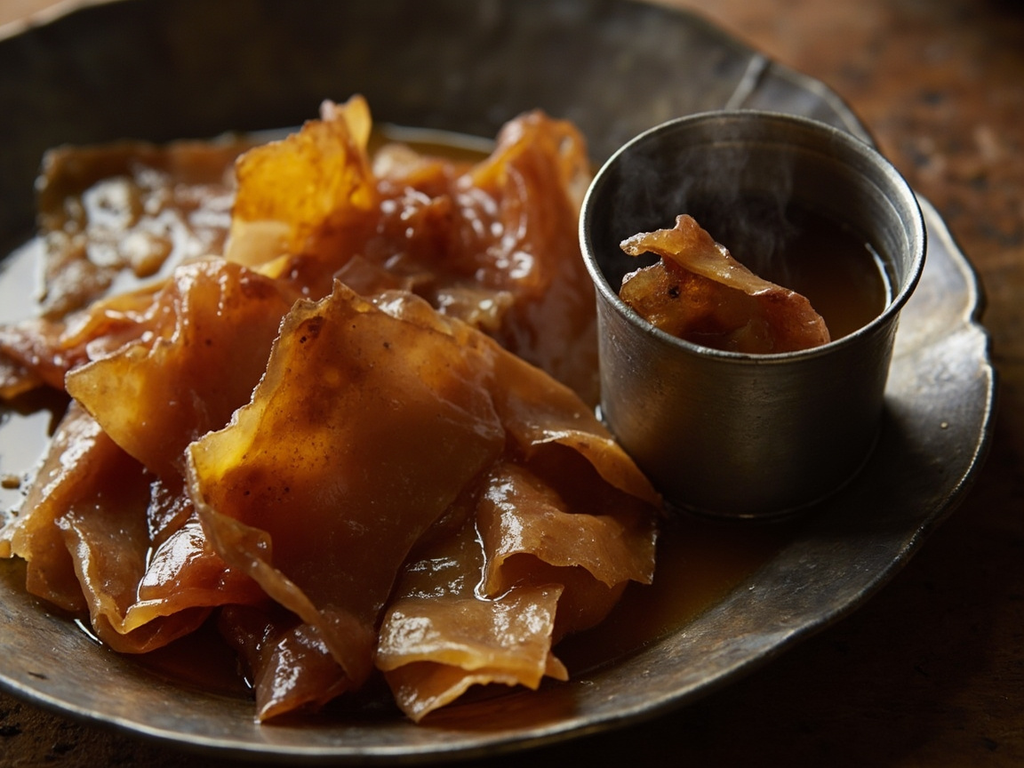
The ancestor of the bouillon cube. You simmer lean meats and feet (rich in gelatine) for hours, strain, then reduce the broth to a jelly that dries into brittle sheets. Light, imputrescible, it gave a hot meal to men on reconnaissance.
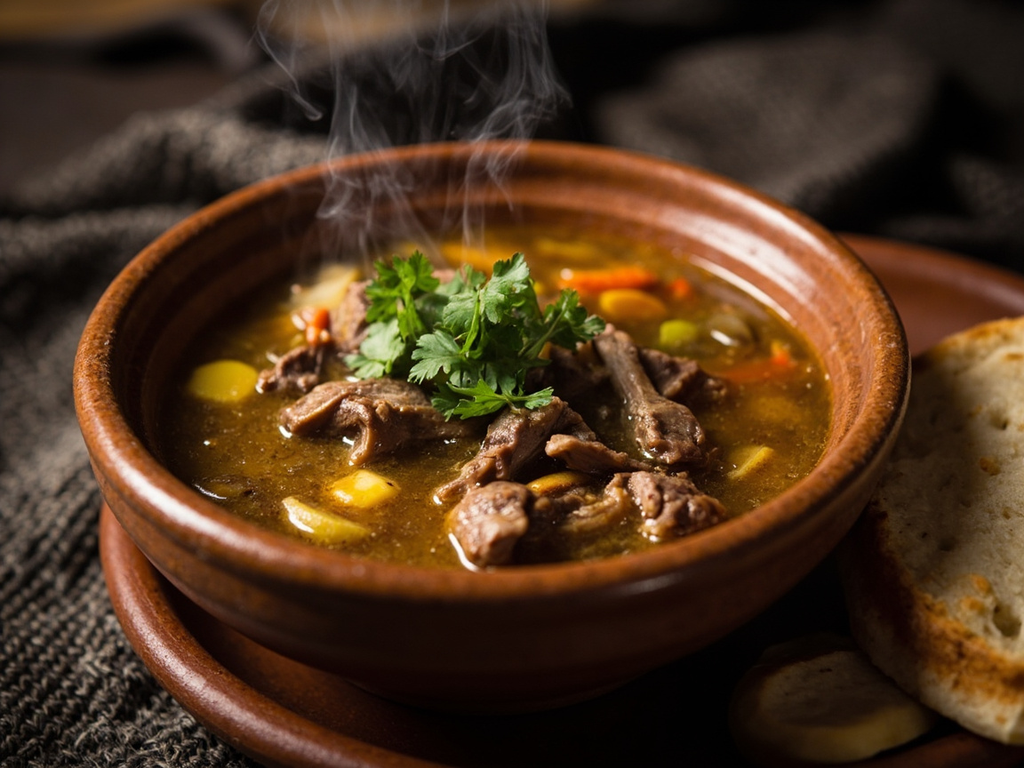
When I sent a boat to survey a bay far from the ship, I could not load my men with barrels. So they carried these sheets of dried broth, hard as horn, which we call portable soup. You need only break a piece into boiling water and there is a hot potage, where there is no galley fire nor fresh provisions. Let it simmer long and reduce it without haste, until it sets like a jelly: it is the patience of the fire that makes good preserve, not haste.
- •Beef or veal shank and feet — in quantity (meat and gelatine)
- •Aromatics (onion, herbs) — as available (flavour)
- •Salt — moderate (seasoning)
Portable Soup, the Traveller's Glue
The ancestor of the bouillon cube. You simmer lean meats and feet (rich in gelatine) for hours, strain, then reduce the broth to a jelly that dries into brittle sheets. Light, imputrescible, it gave a hot meal to men on reconnaissance.
Why this dish? "Portable soup" featured in Cook's provisions: a meat broth reduced until it became a dry paste hard as horn, which kept for years and was reconstituted with hot water. It was slipped into the packs of detachments sent to explore or survey coasts far from the ship.
When I sent a boat to survey a bay far from the ship, I could not load my men with barrels. So they carried these sheets of dried broth, hard as horn, which we call portable soup. You need only break a piece into boiling water and there is a hot potage, where there is no galley fire nor fresh provisions. Let it simmer long and reduce it without haste, until it sets like a jelly: it is the patience of the fire that makes good preserve, not haste.
Ingredients (period version)
- Beef or veal shank and feet — in quantity (meat and gelatine)
- Aromatics (onion, herbs) — as available (flavour)
- Salt — moderate (seasoning)
Ingredients
- Beef shank + one veal foot (or gelatine) — 1 kg + 1 foot (gelatine-rich broth)
- Onion, carrot, bouquet garni — 1 + 1 + 1 (aromatics)
- Salt, pepper — to taste at end of reduction (seasoning)
- Water — 3 L (cooking liquid)
Method
- Place meat, veal foot, and aromatics in a large pot, cover with cold water.
- Bring to a simmer and cook 4 to 5 hours, skimming, without boiling hard.
- Strain finely, discard the meat (or keep for another use), degrease the broth.
- Reduce the broth over low heat for 1 to 2 hours until it reaches a thick syrupy, very gelatinous consistency.
- Pour in a thin layer onto a tray, dry in a very low oven (50-60 °C) for several hours until brittle sheets form.
- Store dry; reconstitute by breaking a piece into a cup of boiling water.
How it was made : Portable soup was supplied in bulk by Navy contractors; it was cut up and stored in boxes or wrapped in paper. Without refrigeration, it was one of the few ways to carry meat in a stable, lightweight form on long exploration marches.
The contemporary twist : Poured into ice cube trays then dried, to obtain real homemade "cubes" to offer in a jar — the artisanal ancestor of the bouillon cube.
Sources : J. C. Beaglehole (ed.), The Journals of Captain James Cook · Janet Macdonald, Feeding Nelson's Navy
James Cook · Charactorium