 flip
flipSunday Boiled Pudding (Figgy Duff)
Sunday Boiled Pudding (Figgy Duff)
Why this dish? On Royal Navy ships, the pudding boiled in a cloth bag — the "duff" — was the treat of feast days and Sundays, eagerly awaited by the entire crew. At Cook's tables, a dried-fruit pudding marked Christmas or the rounding of a cape: a rare sweet comfort amid the daily salt.
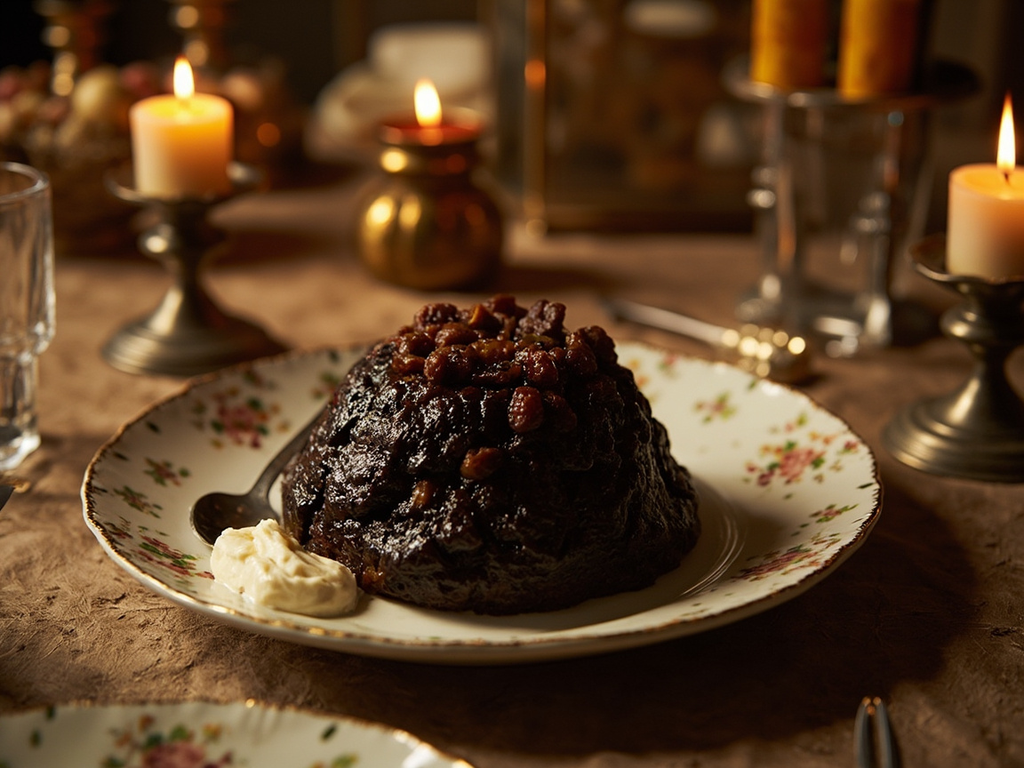
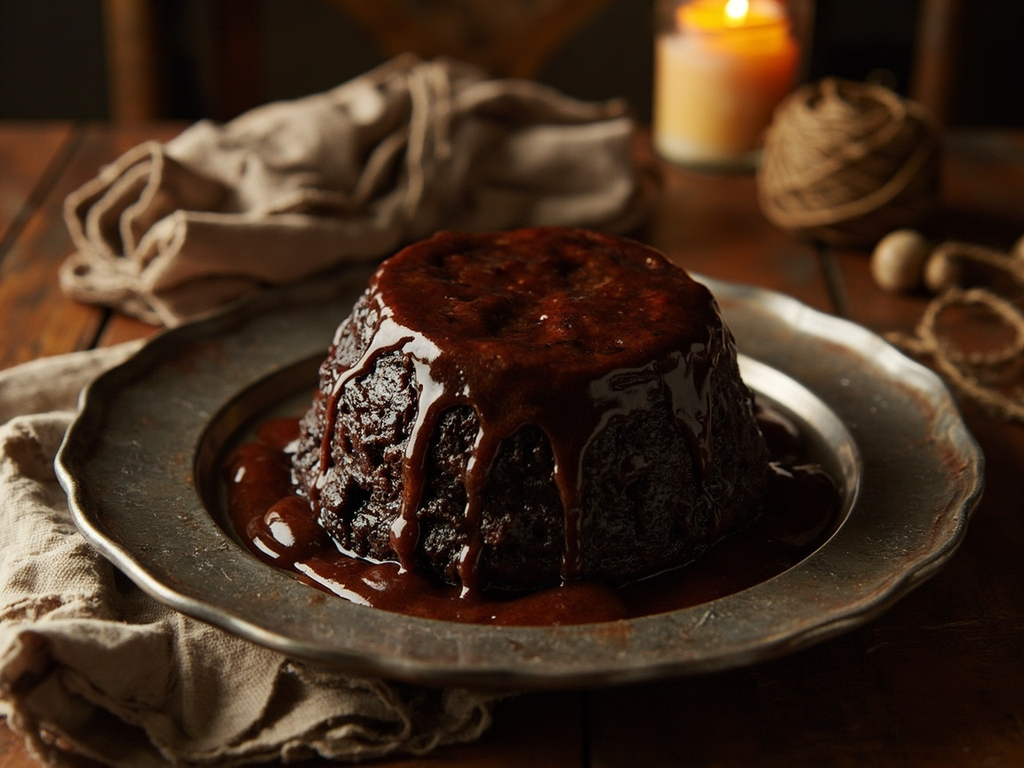
A dough of flour and suet, enriched with raisins and spices, tied in a cloth and boiled for hours in the great cauldron. Dense, sweet, fragrant: the only real treat on a long voyage, and the dish that made sailors' eyes shine.
On a long voyage, a man waits for nothing so much as Sunday, for it is duff day. You bind the flour with suet, throw in the raisins and a little sweet spice, then tie it all tight in a cloth and let it dance for hours in the great copper cauldron. When it comes out, steaming and heavy, and is sliced before the crew, believe me, no doubled cape was ever hailed with such joy. An ounce of sugar, at the end of the world, is worth all the gold of the Admiralty.
- •Wheat flour — by the pound (dough base)
- •Suet (kidney fat) — a good part (fat, tenderness)
- •Raisins / currants — a handful (sweetness and fruit)
- •Sugar or molasses — as provisions allow (sweetness)
- •Sweet spices (nutmeg, cinnamon) — a pinch (festive flavour)
Sunday Boiled Pudding (Figgy Duff)
A dough of flour and suet, enriched with raisins and spices, tied in a cloth and boiled for hours in the great cauldron. Dense, sweet, fragrant: the only real treat on a long voyage, and the dish that made sailors' eyes shine.
Why this dish? On Royal Navy ships, the pudding boiled in a cloth bag — the "duff" — was the treat of feast days and Sundays, eagerly awaited by the entire crew. At Cook's tables, a dried-fruit pudding marked Christmas or the rounding of a cape: a rare sweet comfort amid the daily salt.
On a long voyage, a man waits for nothing so much as Sunday, for it is duff day. You bind the flour with suet, throw in the raisins and a little sweet spice, then tie it all tight in a cloth and let it dance for hours in the great copper cauldron. When it comes out, steaming and heavy, and is sliced before the crew, believe me, no doubled cape was ever hailed with such joy. An ounce of sugar, at the end of the world, is worth all the gold of the Admiralty.
Ingredients (period version)
- Wheat flour — by the pound (dough base)
- Suet (kidney fat) — a good part (fat, tenderness)
- Raisins / currants — a handful (sweetness and fruit)
- Sugar or molasses — as provisions allow (sweetness)
- Sweet spices (nutmeg, cinnamon) — a pinch (festive flavour)
Ingredients
- Flour — 250 g (base)
- Grated beef suet (or very cold butter, grated) — 120 g (tenderness)
- Raisins and currants — 150 g (fruit)
- Brown sugar — 80 g (sweetness)
- Nutmeg and cinnamon — 1/2 tsp each (spices)
- Milk or water — about 150 ml (dough binder)
- Clean cloth + string — 1 (bag cooking)
Method
- Mix flour, grated suet, sugar, dried fruit, and spices.
- Add the milk little by little to form a soft but firm dough.
- Generously flour a clean cloth, place the dough in a ball and tie it, leaving some room for expansion.
- Plunge the bundle into a large pot of boiling water and cook at a simmer for 2 hours (keep it submerged).
- Drain, carefully open the cloth, unmould the steaming pudding.
- Slice and serve hot, drizzled with a little molasses or cream.
How it was made : The "pudding bag" was a standard tool on board: the dough was cooked directly in the boiling water of the cauldron, without a mould. The suet (fat around the beef kidneys) melted slowly and gave the characteristic texture. Dried fruit, a precious commodity embarked at the start of the campaign, was reserved for special occasions.
The contemporary twist : Unmoulded as a dome, flambéed with a dash of rum and topped with a small paper sail — a "cape-doubled day" edition.
Sources : Janet Macdonald, Feeding Nelson's Navy · J. C. Drummond & A. Wilbraham, The Englishman's Food
James Cook · Charactorium