 flip
flipChristmas Plum Pottage
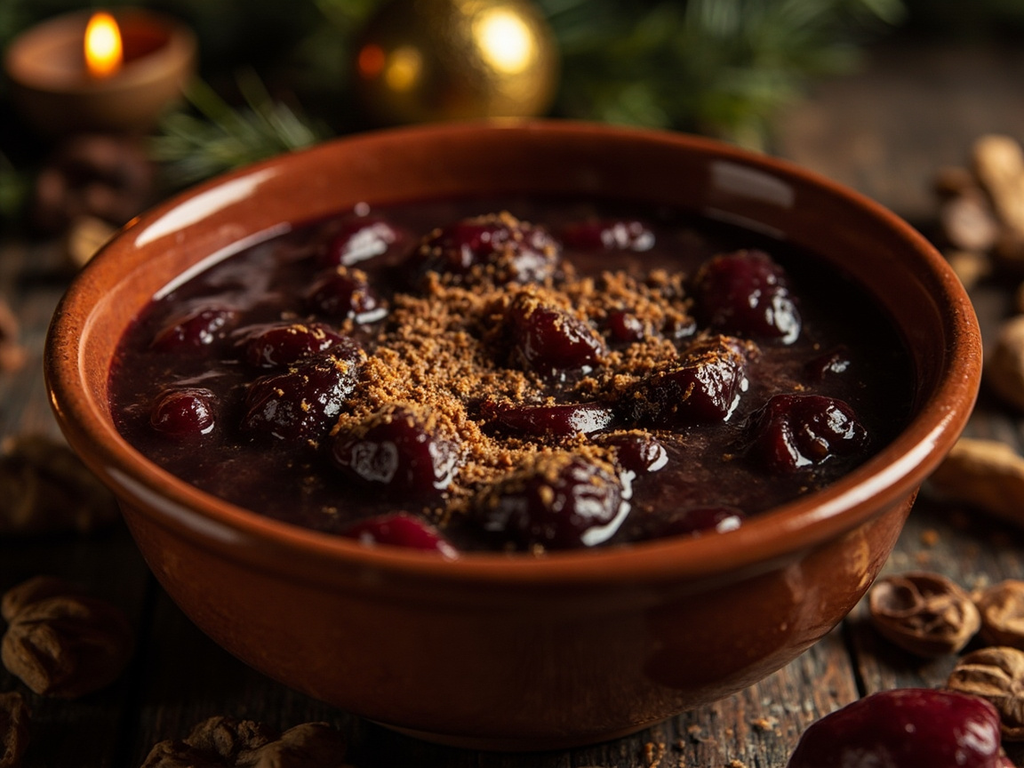
Christmas Plum Pottage
Why this dish? Newton was born on Christmas Day 1642 (Julian calendar then in use in England). 'Plum pottage', the spiced ancestor of Christmas pudding, was THE festive dish of the Nativity on English tables: one can well imagine the child of Woolsthorpe and later the great man tasting it each year on that day, which was both Christmas and his birthday.
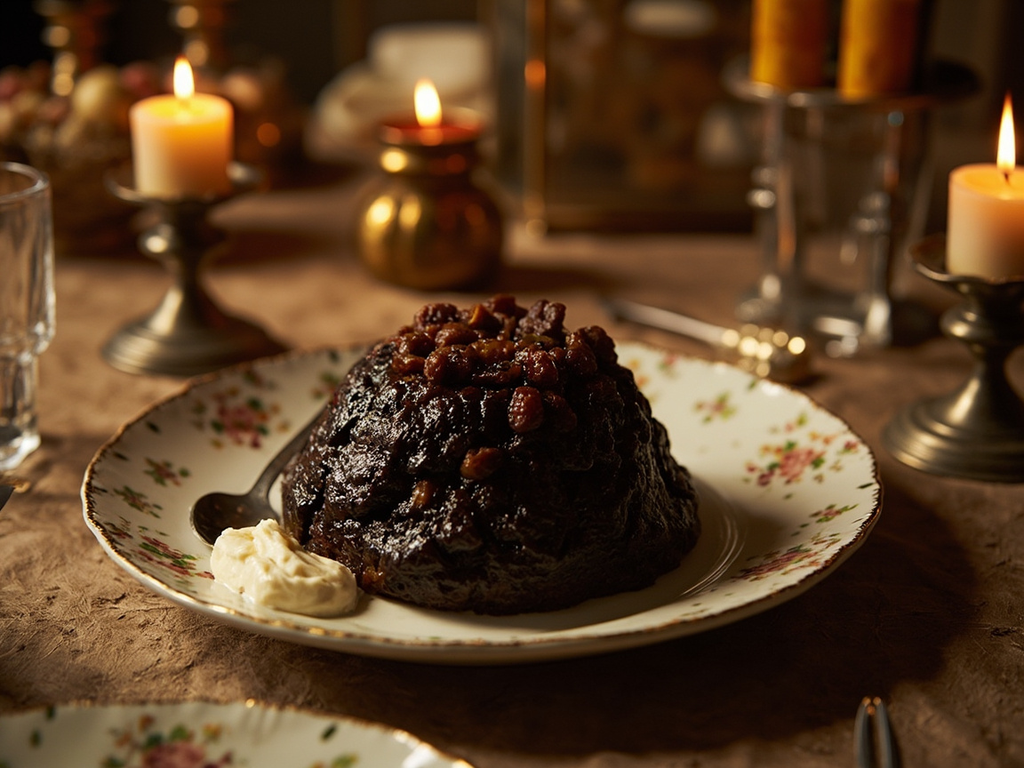
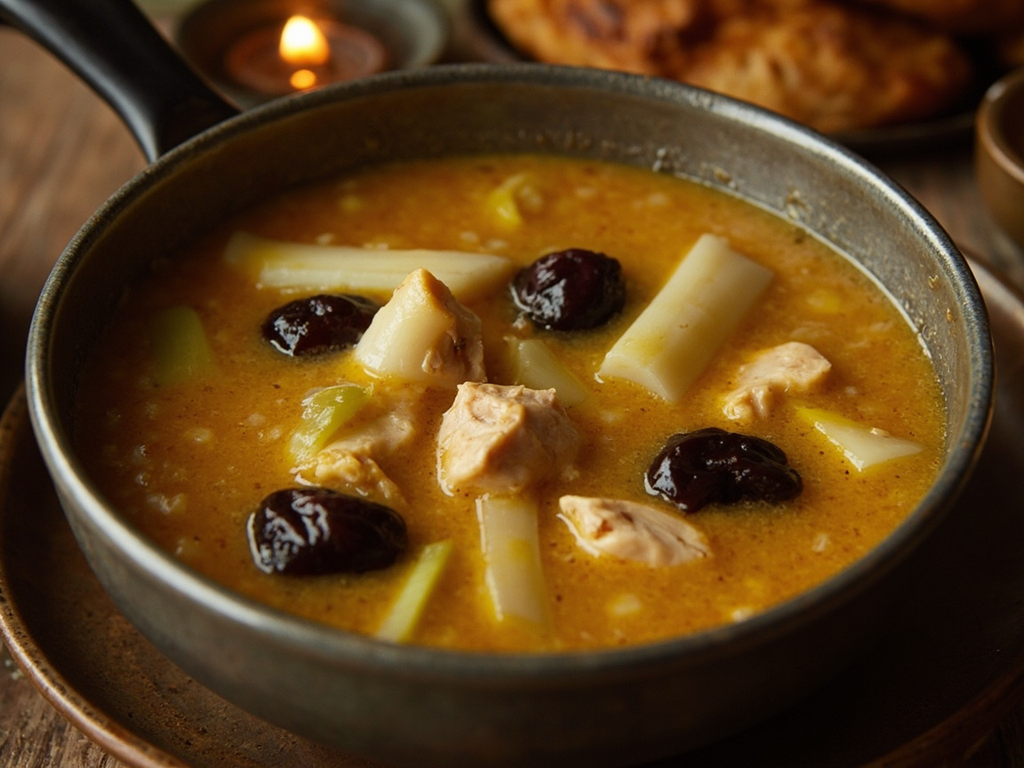
A festive pottage, half-broth half-compote, where meat juice meets dried fruits, sweet wine, and a shower of Eastern spices. Thick, brown, fragrant: the Christmas luxury that the English served long before pudding replaced it.
I am told I was born on the day of the Nativity, and each year my mother would have this pottage set upon the table at Woolsthorpe. It must be kept long on the fire, until the beef broth and the currants become one dark thickness, then pour in a glass of Spanish wine and grate the nutmeg with a liberal hand. I was not a glutton, you know, but this dish I willingly suffered, for it smelled of childhood and home. Eat little and hot: it will satisfy a regiment.
- •Good beef broth — full pot (base of the pottage)
- •Stale breadcrumbs — as needed (thickener)
- •Currants and raisins — generous handful (fruity sweetness)
- •Prunes — a dozen (the 'plums' that give the name)
- •Spanish wine (sack) — a large glass (flavour and warmth)
- •Nutmeg, mace, cinnamon, ginger, clove — to taste (spice bouquet)
- •Sugar — to taste (sweetness)
Christmas Plum Pottage
A festive pottage, half-broth half-compote, where meat juice meets dried fruits, sweet wine, and a shower of Eastern spices. Thick, brown, fragrant: the Christmas luxury that the English served long before pudding replaced it.
Why this dish? Newton was born on Christmas Day 1642 (Julian calendar then in use in England). 'Plum pottage', the spiced ancestor of Christmas pudding, was THE festive dish of the Nativity on English tables: one can well imagine the child of Woolsthorpe and later the great man tasting it each year on that day, which was both Christmas and his birthday.
I am told I was born on the day of the Nativity, and each year my mother would have this pottage set upon the table at Woolsthorpe. It must be kept long on the fire, until the beef broth and the currants become one dark thickness, then pour in a glass of Spanish wine and grate the nutmeg with a liberal hand. I was not a glutton, you know, but this dish I willingly suffered, for it smelled of childhood and home. Eat little and hot: it will satisfy a regiment.
Ingredients (period version)
- Good beef broth — full pot (base of the pottage)
- Stale breadcrumbs — as needed (thickener)
- Currants and raisins — generous handful (fruity sweetness)
- Prunes — a dozen (the 'plums' that give the name)
- Spanish wine (sack) — a large glass (flavour and warmth)
- Nutmeg, mace, cinnamon, ginger, clove — to taste (spice bouquet)
- Sugar — to taste (sweetness)
Ingredients
- Beef broth — 1 litre (base)
- Breadcrumbs or stale bread — 100 g (thickener)
- Currants + raisins — 150 g total (dried fruits)
- Pitted prunes — 150 g (soft fruits)
- Sherry (or sweet wine like Madeira) — 10 cl (flavour)
- Nutmeg, cinnamon, ground ginger, mace, 2 cloves — 1/2 tsp each (spices)
- Sugar — 2 to 3 tbsp (sweetness)
- Juice and zest of 1 lemon — 1 (brightness (touch of acidity))
Method
- Heat the beef broth and add the breadcrumbs so they swell and thicken it.
- Add raisins, chopped prunes, sugar, spices, and lemon zest; simmer for 30 to 40 minutes over low heat.
- Pour in the sherry and lemon juice at the end of cooking, stir, and let simmer for another 5 minutes.
- Taste: the pottage should be thick, dark, sweet-spiced with a slight tang. Adjust sugar or spices.
- Serve hot in bowls, with a final grating of nutmeg on top.
How it was made : Plum pottage graced English Christmas tables in the 17th-18th centuries. It was made from the broth of feast meats, enriched with dried fruits, bread, wine, and spices. Over the 18th century, it became thicker and was boiled in a cloth: thus gradually emerged the 'Christmas pudding' we know today.
The contemporary twist : Serve it in a small warm cocotte with a spoonful of unsweetened whipped cream: a Christmas pre-dessert that tells three centuries of history in one bite.
Isaac Newton · Charactorium