 flip
flipHoliday Dried-Fruit Pudding
Holiday Dried-Fruit Pudding
Why this dish? Dried-fruit and spice pudding was the festive dessert par excellence of British tables, from modest homes to great households, during holidays and gatherings. For a woman of modest means like Mary, it was the occasional luxury of special occasions — a tasty contrast to her daily porridge.
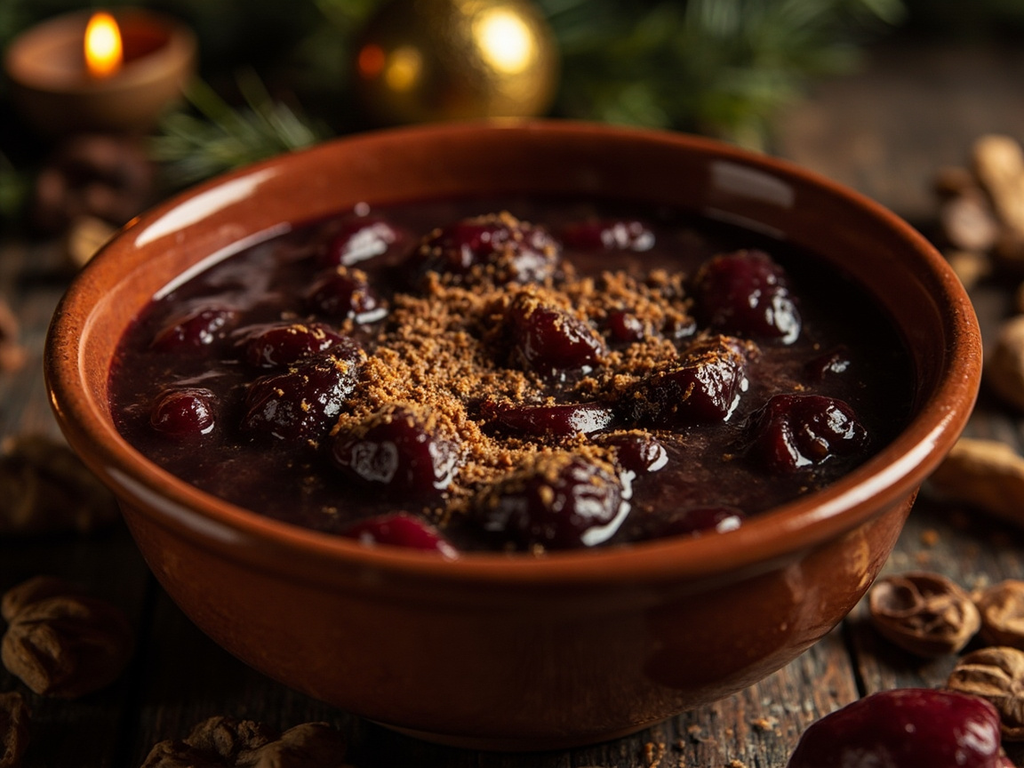
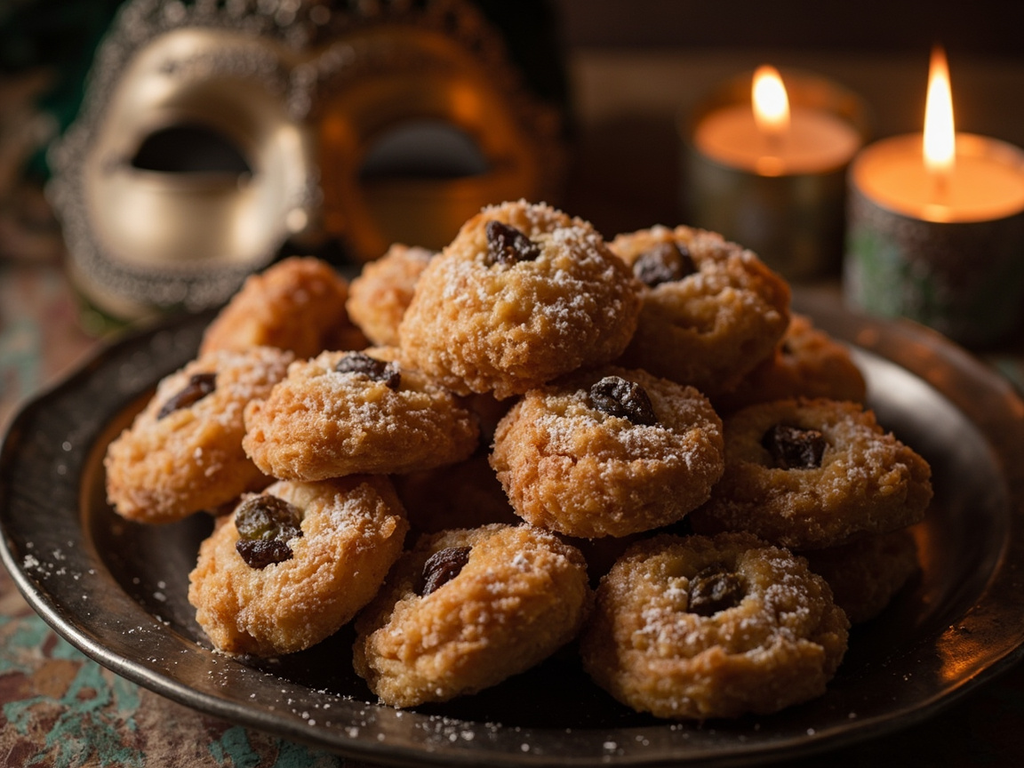
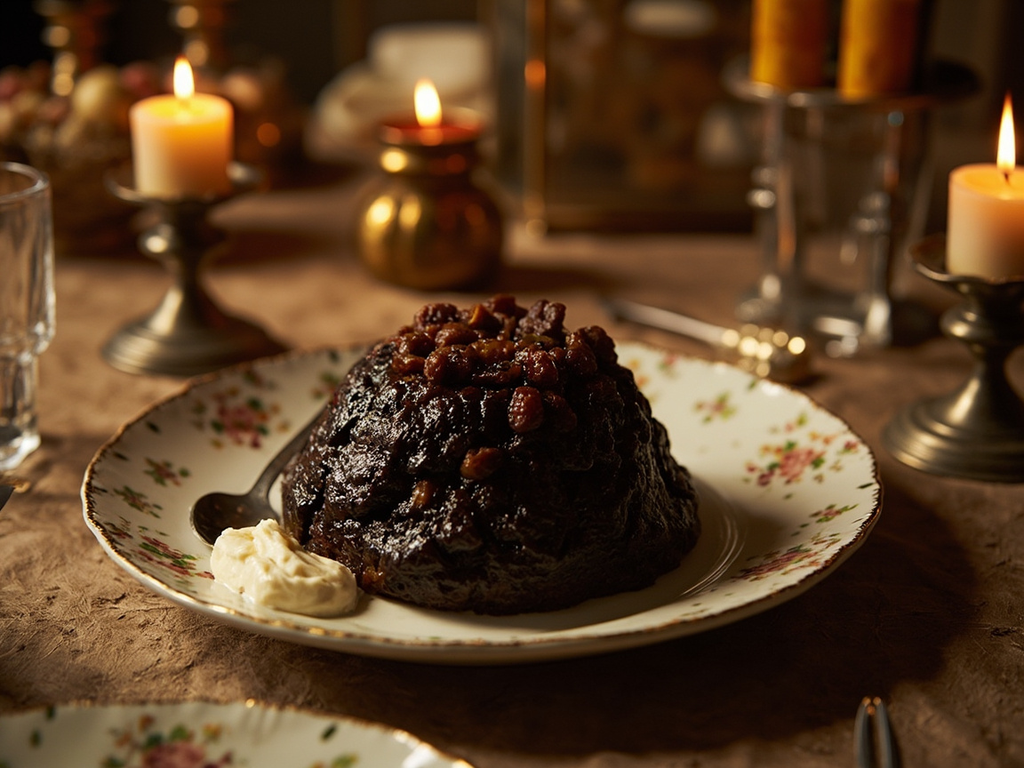
Steamed pudding in a cloth or mould, rich with beef suet, raisins, breadcrumbs and flavoured with nutmeg. Dense, moist, generously spiced: the indulgence of days that count.
For great days only, I grant you — there is no need to spoil oneself too often. One binds the chopped suet, the breadcrumbs and the Corinth raisins, grates the nutmeg with measure, and encloses it all in a floured cloth to boil for hours. The whole house then fills with a fragrance that rejoices even the most severe spirits. Serve it steaming: a little sweetness, on occasion, never corrupted a reasonable soul.
- •Chopped beef suet — a good portion (softness and binding)
- •Stale breadcrumbs — two handfuls (structure)
- •Wheat flour — a handful (structure)
- •Raisins and currants — in abundance (sweetness)
- •Cane sugar — to taste (sweetness)
- •Eggs — two or three (binding)
- •Grated nutmeg and mace — a pinch of each (flavour)
- •Brandy — a small glass (flavour, preservation)
Holiday Dried-Fruit Pudding
Steamed pudding in a cloth or mould, rich with beef suet, raisins, breadcrumbs and flavoured with nutmeg. Dense, moist, generously spiced: the indulgence of days that count.
Why this dish? Dried-fruit and spice pudding was the festive dessert par excellence of British tables, from modest homes to great households, during holidays and gatherings. For a woman of modest means like Mary, it was the occasional luxury of special occasions — a tasty contrast to her daily porridge.
For great days only, I grant you — there is no need to spoil oneself too often. One binds the chopped suet, the breadcrumbs and the Corinth raisins, grates the nutmeg with measure, and encloses it all in a floured cloth to boil for hours. The whole house then fills with a fragrance that rejoices even the most severe spirits. Serve it steaming: a little sweetness, on occasion, never corrupted a reasonable soul.
Ingredients (period version)
- Chopped beef suet — a good portion (softness and binding)
- Stale breadcrumbs — two handfuls (structure)
- Wheat flour — a handful (structure)
- Raisins and currants — in abundance (sweetness)
- Cane sugar — to taste (sweetness)
- Eggs — two or three (binding)
- Grated nutmeg and mace — a pinch of each (flavour)
- Brandy — a small glass (flavour, preservation)
Ingredients
- Beef suet (or cold grated butter) — 100 g (softness)
- Breadcrumbs — 120 g (structure)
- Flour — 60 g (structure)
- Raisins + currants — 200 g total (sweetness)
- Brown sugar — 80 g (sweetness)
- Eggs — 2 (binding)
- Grated nutmeg — ½ tsp (flavour)
- Mace or cinnamon — 1 pinch (flavour)
- Brandy — 2 tbsp (flavour)
- Milk — a little, to adjust (moisture)
Method
- Mix the breadcrumbs, flour, grated suet, sugar and spices in a large bowl.
- Stir in the dried fruit, then the beaten eggs and brandy; add a splash of milk to obtain a soft dough.
- Butter a pudding mould (or a floured cloth), pour in the batter without packing, cover and seal tightly.
- Steam (covered bain-marie) for 2–3 hours, checking the water level.
- Unmould hot and serve in generous slices, optionally flambéed with a dash of brandy.
How it was made : The pudding boiled in a cloth (pudding cloth) is a 17th-century British invention that freed the pudding from animal stomachs. It was boiled for hours in a large cauldron, often alongside the meat. Spices (nutmeg, mace, cinnamon), imported at great expense, signalled celebration; Mediterranean dried fruit advantageously replaced fresh fruit out of season.
The contemporary twist : Unmould it as a dome, spoon over a splash of cream and top with a holly leaf — a nod to the direct ancestor of Christmas pudding.
Sources : Hannah Glasse, The Art of Cookery Made Plain and Easy (1747) · C. Anne Wilson, Food and Drink in Britain (1973)
Mary Wollstonecraft · Charactorium