 flip
flipCock-a-Leekie: Chicken and Leek Soup with Prunes
Cock-a-Leekie: Chicken and Leek Soup with Prunes
Why this dish? A member of Edinburgh's learned clubs, Smith shared dinners where the broth always opened the meal. Cock-a-leekie, blending chicken, leek, and sweet prune, was the reception soup par excellence of Scottish Enlightenment high society.
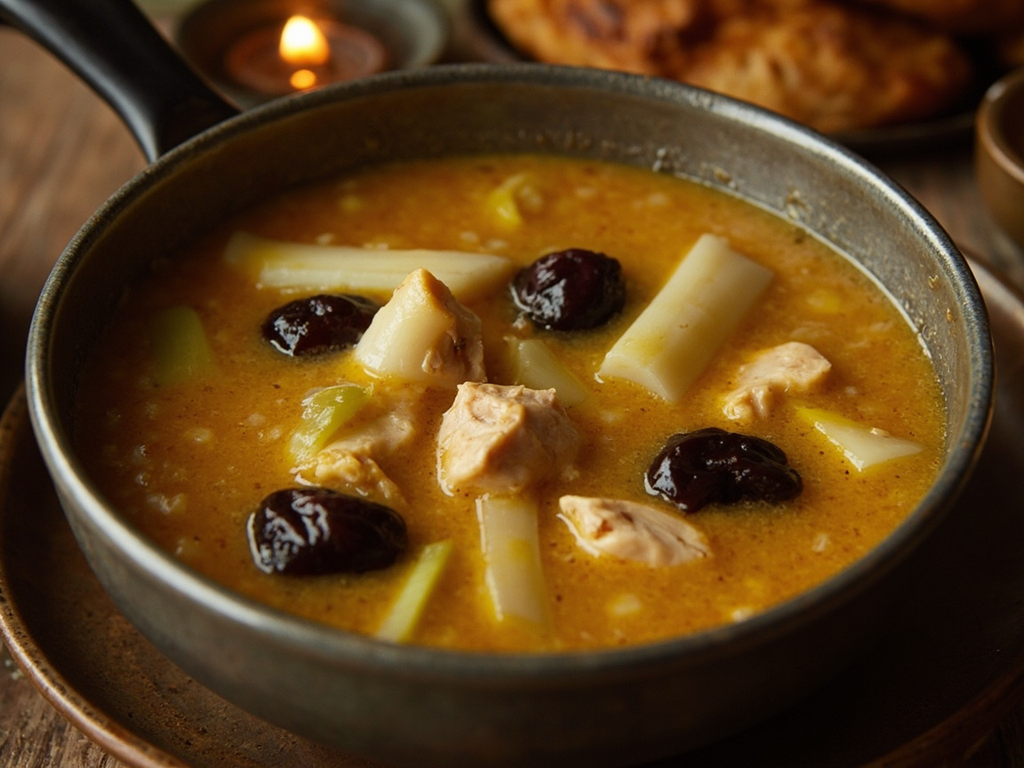
A long, golden broth of old hen simmered with plenty of leeks, scented with barley and sweetened by prunes that melt and discreetly sweeten the soup. A generous foundation dish that serves as both a hearty starter and comfort food.
Here is the soup served when the company is good and the conversation long. An old hen, my friends, is worth more than a young one for the broth: she has lived, and her essence is richer — there is no good thing without a little patience. Throw in the leeks by the handful, then a few prunes that dissolve and give the broth a sweetness one cannot name. Let it simmer all afternoon while you debate morality and commerce; the soup asks only to be forgotten a little.
- •Old hen — one, whole (broth base)
- •Leeks — a large bunch (main vegetable)
- •Pearl barley — a handful (thickener)
- •Prunes — a dozen (sweet note)
- •Salt and peppercorns — to taste (seasoning)
Cock-a-Leekie: Chicken and Leek Soup with Prunes
A long, golden broth of old hen simmered with plenty of leeks, scented with barley and sweetened by prunes that melt and discreetly sweeten the soup. A generous foundation dish that serves as both a hearty starter and comfort food.
Why this dish? A member of Edinburgh's learned clubs, Smith shared dinners where the broth always opened the meal. Cock-a-leekie, blending chicken, leek, and sweet prune, was the reception soup par excellence of Scottish Enlightenment high society.
Here is the soup served when the company is good and the conversation long. An old hen, my friends, is worth more than a young one for the broth: she has lived, and her essence is richer — there is no good thing without a little patience. Throw in the leeks by the handful, then a few prunes that dissolve and give the broth a sweetness one cannot name. Let it simmer all afternoon while you debate morality and commerce; the soup asks only to be forgotten a little.
Ingredients (period version)
- Old hen — one, whole (broth base)
- Leeks — a large bunch (main vegetable)
- Pearl barley — a handful (thickener)
- Prunes — a dozen (sweet note)
- Salt and peppercorns — to taste (seasoning)
Ingredients
- Stewing hen (or chicken thighs) — 1.2 kg (broth base)
- Leeks — 4 large (main vegetable)
- Pearl barley — 60 g (thickener)
- Pitted prunes — 10 to 12 (sweet note)
- Salt, black pepper — to taste (seasoning)
Method
- Place the hen in a large pot, cover with cold water, bring to a simmer and skim.
- Add the pearl barley, sliced white parts of the leeks, and peppercorns. Cover and simmer for 1.5 to 2 hours.
- Remove the hen, bone the meat, and return some of the meat to the broth.
- Add the green parts of the leeks and the prunes; continue cooking for 20 to 30 minutes until the prunes soften and sweeten the soup.
- Adjust salt, serve very hot in deep bowls.
How it was made : The name appears in 18th-century Scottish literature. Prunes, imported and prized by the wealthy classes, were a marker of fine dining; some cooks left them whole in the bowl, others removed them before serving — the debate continues.
The contemporary twist : Garnish with a few reserved whole prunes on top and a chiffonade of raw leek greens for colour contrast and an intact sweet note.
Sources : F. Marian McNeill, The Scots Kitchen (1929) · Meg Dods, The Cook and Housewife's Manual (1826)
Adam Smith · Charactorium