 flip
flipNegus (spiced mulled wine for balls)
Negus (spiced mulled wine for balls)
Why this dish? In Mansfield Park, after the ball, the heroine Fanny Price goes up to bed "to dream of the evening, while her uncle saw that she drank her glass of negus." This comforting hot drink was served at balls to revive the dancers and calm the nerves before rest.
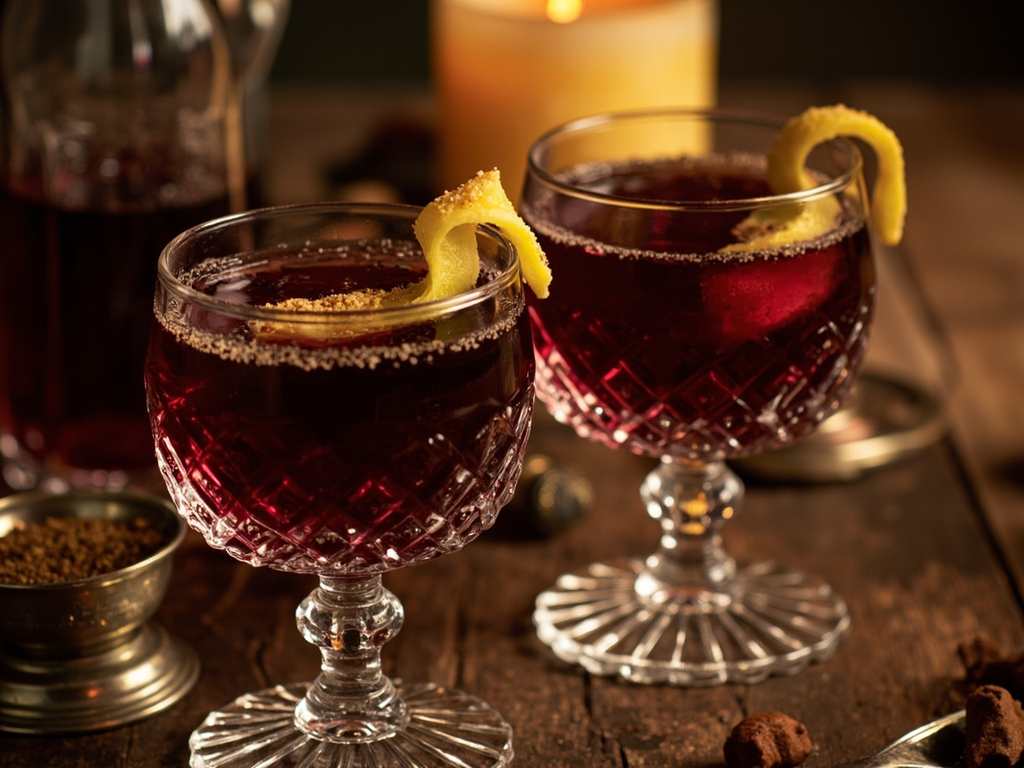
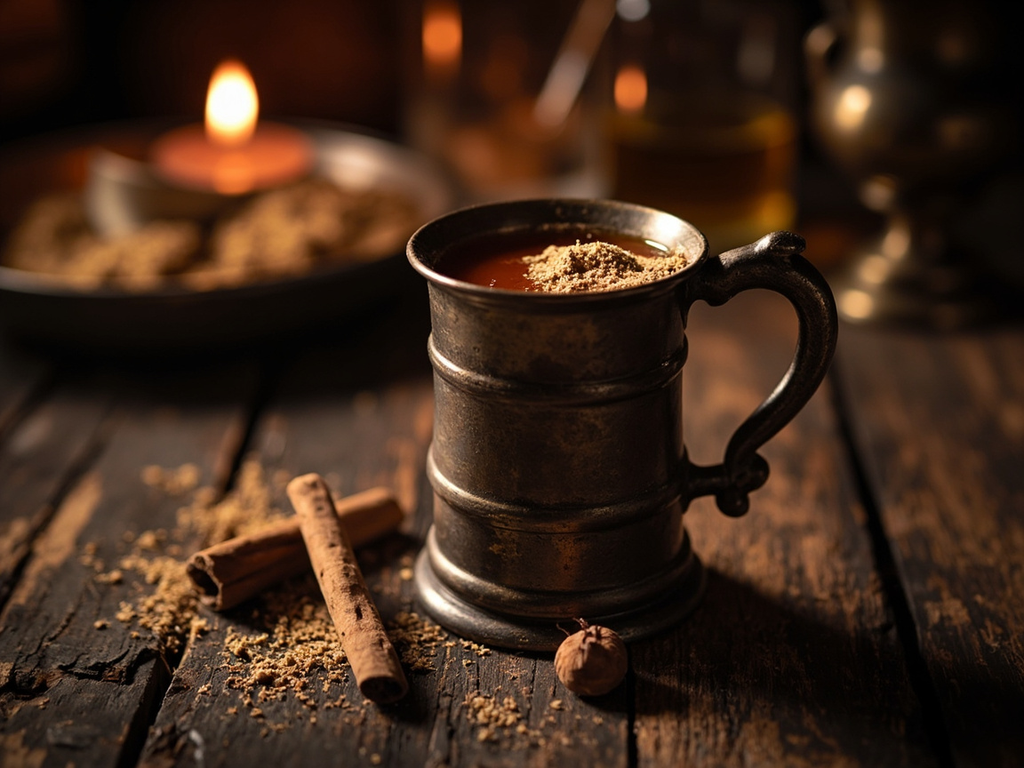
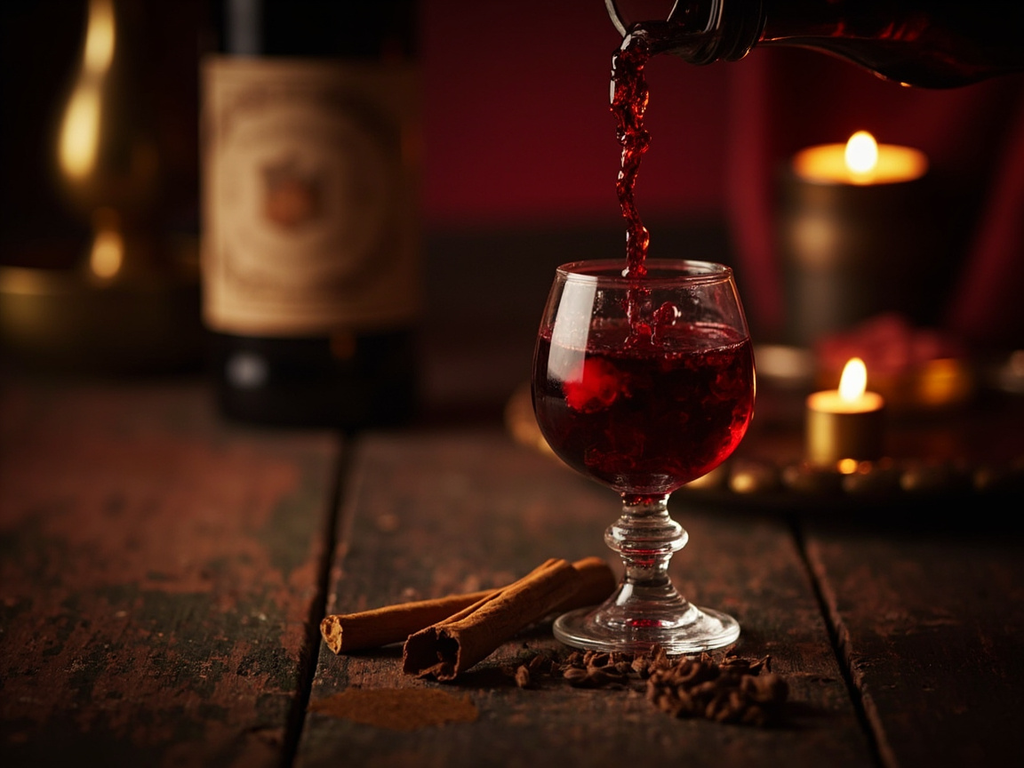
A sweet, fragrant mulled wine: port sweetened with sugar, lifted with lemon juice and zest, perfumed with nutmeg, lengthened with boiling water. The late-ball comfort cherished in Jane Austen's world.
After an evening of dancing, nothing beats a glass of negus to recover from the emotions and exchanged glances. You pour the port over the sugar, squeeze a fine lemon, grate a little nutmeg on top, then boiling water — not too much, otherwise it becomes a mere tisane without character. You drink it hot, in small sips, and go to bed with your head still full of the festivities.
- •Port (or sherry) — a pint (base)
- •Loaf sugar — to taste (sweetness)
- •Lemon (juice and zest) — one (acidity and fragrance)
- •Grated nutmeg — a pinch (spice)
- •Boiling water — twice the volume of wine (dilution)
Negus (spiced mulled wine for balls)
A sweet, fragrant mulled wine: port sweetened with sugar, lifted with lemon juice and zest, perfumed with nutmeg, lengthened with boiling water. The late-ball comfort cherished in Jane Austen's world.
Why this dish? In Mansfield Park, after the ball, the heroine Fanny Price goes up to bed "to dream of the evening, while her uncle saw that she drank her glass of negus." This comforting hot drink was served at balls to revive the dancers and calm the nerves before rest.
After an evening of dancing, nothing beats a glass of negus to recover from the emotions and exchanged glances. You pour the port over the sugar, squeeze a fine lemon, grate a little nutmeg on top, then boiling water — not too much, otherwise it becomes a mere tisane without character. You drink it hot, in small sips, and go to bed with your head still full of the festivities.
Ingredients (period version)
- Port (or sherry) — a pint (base)
- Loaf sugar — to taste (sweetness)
- Lemon (juice and zest) — one (acidity and fragrance)
- Grated nutmeg — a pinch (spice)
- Boiling water — twice the volume of wine (dilution)
Ingredients
- Red port (or fruity red wine) — 500 ml (base)
- Sugar — 4 to 6 tablespoons (sweetness)
- Unwaxed lemon — 1 (juice + zest) (acidity and fragrance)
- Freshly grated nutmeg — 1 pinch (spice)
- Boiling water — 1 L (dilution)
Method
- Pour the port into a large heatproof jug, add the sugar and lemon zest.
- Squeeze the lemon juice over the top and grate a little nutmeg.
- Pour in the boiling water, stir until the sugar is completely dissolved.
- Taste and adjust sugar or lemon, then serve hot in small glasses or cups.
- For a non-alcoholic version: replace the port with hot red grape juice and a dash of light balsamic vinegar.
How it was made : Negus takes its name from Colonel Francis Negus, who supposedly popularized it in the early 18th century. Served warm and sweetened, it was considered suitable for ladies and even children at balls, as the boiling water tempered its strength.
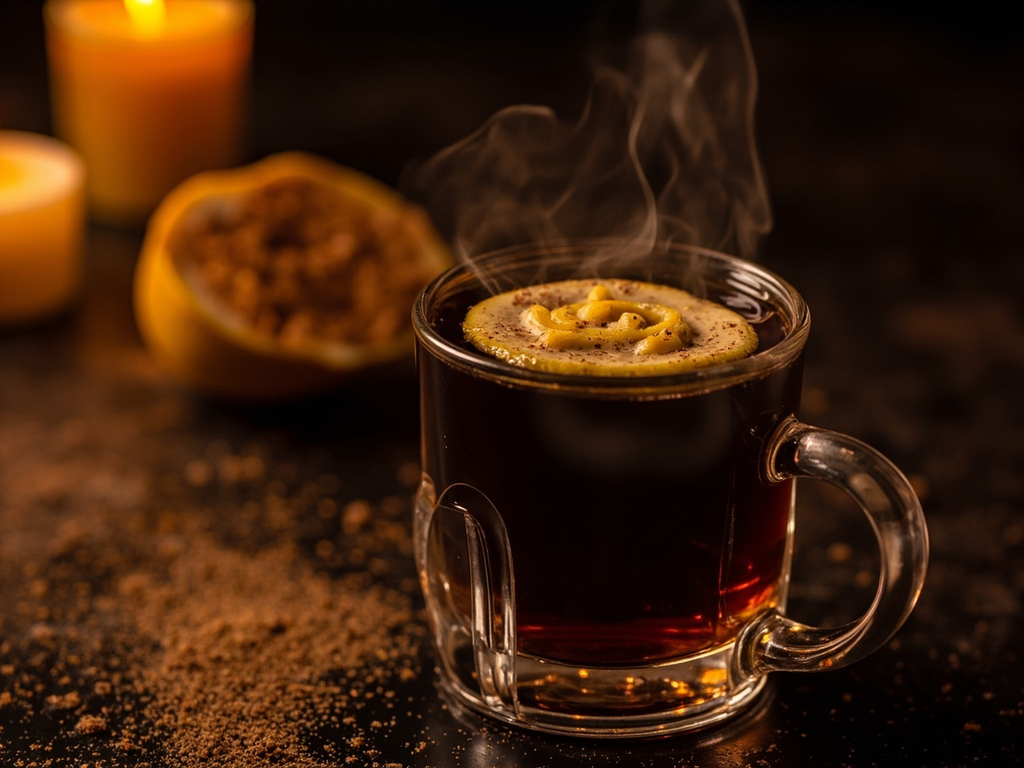
The contemporary twist : Serve it in a "Mansfield Park ball" version in mismatched small tea cups, with a long spiral of lemon zest.
Sources : Jane Austen, Mansfield Park (1814) · Maria Eliza Rundell, A New System of Domestic Cookery (1806)
Jane Austen · Charactorium