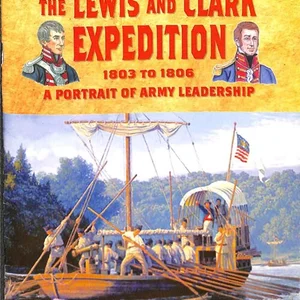

Son of Sacagawea and Toussaint Charbonneau, Jean-Baptiste Charbonneau was born in 1805 during the Lewis and Clark Expedition. He became a guide, trapper, and scout in the American West, roaming the Great Plains and the Rockies for decades.
Jean-Baptiste Charbonneau(1805 — 1866)
Jean-Baptiste Charbonneau
États-Unis
10 min read
Frequently asked questions
Key Facts
- Born on February 11, 1805, at Fort Mandan (present-day North Dakota) during the Lewis and Clark Expedition
- Son of Sacagawea (Shoshone guide) and Canadian trapper Toussaint Charbonneau
- Partly raised by William Clark, who provided him with an education, including time in Europe with Prince Paul of Württemberg (1823–1829)
- Worked as a guide, trapper, and scout in the Rockies and the Great Plains for several decades
- Died in 1866 in Oregon during the Gold Rush
Works & Achievements
Jean-Baptiste was hired as a guide to accompany the Mormon Battalion from Santa Fe to San Diego. His expertise in the territories of the American Southwest and his ability to communicate with local populations were decisive factors in the success of this journey of more than 2,000 kilometers.
Appointed *alcalde* by American military authorities, Jean-Baptiste managed the administrative, judicial, and economic affairs of Mission San Luis Rey in California. This role demonstrates the trust the U.S. Army placed in him and his ability to hold official responsibilities.
Jean-Baptiste regularly served as guide and interpreter for American officers exploring the territories of New Mexico, Arizona, and California. His mastery of the terrain, indigenous languages, and Spanish made him an indispensable asset.
After returning from Europe, Jean-Baptiste threw himself fully into the fur trade, ranging across the Rockies alongside celebrated mountain men such as Jim Bridger and Kit Carson. His wide network of contacts and command of mountain environments made him one of the finest trappers of his generation.
An invitation from Prince Paul Wilhelm of Württemberg gave Jean-Baptiste access to a European education rare for a mixed-heritage American of his era. He learned German, traveled across Europe, and became a living example of the meeting of two worlds — an encounter the prince documented in his travel memoirs.
Anecdotes
Jean-Baptiste Charbonneau was born on February 11, 1805, at Fort Mandan, in the heart of the Lewis and Clark Expedition, when his mother Sacagawea was only about fifteen years old. William Clark immediately became attached to the infant, affectionately nicknaming him “Pomp” or “Pompy” — a Shoshone diminutive meaning “first-born.” Captain Clark would write in his journal that the baby was “the most beautiful little child” he had ever seen.
Around 1823, Jean-Baptiste, then eighteen years old, met Prince Paul Wilhelm of Württemberg during an exploratory journey through North America. The prince, fascinated by the young multilingual man of mixed heritage, invited him to follow him to Europe. Jean-Baptiste thus spent six years in Germany, learning to speak German fluently in addition to French, English, and several Native American languages, and frequented the intellectual circles of Stuttgart before returning to America in 1829.
In 1847, following the Mexican-American War, Jean-Baptiste was appointed *alcalde* — a local magistrate — of Mission San Luis Rey in California. He thus administered one of California’s largest Franciscan missions for several months, a role that reflected the trust the American authorities placed in him despite — or perhaps because of — his mixed heritage.
During the Gold Rush of 1848, Jean-Baptiste headed to California like so many other adventurers. But unlike most gold seekers, he put his extraordinary skills as a guide and scout to use rather than digging in the earth. Multilingual, knowing the mountains and plains like the back of his hand, he was hired to lead expeditions into territories still largely unknown to Americans of European descent.
In May 1866, Jean-Baptiste Charbonneau left California to join the goldfields of Montana. Sixty-one years old but a traveler at heart, he contracted pneumonia while crossing Oregon. He died on May 16, 1866, in Danner, Malheur County, hundreds of miles from any significant settlement — an end perfectly in keeping with his entire life: on the road, between two worlds.
Primary Sources
Sunday February 17th 1805. The wife of Charbono delivered of a fine boy. it is worthy of remark that this was the first child which this woman had boarn, and as is common in such cases her labour was tedious and the pain violent.
Your Son (my boy Pomp) you well know my fondness for, and I may say I feel myself somewhat interested in his welfare. If you will bring your son Baptiste to me I will educate him and treat him as my own child.
I met young Charbonneau, son of the interpreter of the Lewis and Clark Expedition. This young man of about twenty spoke several languages and possessed a remarkable knowledge of the Western territories; I invited him to accompany me to Europe.
Charbonneau, our guide, proved himself invaluable throughout the march. His knowledge of the terrain and his ability to communicate with the native peoples of the region saved the battalion from considerable hardship.
Jean Baptiste Charbonneau, age 61, died May 16, 1866, at Danner, Oregon, of pneumonia contracted during travel. Born 1805, son of Toussaint Charbonneau and a Shoshone woman.
Key Places
Birthplace of Jean-Baptiste Charbonneau, on February 11, 1805. It was here that the Lewis and Clark Expedition spent the winter of 1804–1805, and where Sacagawea gave birth to her son in the heart of Mandan territory.
The city where William Clark took charge of young Jean-Baptiste's education after the expedition. St. Louis was then the gateway to the American West and the hub of the fur trade.
Jean-Baptiste lived in Europe from 1823 to 1829, at the invitation of Prince Paul Wilhelm of Württemberg. There he perfected his German, moved in intellectual circles, and was presented as a living curiosity from the American wilderness.
Jean-Baptiste was appointed alcalde of this Franciscan mission in 1847, following the American conquest of California. He served in an administrative and judicial capacity there for several months, demonstrating his ability to navigate between cultures.
Jean-Baptiste spent most of his adult life roaming the Rocky Mountains as a trapper, guide, and scout. This vast territory was both his workspace and his domain of freedom, an inheritance from the founding expedition of Lewis and Clark.
The place where Jean-Baptiste Charbonneau died, on May 16, 1866. He passed away from pneumonia while traveling toward the gold mines of Montana, alone and far from everything — true to the last to his life as a wanderer.
Typical Objects

The weapon of choice for trappers and scouts in the Rockies, the Hawken rifle was accurate, sturdy, and well-suited to outdoor life. Jean-Baptiste used it to hunt bison, bear, and antelope during his long rides through the West.

A trapper's most essential tool, this jaw trap was used to catch beavers whose pelts were sold at fur trading posts. Jean-Baptiste spent much of his life setting such traps along the rivers of the Great Plains and the Rockies.

Light and durable Native American footwear, moccasins were far superior to European boots for moving silently through forests or crossing the rugged terrain of the West. Jean-Baptiste, raised partly in the Shoshone tradition of his mother, wore this type of footwear throughout his life.

A thick woolen cloth traded by fur companies, the Stroud blanket was an essential medium of exchange with Indigenous peoples and also provided protection against the cold of mountain nights. Jean-Baptiste, a bridge between two cultures, handled these objects both as trade goods and as everyday tools.

A spiritual heir to the explorers Lewis and Clark, Jean-Baptiste used a compass and journals to record his routes, locate water sources, and mentally map territories often unknown to official cartographers. His geographical knowledge made him a guide of invaluable worth.

A symbol of peace and negotiation between peoples, the ceremonial pipe played a crucial role in diplomatic meetings with tribes of the West. Jean-Baptiste, through his Shoshone heritage and mastery of several Indigenous languages, often served as intermediary during these rituals.

Guides and trappers had to treat their own wounds with no doctor for hundreds of miles around. Jean-Baptiste had acquired, in part through the Shoshone tradition of his mother Sacagawea, knowledge of the medicinal plants of the Great Plains.
School Curriculum
Vocabulary & Tags
Key Vocabulary
Tags
Daily Life
Morning
Jean-Baptiste rose before dawn, like all Rocky Mountain trappers. He checked his traps set the previous evening along the streams, retrieved the captured beavers, then built a fire to render bear fat or roast dried bison meat. In the first rays of sunlight, he assessed the weather, scoured the ground for animal tracks, and watched for potential dangers — hostile Native Americans, grizzlies, or approaching snowstorms.
Afternoon
The afternoon was devoted to travel or to the work of preparing pelts. Jean-Baptiste skinned and stretched the furs on wooden frames to dry them — a lengthy and painstaking task that determined the market value of his harvest. When guiding a military expedition or a group of settlers, he rode ahead as a scout, far in front of the column, to identify passes and water sources before the party arrived.
Evening
Come evening, Jean-Baptiste returned to camp and joined in the communal life of the trappers: sharing meals around the fire, swapping stories of past expeditions, and maintaining weapons and equipment. An uncommonly gifted polyglot, he could converse in Shoshone with Native American delegations, in French with Canadian trappers, in English with American officers, or in Spanish with Mexican travelers — making him a natural bridge between worlds that were often hostile to one another.
Food
Jean-Baptiste's diet varied considerably depending on the season and the territory he was crossing. On the plains, bison formed the foundation of his meals: fresh roasted meat, pemmican (a mix of dried meat and fat) for long journeys, and bone marrow cracked open at rest stops. In the mountains, he supplemented with deer, elk, trout caught in mountain streams, and wild berries gathered in summer. During periods of scarcity — typical of the harsh Rocky Mountain winters — trappers could be reduced to eating their own horses or roots.
Clothing
Jean-Baptiste wore a hybrid outfit, blending Native American and European influences. A soft deerskin shirt, tanned leather leggings, elk-hide moccasins, and a beaver or bear-fur vest made up his basic clothing. On his head, a felt hat or fur cap depending on the season. During his time in Europe, he adopted European bourgeois dress, but always returned to leather garments, which were infinitely better suited to life in the American West.
Housing
Jean-Baptiste never had a permanent home. In winter, he built or shared a temporary shelter — a pit dug into the snow, a log hut, or a tipi borrowed from a Shoshone or Crow community. During the annual trappers' rendezvous, he camped under a bison-hide tent or slept under the open sky. The rare periods of settled life — in Saint-Louis during his childhood, in Stuttgart in Europe, at Mission San Luis Rey in California — gave him solid-walled lodgings, but he always returned to the nomadic life whenever the opportunity arose.
Historical Timeline
Period Vocabulary
Liens externes & ressources
Références
Œuvres
Service de guide lors de l'expédition du Mormon Battalion
1846-1847
Administration de la Mission San Luis Rey (alcalde)
1847-1848
Guide pour les expéditions militaires américaines dans le Sud-Ouest
1845-1850
Activité de trappeur dans les Rocheuses
1829-1845
Voyage en Europe et apprentissages culturels
1823-1829