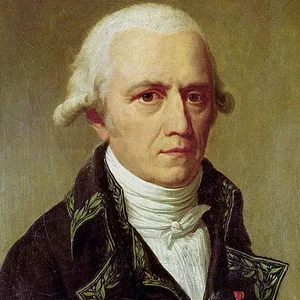

French naturalist and zoologist (1744–1829), Lamarck developed a theory of evolution based on the adaptation of organisms to their environment and the inheritance of acquired characteristics. A professor at the Paris Museum of Natural History, he laid the foundations of transformism, a precursory vision of evolution predating Darwin.
Jean-Baptiste Lamarck(1744 — 1829)
Jean-Baptiste de Lamarck
Première République française, royaume de France, Premier Empire français, Restauration
7 min read
Frequently asked questions
Key Facts
- 1778: Appointed as a botanist at the Paris Museum of Natural History
- 1809: Publication of Philosophie Zoologique, outlining his theory of transformism and the inheritance of acquired characteristics
- 1815–1822: Writes Natural History of Invertebrate Animals, a comprehensive work of zoological synthesis
- 1829: Dies in Paris, nearly ignored and forgotten, his theories discredited by Cuvier and the fixist school
- Late 19th–20th century: Rediscovery of his work following the publication of Darwin's On the Origin of Species (1859)
Works & Achievements
A botanical work in three volumes proposing a dichotomous method for identifying plants, revolutionary for its time. It earned Lamarck his scientific reputation and his admission to the Académie des sciences.
Lamarck's first major zoological work, laying the foundations for a modern classification of invertebrates. He introduces for the first time ideas on the progressive transformation of species.
An essay on the slow transformation of the Earth's surface by water, in which Lamarck argues for an extremely ancient Earth. He also coins the term 'biology' in this work.
Lamarck's theoretical masterpiece, setting out his law of use and disuse of organs and the inheritance of acquired characteristics. It is the first systematic exposition of a theory of species evolution.
A seven-volume encyclopedia devoted to invertebrates, the product of twenty years of work at the Muséum. A monumental work of classification that remained a reference for several decades.
Anecdotes
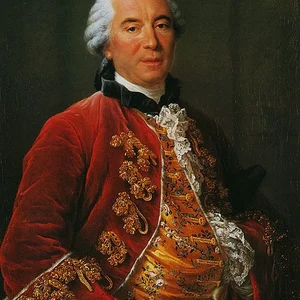
Lamarck was originally a renowned botanist, author of a monumental 'Flore française' in 1778. It was Count Buffon, director of the Jardin du Roi, who recommended him for this work. Yet, at the age of 49, he was appointed professor of zoology at the new Muséum national d'Histoire naturelle… for invertebrates, a field he barely knew. He rose to the challenge brilliantly and ultimately revolutionized biology.
It was Lamarck himself who coined the word 'biology' in 1802, to designate the science of living beings. He used the term almost simultaneously with the German naturalist Gottfried Reinhold Treviranus, but independently. This word, now universal, is one of his least-known contributions to the general public.
Lamarck died blind and in near-total destitution in 1829. His daughter Cornélie had stayed by his side until the end, reading to him and transcribing his final reflections. His belongings were auctioned off to pay his debts, and he was buried in a common grave. It was only decades later that science paid him tribute with a statue at the Muséum d'Histoire naturelle.
When Napoleon received the 'Tableau encyclopédique et méthodique' in 1809, Lamarck hoped for encouragement. But the Emperor, leafing through the work, said to him contemptuously: 'It is your old age that I pity.' Lamarck burst into tears. Napoleon favored sciences useful to war and industry, not philosophical zoology.
Lamarck was one of the first scholars to propose that the Earth was very old — far older than the biblical texts suggested. He estimated that the transformation of species required millions of years, a radical idea for his time, long before geologists such as Lyell popularized the concept.
Primary Sources
Circumstances influence the form and organization of animals, that is to say, when circumstances become very different, they bring about, over time, proportional changes in the form and organization of animals.
I believed it necessary, in this work, to present invertebrate animals from a general perspective, distributing them into the classes that suit them according to their organization.
Time has no limits for nature; it is man alone who feels the necessity of it, because his duration is bounded. For nature, there is neither beginning nor end.
Life is but a physical phenomenon; all the facts it presents to us are mechanical, physical, and chemical results of organization, and consequently natural effects.
Key Places
Lamarck's main workplace for thirty years. It was in its galleries and laboratories that he classified invertebrates and developed his theory of evolution.
Attached to the Muséum, this botanical and zoological garden was Lamarck's daily setting. He observed living plants and animals there, feeding his naturalist thinking.
Lamarck's birthplace in 1744. This rural village in the Somme, far from Paris, reflects his modest origins as the youngest son of a minor noble family.
Institution where Lamarck was elected a member in 1779 thanks to his 'Flore française'. It was also there that his rival Georges Cuvier delivered his ambiguous and reductive eulogy after Lamarck's death.
Typical Objects

An indispensable instrument for the 18th-century naturalist to observe invertebrates and 'microscopic animals'. Lamarck used it at the Muséum to study the minute organisms he had to classify.

Lamarck began his career as a botanist: he assembled carefully pressed and annotated herbaria, which formed the basis of his 'Flore française'. These collections were the scholar's material memory.

Lamarck was a world expert on both fossil and living shells, and contributed to founding invertebrate palaeontology. He compared living and fossil species to support his transformist theories.

The scholar's everyday tools, with which Lamarck wrote thousands of pages of classification and theory. After he lost his sight, it was his daughter Cornélie who held the quill in his place.

The Muséum d'Histoire Naturelle kept thousands of animals in jars of alcohol. Lamarck relied on these collections to establish his classifications of invertebrates.

Before losing his sight, Lamarck used a magnifying glass to examine small invertebrates. This simple but precious tool symbolises the meticulous observation at the heart of his scientific approach.
School Curriculum
Vocabulary & Tags
Key Vocabulary
Daily Life
Morning
Lamarck rose early and devoted his mornings to observation and classification in the galleries of the Muséum. He examined specimens preserved in the collections, took meticulous notes, and occasionally received young naturalists or travelers bringing back exotic animals.
Afternoon
The afternoon was reserved for writing his works and his public lectures, which he gave free of charge at the Muséum. He also walked through the greenhouses and the botanical garden to observe living plants, fuel his reflections on adaptation, and test his theories against direct observation.
Evening
In the evenings, in his modest Parisian apartment, Lamarck read, reflected, and dictated to his daughter Cornélie as his eyesight declined. His income was meager and his evenings often studious but solitary, far from the brilliant salons frequented by his more prosperous contemporaries.
Food
Like most scholars of modest means, Lamarck ate simply: soups, vegetables, bread, and ordinary cuts of meat. The end of his life was marked by genuine poverty that reduced his meals to the bare minimum.
Clothing
Lamarck wore the sober attire of a learned bourgeois of the late 18th century: a coat with lapels, breeches or trousers depending on the era, a white cravat, a powdered wig in his youth and then natural hair under the Empire. Nothing extravagant — a reflection of his always precarious financial circumstances.
Housing
Lamarck lived in modest Parisian apartments, close to the Muséum. His lodgings were cluttered with books, notes, specimens, and collected shells — a scholar's cabinet more than a comfortable home. At the end of his life, he lived in almost complete destitution.
Historical Timeline
Period Vocabulary
Visual Style
Illustration naturaliste néoclassique en gravure au trait, tons sépia et ocre, évoquant les planches encyclopédiques et le cabinet de curiosités savant du début du XIXe siècle.
Sound Ambience
L'atmosphère sonore du cabinet de travail de Lamarck au Muséum : silence studieux ponctué du grattement de la plume, des bruits de collections manipulées et des rumeurs lointaines du Jardin des Plantes.
Liens externes & ressources
Références
Œuvres
Flore française
1778
Système des animaux sans vertèbres
1801
Hydrogéologie
1802
Philosophie zoologique
1809
Histoire naturelle des animaux sans vertèbres
1815-1822