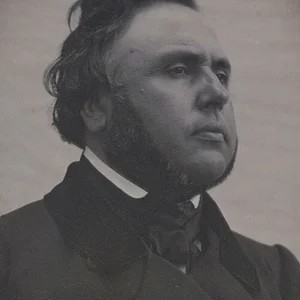

A French political figure of the First Empire, Jean-Baptiste Papin de Saint-Christau served in the Conservative Senate. He represents the class of notables who rallied to the Napoleonic regime.
Jean-Baptiste Papin(1756 — 1809)
Jean-Baptiste Papin de Saint-Christau
France
7 min read
Frequently asked questions
Key Facts
- Senator of the First Empire under Napoleon Bonaparte
- Member of the Conservative Senate, a key institution of the imperial regime
- Belongs to the category of notables who rallied to the Empire
Works & Achievements
Participation in the collective vote that transformed the Consular Republic into a hereditary Empire. This act committed the personal legitimacy of each senator to the founding of the Napoleonic regime.
Participation in the deliberations of the Conservative Senate on the constitutional conformity of government acts. Senators reviewed texts submitted by Napoleon and theoretically held a right of constitutional veto.
By embodying the link between the provincial elites of Béarn and the central Parisian power, Papin de Saint-Christau contributed to the territorial rooting and social legitimation of the Napoleonic regime in south-western France.
Anecdotes
Jean-Baptiste Papin de Saint-Christau came from a noble family of the Béarn region in southwestern France. Like many provincial notables, he navigated the Revolutionary period with caution before rallying to the institutions of the Consulate and then the Empire — a striking illustration of the widespread reconciliation between the elites and the new Bonapartist order.
As a member of the Conservative Senate, Papin de Saint-Christau sat in the Palais du Luxembourg in Paris, a former royal residence transformed into a temple of imperial statecraft. The Senate's sessions were solemn and highly ceremonial, a stark contrast to the turbulent assemblies of the Revolution that many senators had witnessed in their youth.
The Conservative Senate of which Papin de Saint-Christau was a member adopted, in May 1804, the senatus-consultum that transformed the Republic into a hereditary Empire. By casting his vote for this founding act, each senator staked his personal legitimacy on the construction of the new Napoleonic regime, sealing the alliance between the notables of the old France and the Emperor.
Papin de Saint-Christau's death in 1809 came at the very height of the Napoleonic Empire, the same year as the victory of Wagram over Austria. He never witnessed the first cracks in the imperial edifice — the disastrous Russian campaign of 1812 and Napoleon's fall in 1814 — to whose institutional legitimacy he had helped lend an air of respectability.
Primary Sources
Papin de Saint-Christau (Jean-Baptiste), senator, appears among the members of the Conservative Senate appointed by the institutions of the Empire and enjoying the prerogatives attached to that dignity.
The government of the Republic is entrusted to an Emperor, who takes the title of Emperor of the French. The imperial dignity is hereditary in the direct, natural, and legitimate line of descent of Napoleon Bonaparte.
The deliberations of the Conservative Senate record the votes and positions of the senators of the Empire, among whom sat representatives of provincial notables who had rallied to the Napoleonic regime.
There is a Conservative Senate composed of citizens who have rendered distinguished service to the Republic. The Senate preserves the articles of the Constitution. It upholds or annuls all acts referred to it as unconstitutional.
Key Places
A commune in Béarn associated with the Papin de Saint-Christau family. This region of southwestern France was a breeding ground for local notables, many of whom joined the institutions of the Consulate and the Empire.
Seat of the Conservative Senate under the Consulate and the Empire. It was in this imposing Parisian palace that Papin de Saint-Christau took part in the deliberations that shaped the institutions of Napoleonic France.
Historic capital of Béarn and the main administrative city of the Basses-Pyrénées department under the Empire. A regional political hub connected to Paris for southwestern notables integrated into the imperial institutions.
Typical Objects

The official attire of senators of the Empire, characterized by rich gold embroidery on a red velvet ground and a court mantle. This highly codified dress expressed the dignity and hierarchy of the new Napoleonic institutions.

A legislative act issued by the Conservative Senate carrying constitutional force. These texts allowed Napoleon to reshape state institutions without resorting to public debate, and bore the collective signatures of the senators.

An official document signed by Napoleon's own hand by which the Emperor appointed a senator for life. This patent conferred on its holder a lifelong dignity, an annual endowment, and a rank within the new imperial hierarchy.

An indispensable tool of the Empire's administrators and statesmen, used to draft and countersign official acts. Senators had secretaries at their disposal as well as high-quality writing materials for their official correspondence.

The Empire's notables commissioned portraits in uniform or court dress as a display of their social standing and loyalty to the regime. These works adorned their private residences as well as institutional buildings.
School Curriculum
Vocabulary & Tags
Key Vocabulary
Daily Life
Morning
The senator rose early and received his correspondence before reading the *Moniteur universel*, the Empire's official newspaper and essential reading for any politician of the era. On sitting days, he traveled by carriage to the Palais du Luxembourg, dressed in his embroidered court attire.
Afternoon
Afternoons were devoted to senatorial deliberations or, when the chamber was not in session, to managing his properties and receiving visitors. Empire senators enjoyed a considerable annual allowance that enabled them to maintain household staff and carriages.
Evening
Evenings were frequently spent in the Parisian salons of the notables, at official receptions, or at the Opéra. Social life under the Empire was extremely active: balls, lavish dinners, and performances punctuated the calendar of the imperial elite, who sought to rival the splendor of the old court of Versailles.
Food
A senator's diet under the Empire was that of the wealthy notable class: poultry, game, river fish, Bordeaux and Burgundy wines. It was precisely during this period that French gastronomy was being codified, with thinkers such as Brillat-Savarin and the rise of the great Parisian restaurants.
Clothing
Outside official ceremonies, the senator wore the bourgeois dress of the late eighteenth century: a tailcoat, trousers or breeches, a waistcoat, a carefully knotted white cravat, and a bicorne hat. The gold-embroidered red velvet coat was strictly reserved for solemn sessions and imperial receptions.
Housing
Senators benefited from allowances tied to rural estates, known as 'sénatoreries', which supplemented their income. In Paris, they lived in private mansions in the fashionable neighborhoods or in spacious apartments, with the domestic staff befitting their rank.
Historical Timeline
Period Vocabulary
Liens externes & ressources
Références
Œuvres
Vote du sénatus-consulte du 18 mai 1804 (proclamation de l'Empire)
1804
Activité délibérative au Sénat conservateur
1800-1809
Représentation des notables béarnais au sein des institutions impériales
1800-1809