 flip
flipRaisiné, sugar-free jam
Raisiné, sugar-free jam
Why this dish? Sugar, severely rationed, was desperately scarce under the Occupation. In the wine-growing Languedoc of Béziers, an old peasant remedy was revived: raisiné, a syrup obtained by slowly reducing grape must, which sweetens and preserves without a single ounce of purchased sugar. A regional treat that Moulin knew as a child and that regained all its meaning in the shortage.
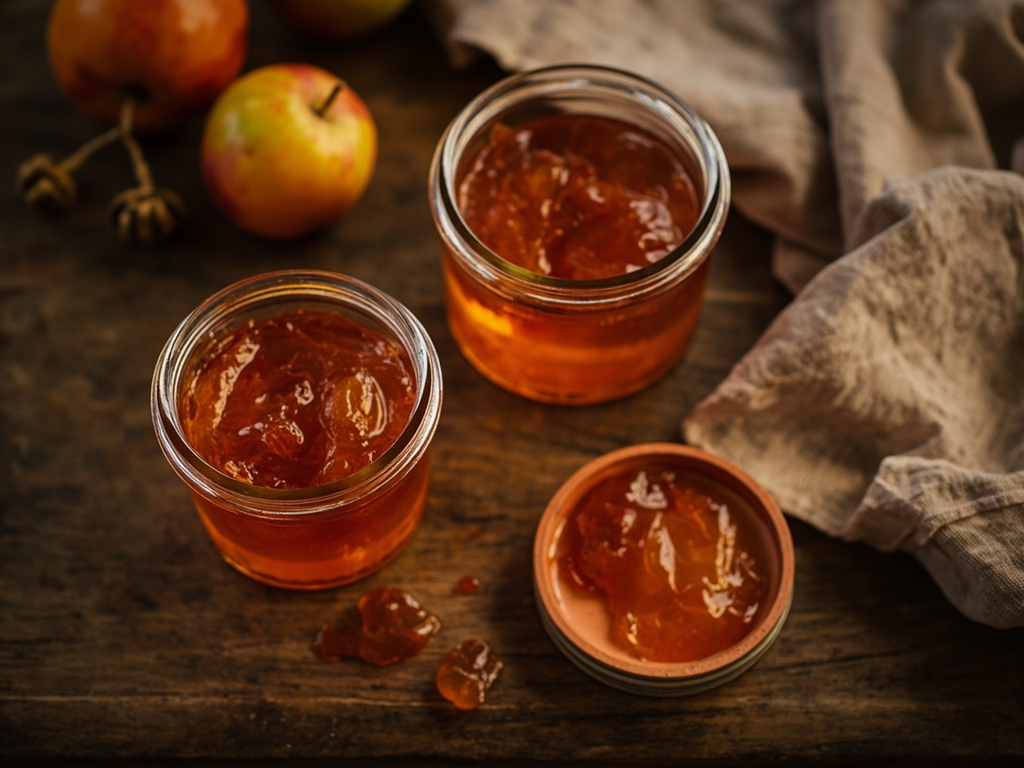
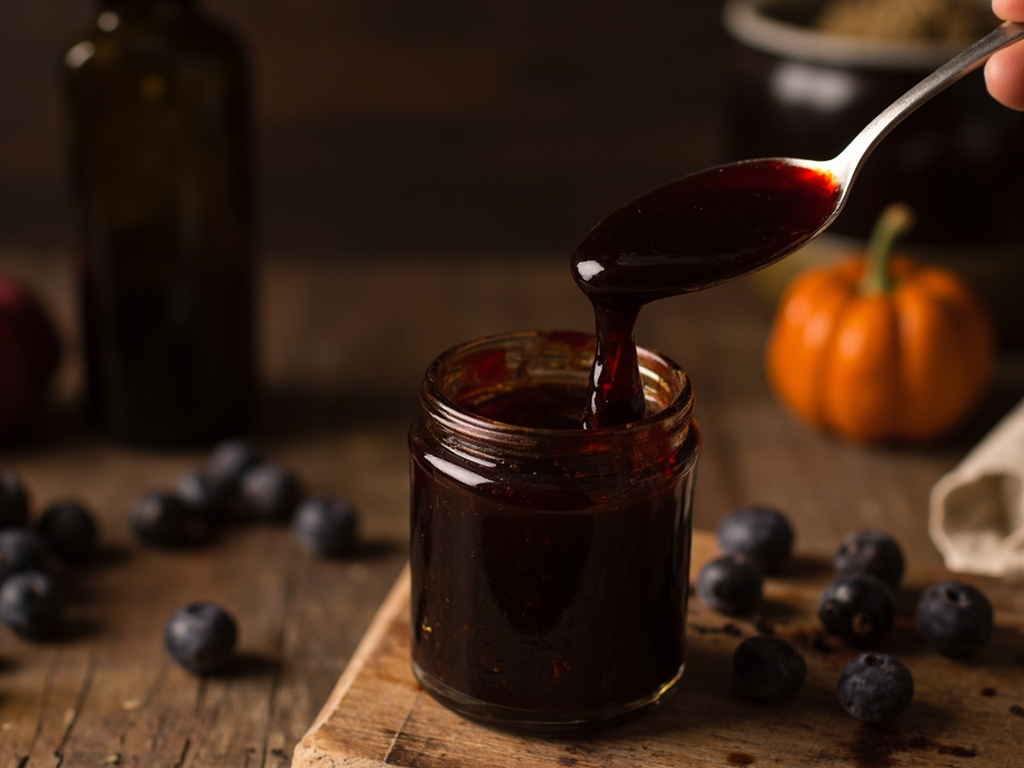
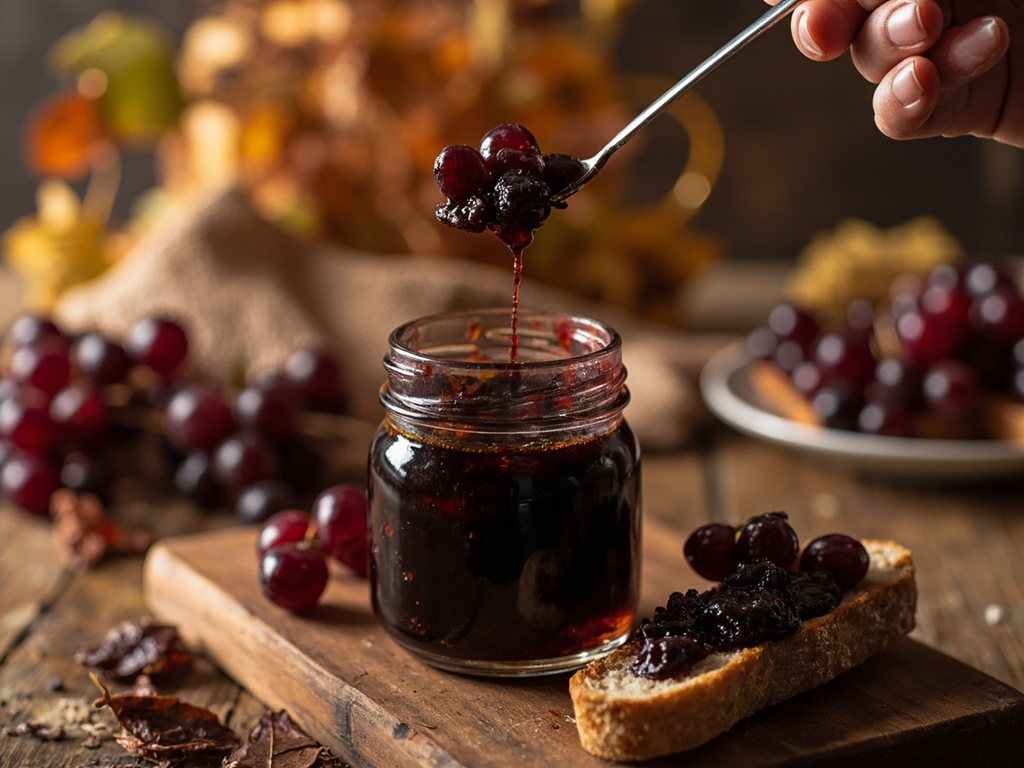
A dark, shiny confit made from grape juice patiently reduced, sometimes with fruits, to a thick honey-like consistency. The 'jam of hard times', which transforms the abundance of the harvest into a sweet reserve for winter.
Sugar? We don't have a quarter of what we need. But in my wine country, we have known how to do without it forever: we take grape juice, cook it for hours over a low flame, never leaving it out of sight, until it thickens and turns brown like honey. We call it raisiné. Spread on a crust of bread, it makes you believe for a moment that times are not so hard. Patience and dry wood: that's the whole recipe, and all the wisdom of those years.
- •Grape must (fresh juice from the harvest) — a full cauldron (natural sugar and base)
- •Quinces or pears — a few (fruits to confit (optional))
Raisiné, sugar-free jam
A dark, shiny confit made from grape juice patiently reduced, sometimes with fruits, to a thick honey-like consistency. The 'jam of hard times', which transforms the abundance of the harvest into a sweet reserve for winter.
Why this dish? Sugar, severely rationed, was desperately scarce under the Occupation. In the wine-growing Languedoc of Béziers, an old peasant remedy was revived: raisiné, a syrup obtained by slowly reducing grape must, which sweetens and preserves without a single ounce of purchased sugar. A regional treat that Moulin knew as a child and that regained all its meaning in the shortage.
Sugar? We don't have a quarter of what we need. But in my wine country, we have known how to do without it forever: we take grape juice, cook it for hours over a low flame, never leaving it out of sight, until it thickens and turns brown like honey. We call it raisiné. Spread on a crust of bread, it makes you believe for a moment that times are not so hard. Patience and dry wood: that's the whole recipe, and all the wisdom of those years.
Ingredients (period version)
- Grape must (fresh juice from the harvest) — a full cauldron (natural sugar and base)
- Quinces or pears — a few (fruits to confit (optional))
Ingredients
- Fresh grape juice (or pure juice with no added sugar) — 1.5 L (base to reduce)
- Quince or pear — 2 fruits (confit garnish (optional))
- Lemon juice — 1 tbsp (balance and preservation)
Method
- Pour the grape juice into a wide, heavy-bottomed saucepan and bring to a simmer.
- Reduce over low heat, uncovered, skimming occasionally: allow 1.5 to 2 hours.
- When the volume has reduced by two-thirds and the syrup coats a spoon, optionally add the diced fruits and lemon juice.
- Continue cooking until a thick, shiny jam-like texture is reached.
- Pour into sterilized jars, seal, and turn upside down to preserve for several months.
How it was made : Raisiné (or 'vin cuit', 'sapa' in the Latin world) is a very ancient technique of reducing must, common in wine-growing regions. In periods of sugar shortage — including the Occupation — it became the privileged means of sweetening and preserving fruits using only the resources of the garden and vineyard.
The contemporary twist : Drizzled over fresh cheese or plain yogurt instead of honey: a 100% fruit grape caramel with no added sugar, speaking to today's palates.
Jean Moulin · Charactorium