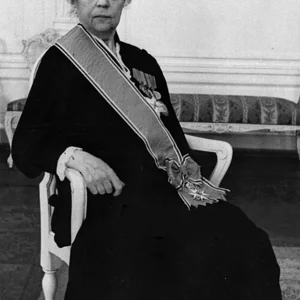

Jean-Pierre Sers (1776-1862) was a French administrator and politician. A prefect under the First Empire, he became a senator and played a role in Napoleonic administration.
Jean-Pierre Sers(1746 — 1809)
Jean-Pierre Sers
France
7 min read
Frequently asked questions
Key Facts
- Born in 1776, he built a career in the imperial administration
- Appointed prefect under the First Empire
- Elevated to the rank of senator of the First Empire
- Survived the changes of regime after 1815
- Died in 1862, having lived through several French political regimes
Works & Achievements
As a prefect appointed by Napoleon, Sers contributed to building the modern administrative state: tax collection, conscript levies, enforcement of the Civil Code, and maintenance of public order. This concrete work of territorial organization constitutes his principal legacy.
Like all prefects of the Empire, Sers regularly drafted reports on the economic, social, and political situation of his department. These documents, preserved in the National Archives, are invaluable sources for local Napoleonic history.
Elevated to the rank of senator, Sers took part in the deliberations of the Empire's representative institutions, exemplifying the typical career trajectory of Napoleon's most loyal and capable administrators.
After Napoleon's fall, Sers continued his career in the service of the restored Bourbon monarchy, bearing witness to the remarkable continuity of French administrative elites through the political upheavals of the nineteenth century.
Anecdotes
Appointed prefect by Napoleon Bonaparte, Jean-Pierre Sers had to learn to navigate between the unyielding demands of imperial power and the economic realities of his département. His reputation as a rigorous and loyal administrator earned him the lasting confidence of his Parisian superiors, who saw in him a reliable man on the ground.
Like many prefects of the Empire, Sers was tasked with organizing conscription levies — a particularly delicate undertaking in rural regions where families resisted sending their sons to distant battlefields. He had to combine administrative firmness with a talent for negotiation in order to meet the quotas imposed by Paris.
The fall of Napoleon in 1814 marked a perilous turning point for Sers. Like many imperial administrators, he had to demonstrate his loyalty to the restored Bourbons while preserving his position — a balancing act that spoke to the remarkable adaptability of France's administrative elite in the face of regime change.
Jean-Pierre Sers lived long enough to pass through five different political regimes — Revolution, Consulate, Empire, Restoration, and July Monarchy — all while maintaining an unbroken career in the service of the state. This exceptional longevity made him a rare witness to the profound transformations of modern France.
Primary Sources
The prefects of the Empire sent regular reports to the Minister of the Interior on the state of their department: economic conditions, public order, enforcement of imperial decrees, and conscript census.
These weekly reports described the mood of local populations, resistance to taxes and conscription, and the activities of political opponents reported by canton mayors.
The personal files of imperial civil servants held at the National Archives trace successive appointments, promotions, and ministerial assessments of serving prefects.
The deliberations of the Napoleonic Conservative Senate recorded senators' votes and speeches, attesting to their role in validating the Empire's legislative acts.
Key Places
A major commercial port in southwestern France and the hometown of the Sers family. Bordeaux was severely affected by Napoleon's Continental Blockade, which paralyzed its Atlantic maritime trade, yet it remained an important administrative and cultural center.
The direct authority over the Empire's prefects, located on rue de Grenelle in Paris. This was where Sers reported on his administration, received his instructions, and negotiated the resources allocated to his department.
The seat of prefectural authority and official residence of the prefect: a place of daily work, reception of local dignitaries, and dispatch of correspondence to Paris. This building was a concrete embodiment of state authority within the department.
The seat of the Conservative Senate under the Empire, and later of the Senate under the Restoration. If Sers did indeed attain the rank of senator, he would have sat here during legislative sessions in this iconic symbol of French parliamentary power.
Typical Objects

The tricolor sash was the distinctive badge of prefectoral authority, worn at official ceremonies. It symbolized the power delegated by the central State to its representative in the département.

A thick leather-bound volume in which administrative decisions, official correspondence, and prefectoral orders were recorded. It served as the living institutional memory of the département.

A metal seal engraved with the imperial arms, used to authenticate official documents. Stamped in red wax, it gave legal force to administrative acts and distinguished them from private correspondence.

The body of laws that prefects were required to apply and enforce within their département. This unified code replaced the old regional customs and formed the fundamental legal instrument of Napoleonic administration.

A formal coat of dark blue cloth embroidered with gold thread, worn by senior officials at audiences and solemn receptions. It gave visible expression to the administrative hierarchy and the grandeur of the Empire.

A large wall map or atlas essential for managing the territory: organizing roads, markets, conscription cantons, and relief operations. An indispensable everyday working tool for the prefect.
School Curriculum
Vocabulary & Tags
Key Vocabulary
Daily Life
Morning
The prefect's day began early with the reading of official correspondence arriving from Paris and the sub-prefectures. Sers dictated his replies to his secretaries, then received local notables — mayors, justices of the peace, military officers — who came to report to him or seek his administrative rulings.
Afternoon
The afternoon was devoted to public hearings, inspection visits to road works, prisons, or hospices under prefectural authority. Drafting administrative orders, reviewing conscription files, and processing tax appeals took up a large part of the day.
Evening
In the evenings, the prefect frequently entertained the department's most influential figures at his table: the bishop, the general commanding the military subdivision, and major landowners. These dinners served to maintain the network of loyalties and intelligence essential to the effective exercise of local power.
Food
The prefect's table reflected the high social standing of the office: braised meats, vegetables from the local kitchen garden, and regional wines. Under the Continental Blockade, certain colonial goods such as cane sugar became scarce, progressively replaced by sugar beet, which Napoleon was actively encouraging.
Clothing
In his everyday working dress, the prefect wore a dark coat and a white cravat. For official ceremonies — presentation of the Légion d'honneur, *Te Deum* services after victories, military reviews — he wore his gold-embroidered formal coat and tricolour sash, conspicuous symbols of his authority.
Housing
The prefect resided in the *hôtel de la préfecture*, a large official building provided by the state. These residences combined private apartments with reception rooms, along with a library, a study, and a garden. The décor, restrained and neoclassical, conveyed the dignity of the office without ostentation.
Historical Timeline
Period Vocabulary
Liens externes & ressources
Références
Œuvres
Administration préfectorale sous le Premier Empire
1804-1814
Rapports sur l'état des départements
1806-1813
Participation aux institutions sénatoriales
Vers 1810-1830
Continuité administrative sous la Restauration
1815-1830