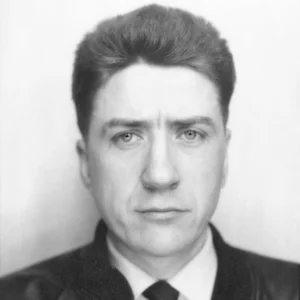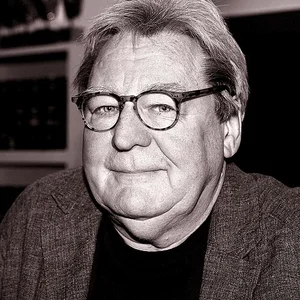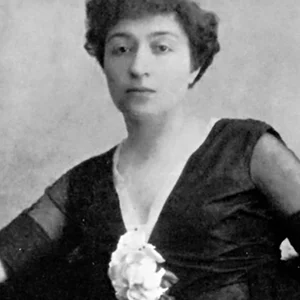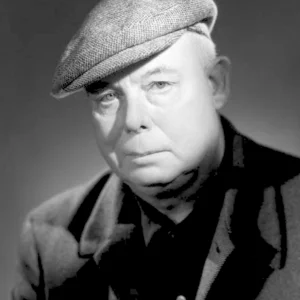

Jean Renoir was a French filmmaker and screenwriter, the son of the painter Auguste Renoir. A major figure of twentieth-century cinema, he left his mark on the history of the seventh art through his poetic realism and his humanism.
Jean Renoir(1894 — 1979)
Jean Renoir
France
6 min read
Frequently asked questions
Famous Quotes
« The terrible thing about this world is that everyone has their reasons.»
Key Facts
- Born in 1894 in Paris, son of the Impressionist painter Auguste Renoir
- Directed La Grande Illusion in 1937, a pacifist film about the First World War
- Directed The Rules of the Game in 1939, a masterpiece at first misunderstood and later recognized as a peak of cinema
- Went into exile in the United States during the Second World War and shot films in Hollywood
- Received an Honorary Oscar for his lifetime achievement in 1975; died in 1979
Works & Achievements
An ambitious adaptation of Zola's novel, marking his silent-film debut with Catherine Hessling.
A comedy about a tramp taken in by a middle-class man, a joyful satire of social conventions.
A film close to the spirit of the Popular Front, celebrating working-class solidarity and the cooperative.
A poetic short film based on Maupassant, a luminous tribute to Impressionist painting.
A pacifist masterpiece about French prisoners of World War I, an immense worldwide success.
A railway drama based on Zola, a peak of poetic realism starring Jean Gabin.
A biting satire of French high society, a flop on release that became a cult film.
Renoir's first color film, shot in India, a meditation on time and life.
Anecdotes
Jean Renoir grew up surrounded by his father's models and canvases — his father being the painter Auguste Renoir. One of those models, Andrée Heuschling, became his first wife under the name Catherine Hessling and the star of his early silent films. Jean's cinema always retained something of the light and colors of his father's paintings.
Serving in the cavalry and then the air force during the First World War, Renoir was seriously wounded in the leg in 1915 and walked with a slight limp for the rest of his life. During his recovery, he devoured the films of Charlie Chaplin: it was there, he said, that his passion for the seventh art was born.
His film *Grand Illusion* (1937) so displeased the Nazis that propaganda minister Joseph Goebbels branded it “Cinematographic Public Enemy Number One.” The film was banned in Germany and Italy, and prints vanished during the war before being recovered decades later.
*The Rules of the Game* (1939) was a resounding failure: jeered at its release, cut down by the censors, and then its negative was partly destroyed in a bombing raid. Painstakingly reconstructed in the 1950s and 60s, it is today regarded as one of the greatest films in the history of cinema.
Renoir loved to appear in his own films. In *The Rules of the Game*, he plays the character of Octave himself, the clumsy and touching friend who utters the famous line: “Everyone has their reasons.” In 1975, at the age of 80, Hollywood awarded him an honorary Oscar for his lifetime achievement.
Primary Sources
The terrible thing about this world is that everyone has their reasons.
My father painted the way others breathe. For him, painting was not a profession but a way of living, and he taught me to look at the world with love.
I believe the only way to move an audience is to offer it characters it can identify with, human beings with their weaknesses and their reasons.
Cinema is a craft of patience. You spend your life trying to capture a moment of truth in the midst of the organized deception of a film shoot.
Key Places
Artists' district where Jean Renoir was born in 1894, in the family home known as the « Château des Brouillards ». He grew up there surrounded by the world of painting.
Estate in the South of France where Auguste Renoir settled and where Jean spent part of his youth among olive trees and paintings. The place nurtured his taste for the southern light.
A region of forests and ponds where Renoir shot the hunting scenes of *The Rules of the Game* in 1939. The château and the countryside served as the backdrop for his satire of society.
Setting of *The River* (1951), Renoir's first color film, shot on the banks of the Ganges. The Indian experience profoundly renewed his art.
Renoir went into exile here from 1941 to escape the Occupation, and shot several films for the American studios during the war.
Renoir spent his final years here, writing his memoirs, and died here in 1979. His body was later repatriated to France.
Typical Objects

A heavy crank-operated, later electric, camera that recorded images onto film. It was the director's central tool, mounted on a tripod or a moving dolly.

A long strip of perforated celluloid onto which images were printed frame by frame. Fragile and flammable, it was stored in round metal cans.

A small hinged slate snapped in front of the camera at the start of each take. It was used to synchronize picture and sound and to number the scenes.

A typed booklet containing the dialogue, the action, and the breakdown of scenes. Renoir worked on it a great deal but liked to improvise on set.

A metal cone or megaphone that let the director give instructions to the actors and crew from the set, often a noisy one.

A powerful standing lamp used to light the sets and shape the lighting. Renoir, the son of a painter, took particular care with light effects.
School Curriculum
Vocabulary & Tags
Key Vocabulary
Daily Life
Morning
An early riser during shoots, Renoir would arrive on set or at the locations at dawn to make the most of the light. He liked to talk at length with his actors and crew before rolling the first take.
Afternoon
Afternoons were spent filming scene after scene, amid the hum of the spotlights and orders shouted through the megaphone. Renoir improvised readily, changing the dialogue and letting his actors suggest ideas.
Evening
In the evening, he watched the day's *rushes* in a screening room, chose the best takes and prepared the next day's work. Off set, he enjoyed long conversations among friends over a good meal.
Food
A bon vivant devoted to French cuisine, Renoir loved simple, convivial meals, wine and country dishes. While in exile in Hollywood, he often missed the food of his homeland.
Clothing
On set he wore practical, comfortable clothes — an open shirt, a loose jacket, sometimes a hat to shield himself from the sun. In town he adopted the understated suit of the men of his day.
Housing
He lived in Parisian apartments and country houses in France, then in a villa in Beverly Hills during his American exile. His homes were always filled with paintings, including works by his father.
Historical Timeline
Period Vocabulary
Liens externes & ressources
Références
Œuvres
Boudu sauvé des eaux
1932
La Grande Illusion
1937
La Bête humaine
1938