 flip
flipSalted Herring with Onions and Black Bread
Salted Herring with Onions and Black Bread
Why this dish? Salted herring from the Hanseatic League traveled north to Lutheran Saxony, where it was the staple on lean days and Lent. Bach, faithful to his confession's customs, would have eaten it on many Good Fridays — he who composed the St Matthew Passion.
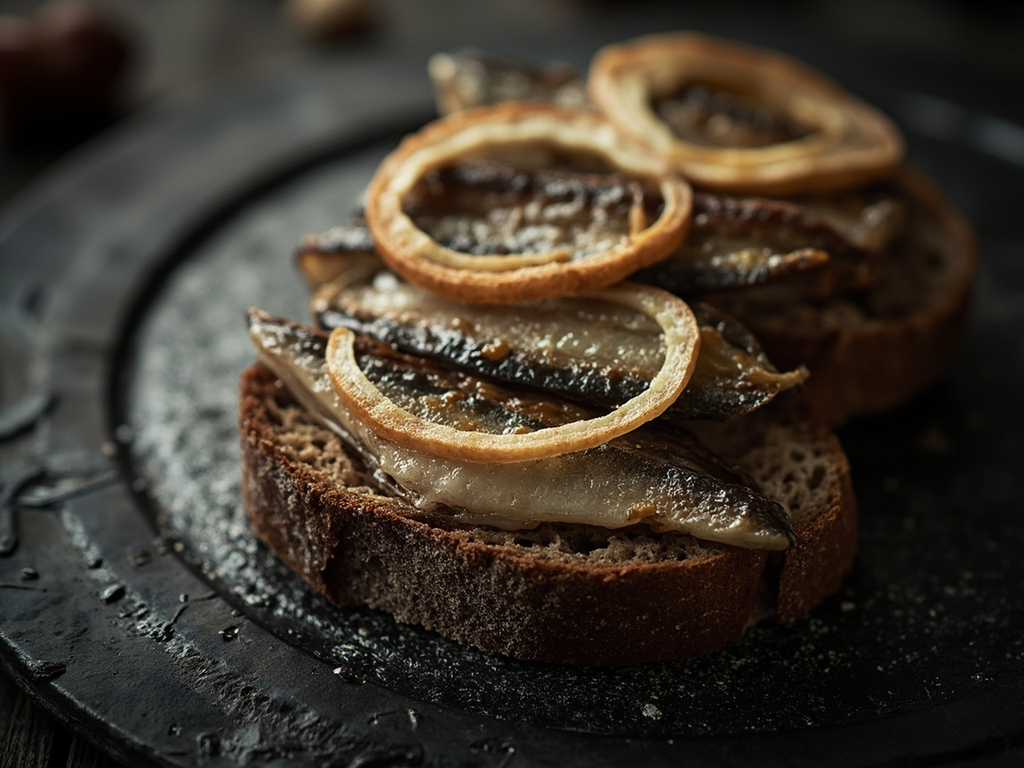
Herring long preserved in brine, desalted, then served cold with raw onions and black bread. A humble, salty, and powerful dish that lasted through winter and meatless days.
On lean days, no roast: we draw from the barrel the herring that the Hanseatic merchants have salted and carted from the North Sea. It must be soaked in fresh water, else it burns the throat like an overdone Kyrie. We serve it with raw onion and a slice of black bread, and give thanks for this simple fare, for the Lord nourishes the humble as well as the prince. This is the meal of penance, and it has its austere beauty.
- •Barrel-salted herrings — two or three (preserved fish)
- •Raw onions — one or two (accompaniment)
- •Black rye bread — as desired (base)
- •Vinegar (optional) — a dash (brighten)
Salted Herring with Onions and Black Bread
Herring long preserved in brine, desalted, then served cold with raw onions and black bread. A humble, salty, and powerful dish that lasted through winter and meatless days.
Why this dish? Salted herring from the Hanseatic League traveled north to Lutheran Saxony, where it was the staple on lean days and Lent. Bach, faithful to his confession's customs, would have eaten it on many Good Fridays — he who composed the St Matthew Passion.
On lean days, no roast: we draw from the barrel the herring that the Hanseatic merchants have salted and carted from the North Sea. It must be soaked in fresh water, else it burns the throat like an overdone Kyrie. We serve it with raw onion and a slice of black bread, and give thanks for this simple fare, for the Lord nourishes the humble as well as the prince. This is the meal of penance, and it has its austere beauty.
Ingredients (period version)
- Barrel-salted herrings — two or three (preserved fish)
- Raw onions — one or two (accompaniment)
- Black rye bread — as desired (base)
- Vinegar (optional) — a dash (brighten)
Ingredients
- Salted herring fillets (to be desalted) — 4 fillets (preserved fish)
- Onion — 1 large (accompaniment)
- Rye bread / pumpernickel — 4 slices (base)
- Cider vinegar — 2 tbsp (light marinade)
- Butter — for the bread (richness)
Method
- Soak the salted herring fillets in cold water for 2 to 4 hours (change water once) to desalt.
- Finely slice the onion; let it macerate for a few minutes in a little vinegar to soften its bite.
- Drain and pat the herrings dry.
- Butter the rye bread, arrange the herring, and top with onion.
- Serve cold, with a dash of vinegar if desired.
How it was made : Herring salting, perfected in the Middle Ages, was the economic foundation of the Hanseatic League: it could be preserved for months in barrels. In the Lutheran world, lean days remained a custom after the Reformation, and salted fish played a large role, especially in winter when fresh fish was scarce in inland Saxony.
The contemporary twist : Dress it as an open-faced sandwich (Smørrebrød) on pumpernickel, with a hint of dill and a thin slice of tart apple to cut the salt.
Johann Sebastian Bach · Charactorium