 flip
flipGlögi — Spiced Mulled Wine for Winter Nights
Glögi — Spiced Mulled Wine for Winter Nights
Why this dish? A lover of fine wines and champagne, Sibelius endured the endless Finnish winters at Ainola, under snow and polar night. Glögi, spiced mulled wine of Advent, warmed those evenings — the drink that has always accompanied Nordic festivities.
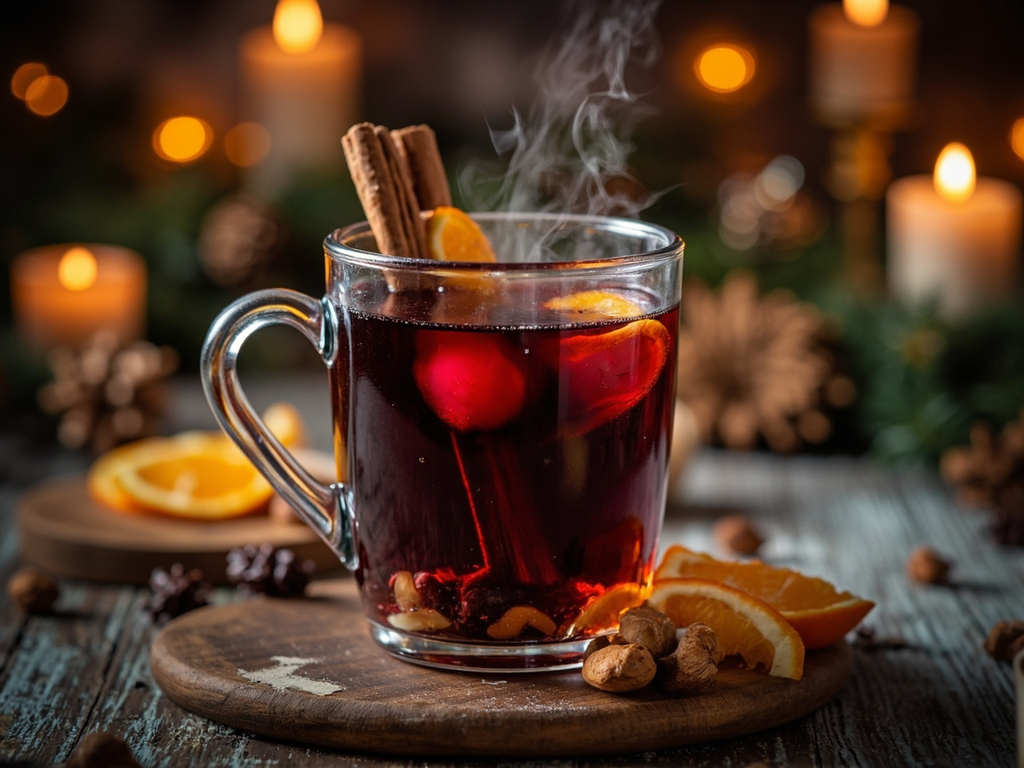
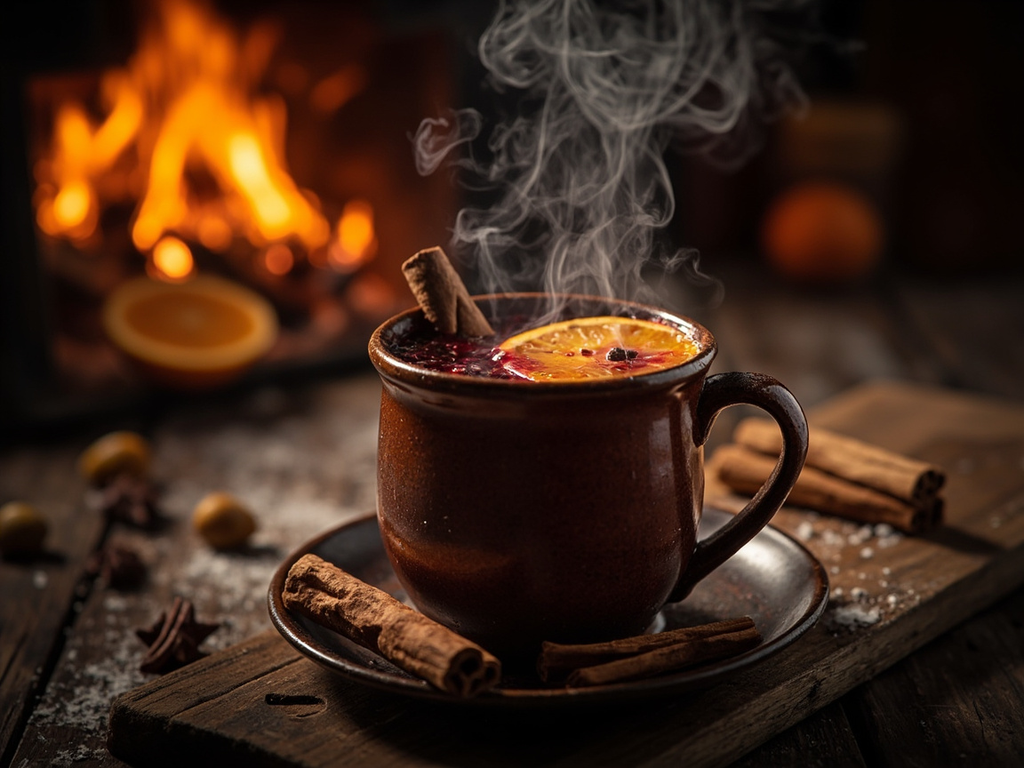
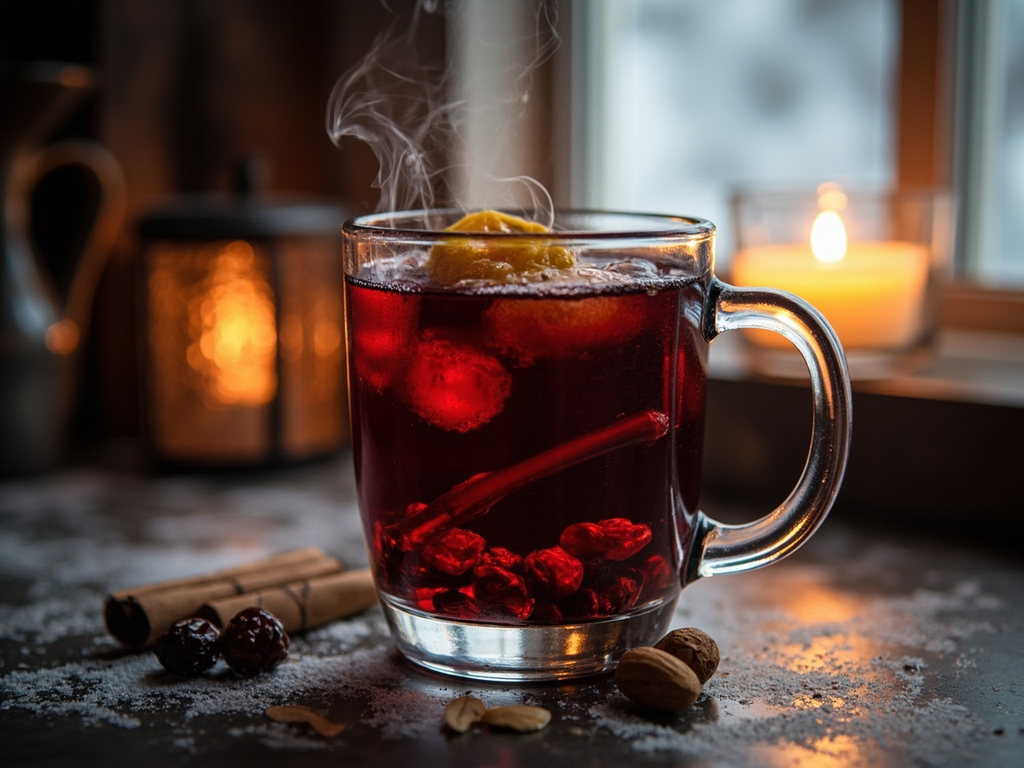
Red wine heated without boiling with cinnamon, cloves, ginger, cardamom and bitter orange zest, sweetened and poured piping hot over raisins and blanched almonds in the glass.
The Finnish winter, my friend, is not a season: it is an ordeal, and a grandeur. When night falls at three o'clock and the snow muffles the world, you put the wine to warm — never letting it boil, lest you kill it — with cinnamon, cloves, ginger and orange. At the bottom of the glass, raisins and almonds that you fish out with a spoon. You drink it burning hot, hands cupped around the glass, and you feel that this austere country knows, too, how to be tender. Skål!
- •Red wine — one bottle (base)
- •Cinnamon sticks — a few (spice)
- •Cloves — a handful (spice)
- •Ginger — a piece (warming spice)
- •Cardamom — a few pods (signature spice)
- •Bitter orange zest — from one orange (fragrant bitterness)
- •Sugar (or sugar cubes) — as desired (sweetener)
- •Raisins and blanched almonds — a handful (glass garnish)
Glögi — Spiced Mulled Wine for Winter Nights
Red wine heated without boiling with cinnamon, cloves, ginger, cardamom and bitter orange zest, sweetened and poured piping hot over raisins and blanched almonds in the glass.
Why this dish? A lover of fine wines and champagne, Sibelius endured the endless Finnish winters at Ainola, under snow and polar night. Glögi, spiced mulled wine of Advent, warmed those evenings — the drink that has always accompanied Nordic festivities.
The Finnish winter, my friend, is not a season: it is an ordeal, and a grandeur. When night falls at three o'clock and the snow muffles the world, you put the wine to warm — never letting it boil, lest you kill it — with cinnamon, cloves, ginger and orange. At the bottom of the glass, raisins and almonds that you fish out with a spoon. You drink it burning hot, hands cupped around the glass, and you feel that this austere country knows, too, how to be tender. Skål!
Ingredients (period version)
- Red wine — one bottle (base)
- Cinnamon sticks — a few (spice)
- Cloves — a handful (spice)
- Ginger — a piece (warming spice)
- Cardamom — a few pods (signature spice)
- Bitter orange zest — from one orange (fragrant bitterness)
- Sugar (or sugar cubes) — as desired (sweetener)
- Raisins and blanched almonds — a handful (glass garnish)
Ingredients
- Full-bodied red wine — 1 bottle (75 cl) (base)
- Cinnamon sticks — 2 (spice)
- Cloves — 6 (spice)
- Fresh ginger — 3 thin slices (warming spice)
- Cardamom pods, crushed — 5 (signature spice)
- Orange zest — 1 orange (strips) (fragrance)
- Brown sugar — 3 to 4 tablespoons (sweetener)
- Raisins — 4 tablespoons (glass garnish)
- Blanched slivered almonds — 3 tablespoons (glass garnish)
Method
- Pour the wine into a saucepan with cinnamon, cloves, ginger, crushed cardamom and orange zest.
- Heat gently WITHOUT ever boiling (alcohol and aromas would evaporate); keep at a simmer for 20 to 30 minutes.
- Add sugar, taste and adjust.
- Divide raisins and almonds among heatproof glasses.
- Strain the hot wine and pour it piping hot over the dried fruits. Serve with a small spoon to scoop out raisins and almonds.
- Non-alcoholic version: replace with grape or apple juice with a splash of orange juice.
How it was made : Nordic glögi descends from spiced and heated wines drunk in Europe since the Middle Ages, becoming the ritual Advent drink in Scandinavia and Finland by the 19th century. The raisins and almonds at the bottom of the glass, eaten at the end, are its distinctive mark. Even then, they insisted on not boiling it.
The contemporary twist : A splash of aquavit or vodka at serving time to “fortify” it Finnish-style, and a cinnamon stick as a stirrer.
Jean Sibelius · Charactorium