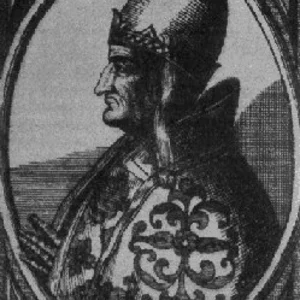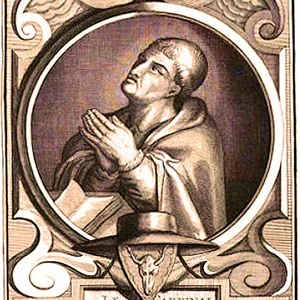

Antipope from 1410 to 1415, elected during the Western Schism when three simultaneous claimants contested the papal throne. Deposed by the Council of Constance, he embodies the deep crisis of the medieval Church and the triumph of conciliarism.
John XXIII (antipope)
John XXIII (antipope), born Baldassare Cossa
9 min read
Frequently asked questions
Key Facts
- Born around 1370 in Naples as Baldassare Cossa
- Elected antipope in 1410 in Bologna during the obediential schism
- Convened the Council of Constance in 1414 to put an end to the schism
- Deposed by the Council of Constance in 1415 for simony and misconduct
- Died in 1419 in Florence after being reconciled with the Church
Works & Achievements
As papal legate, John XXIII restored pontifical authority over Bologna by force of arms, established an efficient administration, and built up a treasury that financed his rise to power. This military-political governance of the Romagna was his true claim to fame before the pontificate.
Cossa played a major role in organizing the Council of Pisa, which attempted to resolve the schism by deposing both popes and electing Alexander V. Although this solution deepened the confusion by creating a third claimant, it represented a revolutionary application of conciliarist theory.
Under pressure from Emperor Sigismund, John XXIII officially convened the Council of Constance — an act that turned against him: it was this very assembly that deposed him. The document illustrates the fundamental contradiction of a pope summoning the tribunal of his own removal.
Commissioned by Cosimo de' Medici after Cossa's death, this monument sculpted by Donatello and Michelozzo is one of the first great works of Renaissance sculpture. The fact that this tomb was erected in Florence's most sacred building testifies to the power of the Medici and their loyalty to their fallen ally.
John XXIII issued numerous bulls granting indulgences and privileges to finance his military campaigns, contributing to the commercialization of spiritual grace that Jan Hus and other reformers denounced with great vehemence at the Council of Constance.
Anecdotes
Baldassare Cossa came from a Neapolitan family of minor nobility, and his enemies spread the rumor that he had begun his career as a pirate captain in the Mediterranean before embracing the ecclesiastical life. While the accusation remains difficult to verify, it reflects the climate of violence and opportunism that prevailed in Trecento Italy, where the boundaries between political ambition and banditry were sometimes dangerously blurred.
At the Council of Constance in 1415, John XXIII attempted to flee disguised as a stable groom to escape the deposition that the council fathers were preparing to pronounce against him. Caught in the city of Schaffhausen, he was brought back under escort and imprisoned in Heidelberg Castle, enduring the supreme humiliation of seeing his pontifical authority rendered null by an assembly of prelates.
Among the 54 charges brought against John XXIII at the Council of Constance were simony, perjury, the murder by poisoning of his predecessor Alexander V, and countless acts of debauchery. Whatever the truth behind these accusations — some were clearly politically motivated — their public reading before the assembly caused a resounding scandal throughout Christendom.
Released in 1419 after the Medici paid his ransom, Baldassare Cossa traveled to Florence to submit to the legitimate pope Martin V, who showed unexpected clemency by appointing him Cardinal-Bishop of Tusculum. Cossa died a few months later, and the Medici had a magnificent tomb erected for him in the Florence Baptistery, sculpted by Donatello and Michelozzo — one of the first great masterworks of the Renaissance.
The name 'John XXIII' was considered stained with infamy for more than five centuries on account of this antipope. When in 1958 Cardinal Angelo Roncalli chose to take up this number upon his election to the papacy, it was a deliberate act of symbolic rehabilitation, erasing the medieval shame attached to the name and turning it into one of the most beloved pontificates of the twentieth century.
Primary Sources
This holy council of Constance, forming a general assembly, lawfully convened in the Holy Spirit, representing the Catholic Church militant, holds its power directly from Christ; and everyone, of whatever state or dignity, even papal, is bound to obey it in matters concerning the faith, the eradication of schism, and the reform of the Church.
Baldassare Cossa, a man of consummate cunning and boundless ambition, made himself master of Bologna by force of arms as much as by guile, governing his legateship more like a secular prince than a servant of the Church, amassing wealth and supporters with an energy that won the admiration of his allies and struck terror into his enemies.
Today we attended the public reading of the charges brought against the man who called himself John XXIII: the list was so long and so shameful that several of the fathers turned away their faces. Never was the majesty of the apostolic see more cruelly wounded than at that moment.
In that year, the Pisan pope, known as John XXIII, was put to flight by his own cardinals during the council, and was recaptured dressed as a groom, which brought great joy to the partisans of Church reform, who at last saw the triumph of the council over the pretensions of the pontiffs.
Key Places
The presumed birthplace of Baldassare Cossa, born around 1370 into a Neapolitan noble family. The Kingdom of Naples, then contested between rival dynasties, shaped his view of power as a matter of military force and opportunistic alliances.
The city where John XXIII served as papal legate from 1403 to 1408, governing it with an iron hand and building up considerable military and financial power. It was here that he convened the 1410 conclave that elected him antipope following the suspicious death of Alexander V.
The Tuscan city where, in 1409, dissident cardinals convened a council in an attempt to end the schism. The council deposed both existing popes and elected Alexander V, paradoxically creating the chaotic three-claimant situation that John XXIII would inherit.
A city in the Holy Roman Empire where the great Council of 1414–1418 was held. The council deposed John XXIII, ended the schism, and condemned Jan Hus. It was here that John XXIII attempted to flee in disguise before being captured, tried, and imprisoned.
The place where Baldassare Cossa, after his release, submitted to Pope Martin V and died in 1419. His Florentine patrons, the Medici, had a monumental tomb erected for him in the Baptistery, sculpted by Donatello and Michelozzo — the sole honorific monument to survive from his tenure.
Typical Objects

A triple-crowned headdress symbolizing the pope's authority over heaven, earth, and purgatory. John XXIII wore it during solemn ceremonies in Bologna and Rome, asserting a legitimacy that his rivals disputed.

An official document sealed with a lead disc (*bulla*) bearing the pontiff's name, used to appoint bishops, grant indulgences, or issue anathemas. John XXIII issued several hundred of them to fund his military campaigns and secure loyalties.

A papal ring depicting Saint Peter drawing in his nets, whose impression was used to authenticate the pope's private letters. Ritually broken at the pontiff's death or deposition, it stood at the heart of ceremonies of legitimation and delegitimation.

A large ledger in which all letters and decisions of the pontiff were copied and preserved, kept by apostolic notaries. The chancery of John XXIII — first in Bologna, then in Rome — was one of the most active administrative engines of his reign.

A pastoral staff of precious metal with a curved, scroll-like top, symbolizing the shepherd guiding his flock. As a bishop and claimant to the pontificate, John XXIII carried it during processions and assemblies, asserting his dignity despite the challenges to his authority.

A document issued by Emperor Sigismund guaranteeing the safety of a traveler or council participant. John XXIII had obtained such a pass to come to Constance, only to dispute its validity when he later wished to flee.
School Curriculum
Vocabulary & Tags
Key Vocabulary
Daily Life
Morning
The day of an antipope like John XXIII began with the canonical hours — lauds and prime — celebrated with his retinue of chaplains, even as his contemporaries made pointed remarks about the frequency of his actual devotions. After private Mass, he received reports from his legates, advisors, and mercenary commanders, since governing a Papal State demanded as many military decisions as spiritual ones.
Afternoon
Afternoons were devoted to diplomatic audiences, dictating papal bulls and apostolic letters to his notaries, and lengthy negotiations with Italian princes, Florentine bankers, and the cardinals of his curia. John XXIII managed his personal finances with close attention — he had amassed a considerable fortune during his Bolognese legateship — and oversaw the movements of his condottiere troops.
Evening
Evenings at the papal court blended banquets, theological and conciliar debates, and, according to his adversaries' accusations, more worldly entertainments. John XXIII surrounded himself with humanists and jurists, reflecting the taste of the late-fourteenth-century Italian court for classical letters and civil law.
Food
The papal table, even in wartime, observed the splendor of the medieval Italian court: meats in spiced sauces, fish on fast days, fine wines, and oriental spices imported through Venetian and Florentine merchants. On days of diplomatic reception, banquets could run to dozens of courses served by a sizeable household staff.
Clothing
In ceremony, John XXIII wore the full pontifical regalia: the tiara, the gold-embroidered white cope, the stole, and the chasuble. For daily wear he preferred the white cassock with the *rochet* (a linen surplice) and the *mozzetta* (short cape), insignia of pontifical dignity. His military equipment — for he personally led certain campaigns — included chainmail and the light armor typical of the *condottiere* of his era.
Housing
John XXIII resided successively in the palace of the legates in Bologna (fortress as much as palace), in the Lateran Palace in Rome, and in various residences of allied Italian princes during his flights. These dwellings combined the functions of papal court, administrative chancery, and military command center, furnished with tapestries, libraries of legal and theological manuscripts, and fortified treasuries.
Historical Timeline
Period Vocabulary
Liens externes & ressources
Références
Œuvres
Administration de la légation de Bologne
1403–1408
Participation active au Concile de Pise (1409)
1409
Bulle de convocation du Concile de Constance
1413
Tombeau dans le Baptistère de Florence (posthume)
1422–1428
Indulgences et lettres de créance pontificales
1410–1415