 flip
flipArroz com feijão (rice and black beans)
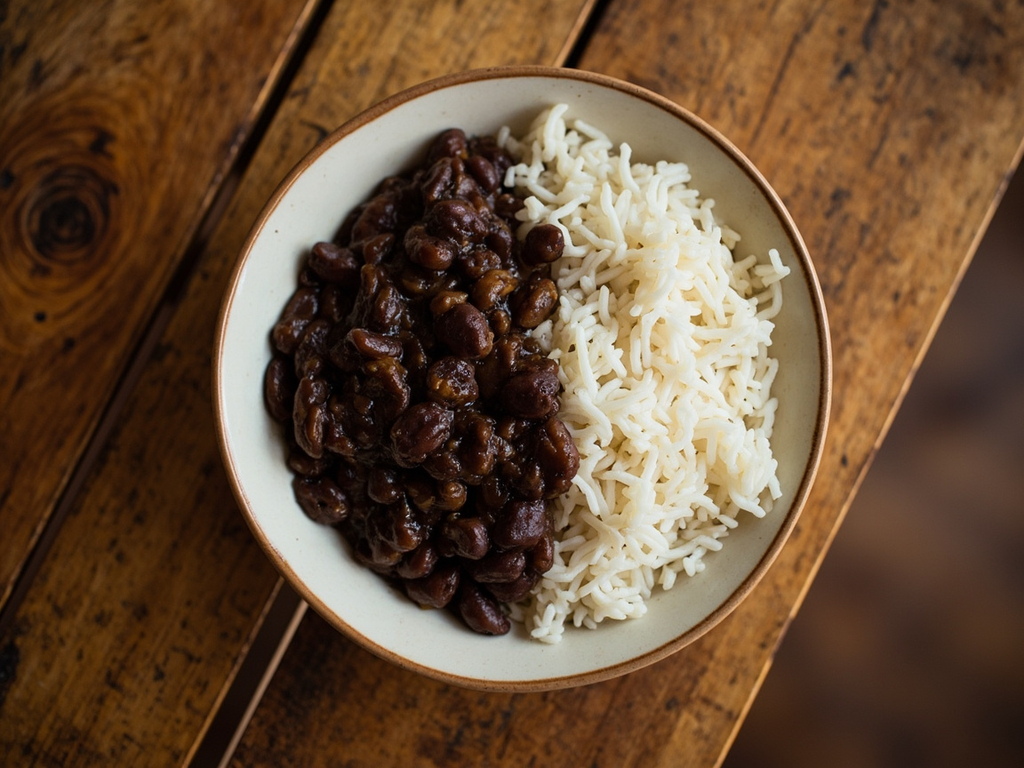
Arroz com feijão (rice and black beans)
Why this dish? It is said that João lived with almost monastic frugality, simply eating rice, beans, and fruits. This rice-and-beans duo is the beating heart of every Brazilian table, from the humblest to the richest — the dish he knew as a child in Juazeiro as well as in his Rio apartments.
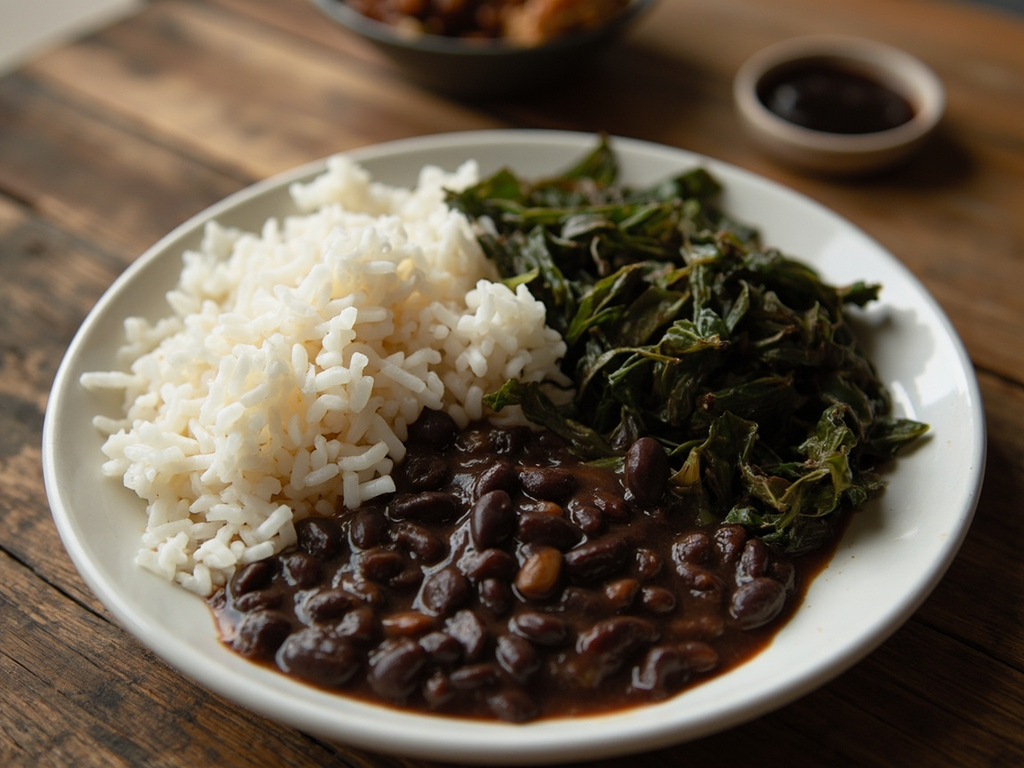
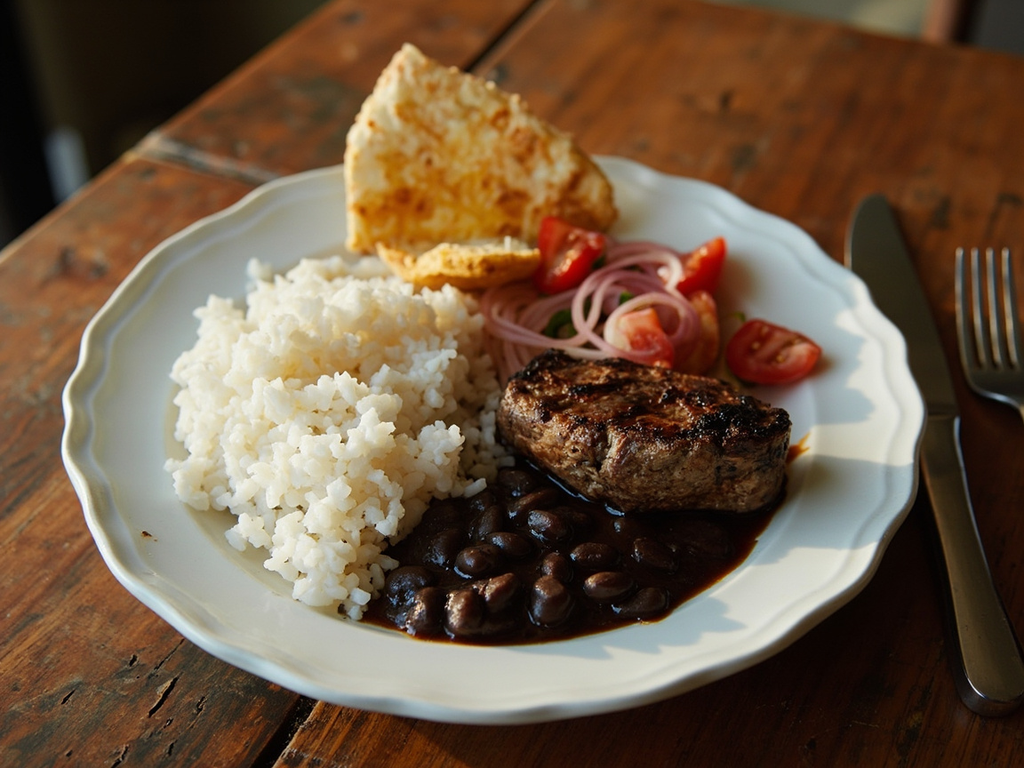
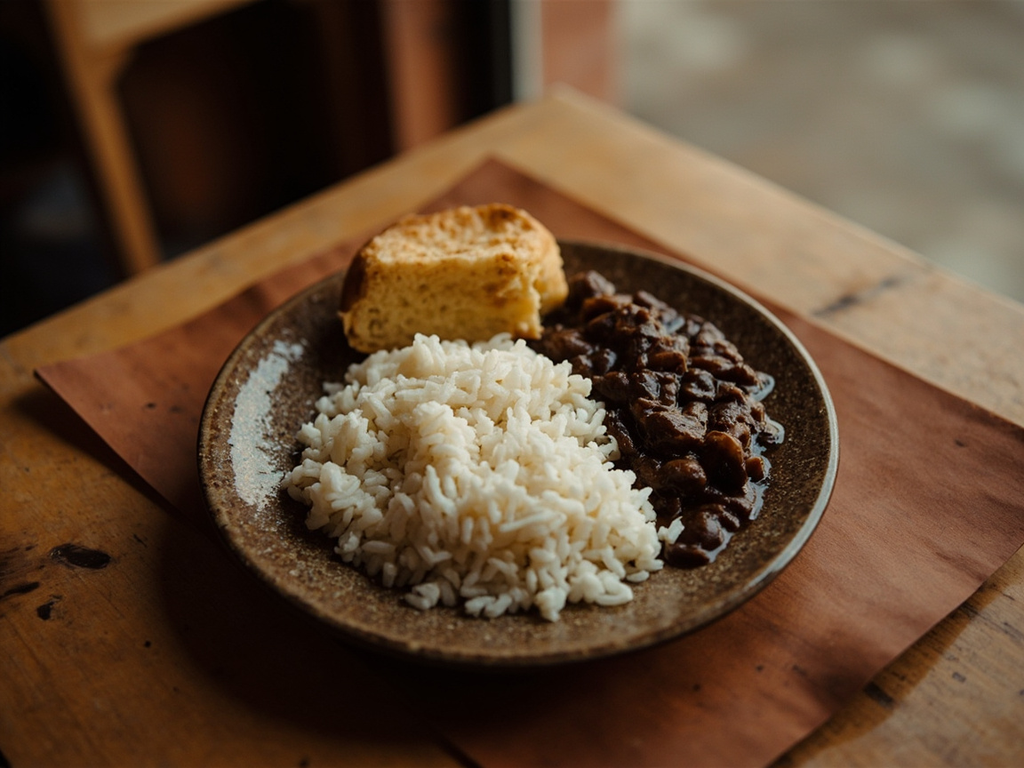
The inseparable couple of Brazilian cuisine: pearly white rice, lightly garlic-scented, alongside long-simmered black beans, soft and velvety. Simple, nourishing, comforting — the very definition of everyday food.
Sabe, I never needed much. A plate of rice, a little well-black and creamy feijão, and I'm fine. My mother, there in Juazeiro, would let the beans sing softly on the fire for hours — you need patience, like finding the right note on the violão. You mash the beans a little against the rice, you mix, and you eat slowly, without noise. Silence too is part of the meal.
- •Black beans (feijão preto) — a generous handful per person, soaked the day before (base)
- •White rice — a bowl per person (foundation)
- •Garlic — a few cloves (aromatic)
- •Onion — one (aromatic)
- •Lard or oil — a drizzle (fat)
- •Bay leaf — 1 (flavoring)
- •Salt — to taste (seasoning)
Arroz com feijão (rice and black beans)
The inseparable couple of Brazilian cuisine: pearly white rice, lightly garlic-scented, alongside long-simmered black beans, soft and velvety. Simple, nourishing, comforting — the very definition of everyday food.
Why this dish? It is said that João lived with almost monastic frugality, simply eating rice, beans, and fruits. This rice-and-beans duo is the beating heart of every Brazilian table, from the humblest to the richest — the dish he knew as a child in Juazeiro as well as in his Rio apartments.
Sabe, I never needed much. A plate of rice, a little well-black and creamy feijão, and I'm fine. My mother, there in Juazeiro, would let the beans sing softly on the fire for hours — you need patience, like finding the right note on the violão. You mash the beans a little against the rice, you mix, and you eat slowly, without noise. Silence too is part of the meal.
Ingredients (period version)
- Black beans (feijão preto) — a generous handful per person, soaked the day before (base)
- White rice — a bowl per person (foundation)
- Garlic — a few cloves (aromatic)
- Onion — one (aromatic)
- Lard or oil — a drizzle (fat)
- Bay leaf — 1 (flavoring)
- Salt — to taste (seasoning)
Ingredients
- Dried black beans — 250 g (soaked 8 h) (base)
- Long-grain rice — 300 g (foundation)
- Garlic — 4 cloves (aromatic)
- Onion — 1 medium (aromatic)
- Neutral oil — 3 tbsp (fat)
- Bay leaf — 1 (flavoring)
- Salt — to taste (seasoning)
Method
- Drain the soaked beans, cover with fresh water and add the bay leaf, then cook for 1 to 1 1/2 hours until very tender.
- In a pan, sauté half the minced garlic and onion until golden, then take a ladle of beans, mash them, and return everything to the pot to thicken the broth. Season with salt.
- For the rice: sauté the remaining garlic and onion in oil, add the rinsed rice, coat well, cover with salted water (1.5 times the volume), and cook covered for 15 minutes.
- Serve the rice and beans side by side, never mixed in the pot — it's on the plate that they are married.
How it was made : Feijão was cooked in an earthenware or cast-iron pot left for hours over a wood fire, often enriched with pieces of dried meat or pork rind in wealthier families. Rice and beans, an alliance of Portuguese, African, and Indigenous origins, have formed the nutritional backbone of Brazil since the 19th century.
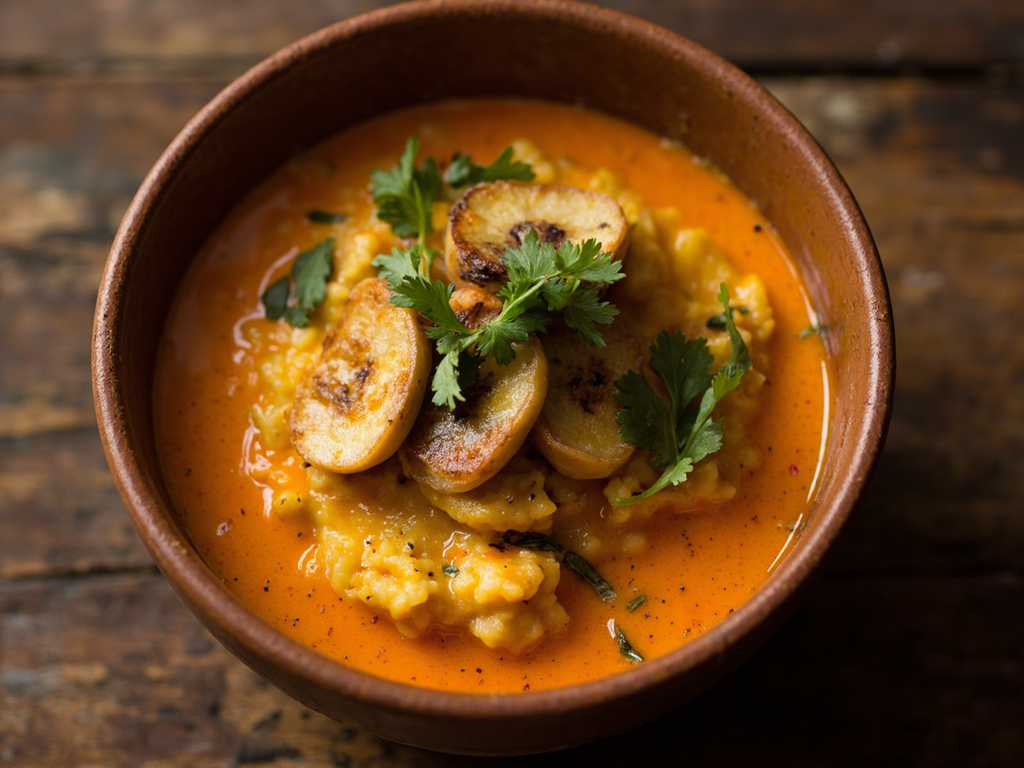
The contemporary twist : Serve with a farofa (toasted cassava flour browned in butter) sprinkled at the table for crunch — and a few pan-fried plantain slices.
João Gilberto · Charactorium