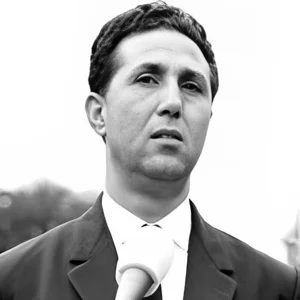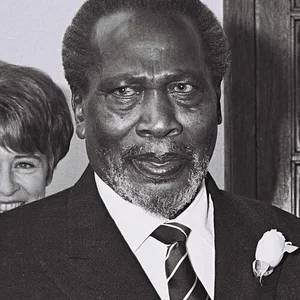

Kenyan statesman, a leading figure of Pan-Africanism and the anti-colonial struggle, he became the first Prime Minister and then the first President of independent Kenya. He led the country from independence in 1963 until his death in 1978.
Jomo Kenyatta(1893 — 1978)
Jomo Kenyatta
Kenya
6 min read
Frequently asked questions
Famous Quotes
« Our most difficult work begins now that we are independent.»
Key Facts
- Born around 1890 (exact date uncertain) into the Kikuyu people, in British colonial Kenya
- Published 'Facing Mount Kenya' in 1938, an ethnographic study defending Kikuyu culture
- Imprisoned by the British from 1953 to 1961, accused of supporting the Mau Mau uprising
- Became Prime Minister in 1963 and then the first President of independent Kenya in 1964
- Led Kenya until his death in 1978, advocating reconciliation ('Harambee')
Works & Achievements
A pioneering study of Kikuyu culture written by an African, defending the dignity of traditions against colonialism. A classic of anthropology and anti-colonial thought.
A decisive gathering that brought together the future leaders of an independent Africa, laying the groundwork for the continent's decolonisation.
Kenyatta takes the helm of the main nationalist party, which would lead Kenya to independence and remain in power for decades.
The culmination of the nationalist struggle: Kenya becomes a sovereign state, with Kenyatta as its first leader.
A programme of national unity and collective development, encouraging all communities to build the new Kenya together.
An autobiographical collection of speeches and reflections retracing his political journey and his philosophy of forgiveness.
Anecdotes
Jomo Kenyatta was named Kamau wa Ngengi at birth. He later chose the name “Kenyatta,” inspired by a traditional Kenyan beaded belt (a *mucibi wa kinyata*) that he liked to wear, and “Jomo,” a Kikuyu word evoking a blazing spear. This new name became a symbol of African pride.
In the 1930s, Kenyatta lived in Europe for nearly seventeen years. In London, he studied anthropology under the famous scholar **Bronisław Malinowski** and wrote a book about his people, the Kikuyu. He even worked briefly as an extra in a film and gave lectures to defend the rights of Africans.
In **1952**, the British colonial authorities accused him of having led the Mau Mau uprising and imprisoned him after a sensational trial at Kapenguria. He spent nine years in detention in remote, desert regions of northern Kenya. Far from erasing him, prison made him a hero in the eyes of the people.
Having become head of government in **1963**, Kenyatta launched the rallying cry “Harambee!”, which means “let us all pull together” in Swahili. This slogan, which became the national motto featured on Kenya's coat of arms, called on everyone to take part in building the new country.
While many feared retaliation against the former colonists after independence, Kenyatta championed reconciliation with his phrase “Forgive and forget.” He encouraged many European farmers to stay in Kenya, surprising those who had portrayed him as a dangerous agitator.
Primary Sources
The Gikuyu people gave their first allegiance to the unit of the family group, then to the clan, and finally to the tribe as a whole.
We are not fighting against any single community or against any single race. We are fighting for the rights of the African people of the whole of Kenya.
Harambee! Let us all pull together. We must work hard, together, to build our nation.
Let us join hands and work for the benefit of Kenya, the country we all love and cherish.
Key Places
Region of the central highlands where Kenyatta was born around 1893 into a family of Kikuyu peasants. This rural grounding shaped his entire political thinking.
Kenyatta lived here for nearly seventeen years, studying anthropology and campaigning for African rights. It was here that he published his book and organized the Pan-African Congress.
An isolated town in the northwest where the 1952-1953 trial took place that convicted Kenyatta for his alleged ties to the Mau Mau. The trial became a symbol of the anti-colonial struggle.
An arid and remote area in northern Kenya where Kenyatta was detained and then placed under house arrest for years. His isolation paradoxically strengthened his aura as a martyr.
The center of power where Kenyatta governed as Prime Minister and then President from 1963 to 1978. There he led the building of the young independent state.
A major port city on the coast where Kenyatta died in his sleep on 22 August 1978. His passing marked the end of an era for the country.
Typical Objects

Kenyatta almost always appeared in public holding a fly-whisk made of horsehair, which became his personal emblem. This object symbolized the authority and status of a traditional African chief.

This traditional beaded belt worn by the Kikuyu directly inspired the name “Kenyatta” that he adopted. It tied his identity to the heritage of his people.

During ceremonies, Kenyatta sometimes wore a headdress made of colobus monkey skin, a sign of dignity among Kikuyu elders. It asserted his African roots in the face of colonial symbols.

Adopted at independence in 1963, this black-red-green flag bearing a Maasai shield embodies the nation Kenyatta led. Its colors evoke the people, the blood shed for freedom, and the richness of the land.

Written during his studies in London, this book describes Kikuyu culture from the inside and defends its value against colonial contempt. It became a landmark of African thought.
School Curriculum
Vocabulary & Tags
Key Vocabulary
Daily Life
Morning
Once he became president, Kenyatta rose early, true to his Kikuyu farmer habits. He liked to begin the day on his farm at Gatundu, walking among his lands before receiving ministers and visitors.
Afternoon
His afternoons were devoted to affairs of state: cabinet councils, receiving foreign heads of state, and long discussions with the elders and notables who came from all over the country. He readily made a point of listening to people's grievances.
Evening
In the evening, he reunited with his family and his close advisers. A great orator, he enjoyed stories, Kikuyu proverbs, and conversations about the history and future of Kenya.
Food
His diet remained simple and close to Kikuyu traditions: maize, beans, leafy greens, and dishes such as *ugali* (a maize porridge). He valued the produce of the Kenyan land over imported food.
Clothing
Kenyatta blended Western dress with African symbols: he often wore a leather jacket or a suit, but also animal-skin headdresses and his inseparable fly whisk, asserting his African identity.
Housing
He lived in his home at Gatundu, in the heart of Kikuyu country, and in the presidential residences in Nairobi and Mombasa. His farm remained his favorite place, a sign of his attachment to the land.
Historical Timeline
Period Vocabulary
Liens externes & ressources
Références
Œuvres
Facing Mount Kenya (Au pied du mont Kenya)
1938
Organisation du 5e Congrès panafricain de Manchester
1945
Direction de la KANU
1960
Indépendance du Kenya
1963
Politique de réconciliation « Harambee »
1963-1978
Suffering Without Bitterness
1968