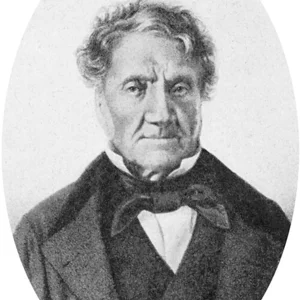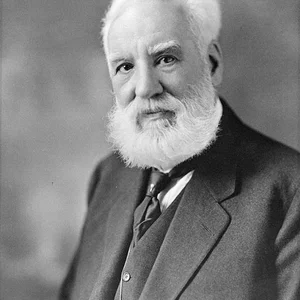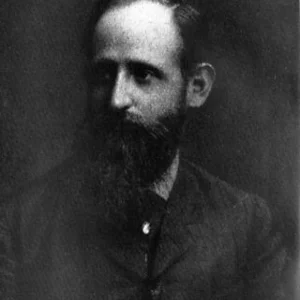

Austrian physician and physiologist, a pioneer of the cathartic method. His treatment of the patient “Anna O.” in the 1880s and his collaboration with Sigmund Freud paved the way for the birth of psychoanalysis.
Josef Breuer(1842 — 1925)
Josef Breuer
Autriche, empire d'Autriche, Cisleithanie
6 min read
Frequently asked questions
Key Facts
- Born in 1842 in Vienna, died in 1925 in the same city
- Described the Hering-Breuer reflex regulating breathing around 1868
- Demonstrated the role of the semicircular canals of the inner ear in balance (1870s)
- Treated the patient “Anna O.” (Bertha Pappenheim) with the cathartic method between 1880 and 1882
- Published the “Studies on Hysteria” with Sigmund Freud in 1895
Works & Achievements
Discovery of the nervous mechanism that, via the vagus nerve, automatically regulates the rhythm of breathing. A classic of physiology.
Demonstration that the canals of the inner ear serve to perceive the movements of the head, founding the physiology of the sense of balance.
First implementation of the cathartic method, in which speaking under hypnosis makes symptoms disappear. The starting point of psychoanalysis.
Article setting out the idea that hysterical symptoms stem from repressed traumatic memories and their emotional charge.
Foundational work bringing together clinical cases and the theory of catharsis. Regarded as the birth certificate of psychoanalysis.
Anecdotes
Between 1880 and 1882, Breuer treated a young patient he nicknamed “Anna O.” to protect her identity — she was in fact Bertha Pappenheim, who would become a leading figure in social work. It was she who coined the expression “talking cure” after noticing that her symptoms eased when she recounted their origin under hypnosis.
Breuer was not interested in the mind alone: while studying respiration, he discovered, together with the physiologist Ewald Hering, an automatic reflex that prevents the lungs from over-inflating. This mechanism still bears their names today, the “Hering-Breuer reflex.”
We also owe him a discovery about balance: Breuer understood that the small fluid-filled canals in the inner ear inform us about the movements of the head. That is why we feel dizzy after spinning around on the spot.
A renowned Viennese physician, Breuer counted many university professors among his patients, including the great physiologist Ernst Brücke. Older and already established, he gave financial help to the young Sigmund Freud, then a penniless student.
The friendship between Breuer and Freud eventually fell apart. Breuer remained cautious about the role of sexuality in neuroses, whereas Freud made it the heart of his theory. Their famous joint book was almost their last collaboration.
Primary Sources
The hysterical patient suffers for the most part from reminiscences. Each symptom disappeared permanently once we managed to clearly awaken the memory of the triggering event and the affect that accompanied it.
She very aptly described this procedure, speaking seriously, as the “talking cure,” and, jokingly, as “chimney-sweeping.”
The inflation of the lung triggers, by a reflex action via the vagus nerve, the halting of inhalation and the onset of exhalation.
The semicircular canals do not serve hearing, but rather the perception of the movements and position of the head in space.
Key Places
Breuer's birthplace, where he spent almost his entire life. A bustling cultural and scientific capital at the end of the 19th century.
Where he studied medicine and later conducted his research in physiology. One of the great medical faculties of Europe.
Large hospital where Breuer served as assistant to the clinician von Oppolzer and refined his medical practice.
His renowned medical practice, where he received a well-to-do clientele, including notably several university professors.
Vast Viennese cemetery where Breuer was buried in 1925.
Typical Objects

Couch on which patients would lie down to relax and recount their memories. It became the very symbol of the talking cure.

The town doctor's instrument for listening to the heart and lungs. Breuer used it in his daily clinical practice.

Notebook in which the doctor recorded day after day the evolution of his patients' symptoms. The notes on Anna O. fed into the Studies on Hysteria.

The physiologist's tool for studying tissues and organs, such as the labyrinth of the inner ear. Breuer was first and foremost a laboratory researcher.

Leather case holding the instruments carried to patients' bedsides during house calls, which were common at the time.

A watch kept in the waistcoat pocket, essential for the doctor to measure his patients' pulse and breathing.
School Curriculum
Vocabulary & Tags
Key Vocabulary
Daily Life
Morning
A renowned city physician, Breuer began his day early with consultations at his practice. He saw a large, well-off clientele, carefully noting the condition of each patient.
Afternoon
The afternoon was often devoted to house calls, common in an era when the sick were frequently treated at home. He traveled across Vienna with his doctor's bag.
Evening
In the evening, Breuer returned to his family and his books, or entertained friends. A cultured man, he discussed science, philosophy, and literature, and kept up a rich correspondence, notably with Freud.
Food
He shared the diet of the Viennese bourgeoisie: soups, slow-cooked meats, bread, and the city's famous pastries. Viennese coffee, taken at a café or at home, set the rhythm of the day.
Clothing
Breuer wore the formal attire of the 19th-century bourgeois physician: a dark suit, waistcoat, stiff-collared shirt and tie, and a pocket watch. A neatly trimmed beard completed the respectable look of the era.
Housing
He lived and practiced in a bourgeois apartment in central Vienna, spacious and comfortable, blending the family home with his consulting room, furnished in the plush taste of the period.
Historical Timeline
Period Vocabulary
Liens externes & ressources
Références
Œuvres
Réflexe de Hering-Breuer (avec Ewald Hering)
1868
Théorie de la fonction des canaux semi-circulaires
1874
Traitement et observation de « Anna O. »
1880-1882
Communication préliminaire sur le mécanisme psychique des phénomènes hystériques (avec S. Freud)
1893
Études sur l'hystérie (avec S. Freud)
1895