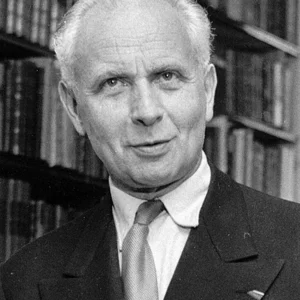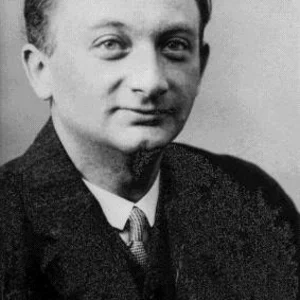

Joseph Roth (1894-1939) was an Austrian writer and journalist, a major figure in German-language literature between the wars. Author of "The Radetzky March", he celebrated the nostalgia for the vanished Austro-Hungarian Empire and denounced the rise of Nazism before dying in exile in Paris.
Joseph Roth(1894 — 1939)
Joseph Roth
Autriche, Cisleithanie
6 min read
Frequently asked questions
Key Facts
- Born in 1894 in Brody, Galicia, then an eastern province of the Austro-Hungarian Empire
- Became a renowned journalist in the 1920s, notably as a correspondent for the Frankfurter Zeitung
- Published his masterpiece "The Radetzky March" in 1932, a fresco on the decline of the Habsburg Empire
- Exiled himself in Paris in 1933 after Hitler's rise to power, fleeing Nazism
- Died in Paris in 1939, in destitution and an alcoholic
Works & Achievements
A novel set in a post-war Central Europe, populated by displaced persons and survivors.
The story of a former soldier unable to find his place in the world after the Empire.
A sensitive report on the condition of Eastern European Jews, torn between tradition and exile.
The story of a humble Galician Jew struck by misfortune, Roth’s first major literary success.
A masterpiece following three generations of the Trotta family in the slow decline of the Austro-Hungarian Empire.
A sequel to *Radetzky*, continuing the Trotta chronicle up to the Anschluss of 1938.
A final, almost autobiographical story about a drunken Parisian vagrant touched by grace.
Anecdotes
On the very day Hitler became chancellor, January 30, 1933, Joseph Roth left Germany never to return. He had understood the mortal danger of Nazism before many other writers and wrote to his friend Stefan Zweig that "hell reigns."
Roth spent nearly his entire adult life in hotel rooms, without a real home. He wrote seated in cafés, a stack of papers before him, and considered himself an eternal traveler, a citizen of no country since the disappearance of the Austro-Hungarian Empire.
His great novel, *The Radetzky March* (1932), takes its title from a famous military march by Johann Strauss Sr. Through three generations of the Trotta family, Roth recounts the slow collapse of the Habsburg Empire he so loved.
Roth told contradictory stories about his own origins: sometimes his father was a high-ranking Austrian official, sometimes a Polish count, sometimes a railway employee. A master of legend, he deliberately blurred the trail of his birth in the modest Jewish town of Brody.
An alcoholic, Roth drew from his own downfall the material for his last story, *The Legend of the Holy Drinker* (1939), the tale of a drunken vagrant in Paris touched by grace. He died a few weeks later, at age 44, in a Paris hospital.
Primary Sources
You will now see that we are heading towards great catastrophes. (...) Don't delude yourself. Hell reigns.
This book foregoes the applause and approval of those who, regarding the Eastern Jews, feel only a pity full of condescension, but it is addressed to readers before whom one need not defend man against contempt.
It was a habit of the Trottas: loyalty to the Emperor and to service. Lieutenant Trotta had saved the Emperor's life at the Battle of Solferino, and his name had entered the schoolchildren's reading books.
Key Places
Roth's birthplace, on the eastern edge of the Empire, notably populated by Central European Jews.
Imperial capital where Roth studied and which, in his eyes, embodies the heart of Austro-Hungarian civilization.
Home to the *Frankfurter Zeitung*, where Roth became a star journalist in the 1920s.
Bustling metropolis of the Weimar Republic where Roth observed the rise of tensions and Nazism.
City of exile where Roth spent his final years in hotels and where he died in May 1939.
Typical Objects

Daily tool of the journalist and novelist, who wrote articles and novels at an intense pace to earn a living.

Alcohol accompanied Roth throughout his life and eventually destroyed him; it inspired his story "The Legend of the Holy Drinker".

Major German daily for which Roth was one of the best-paid reporters of the 1920s.

Symbol of his wandering life from hotel to hotel and his existence as an exile after 1933.

Roth's true office, where he wrote amid the noise of Viennese, Berlin, and later Parisian cafés.

Roth cultivated the appearance of an old Austro-Hungarian gentleman, nostalgic for the vanished Empire.

Tutelary figure of his work, the emperor embodies the lost world that Roth never ceased to mourn.
School Curriculum
Vocabulary & Tags
Key Vocabulary
Tags
Daily Life
Morning
Roth wakes up in a hotel room, often tired and already tempted by a first drink. He goes down to the nearby café, where newspapers and correspondence await him, and starts scribbling notes and articles.
Afternoon
Seated at a café table, he writes for hours — novels in the morning, journalism in the afternoon — to cope with his constant debts. He receives editors, writer friends, and exiles who come seeking advice or comfort.
Evening
Evenings stretch on around alcohol and conversations about literature and politics. Roth, a brilliant conversationalist, sets the world to rights while gradually sinking into intoxication.
Food
His diet is irregular and dominated by alcohol — white wine, cognac, schnapps — accompanied by simple café and brasserie dishes. At the end of his life, he ate little and drank heavily.
Clothing
Roth maintains an Austro-Hungarian gentlemanly appearance: dark suit, coat, sometimes a cane. He cultivates an air of old imperial elegance, nostalgic for a vanished world.
Housing
He never has a real home and lives almost his entire life in hotel rooms, in Vienna, Berlin, then Paris. The hotel, a place of transit par excellence, becomes the symbol of his stateless existence.
Historical Timeline
Period Vocabulary
Visual Style
Une esthétique sépia et automnale de splendeur impériale fanée, entre cafés viennois enfumés et chambres d'hôtel d'exil, baignée de mélancolie.
Sound Ambience
L'ambiance feutrée et nostalgique des cafés d'Europe centrale, mêlant cliquetis de machine à écrire, sifflets de trains et échos de marches militaires viennoises.
Liens externes & ressources
Références
Œuvres
Hôtel Savoy
1924
La Fuite sans fin
1927
Juifs en errance
1927
Job, roman d'un homme simple
1930
La Marche de Radetzky
1932
La Crypte des Capucins
1938
La Légende du saint buveur
1939