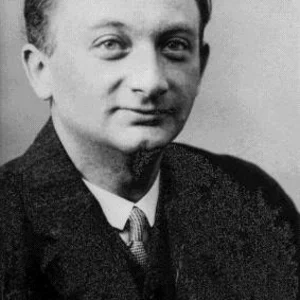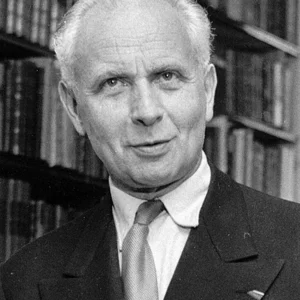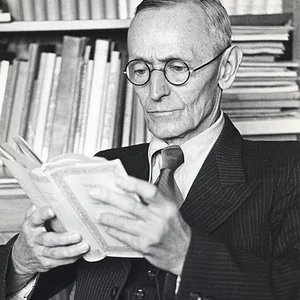

Hermann Hesse (1877-1962) was a German-born Swiss writer and poet, awarded the Nobel Prize in Literature in 1946. His work, marked by spiritual quest and introspection, blends Eastern influences and psychoanalysis in novels such as “Siddhartha,” “Steppenwolf,” and “The Glass Bead Game.”
Hermann Hesse(1877 — 1962)
Hermann Hesse
Suisse, Allemagne, Empire allemand
6 min read
Frequently asked questions
Famous Quotes
« For the possible to come into being, the impossible must be attempted again and again.»
« If we hate a person, we are hating in their image something that is within ourselves.»
Key Facts
- Born in 1877 in Calw, in Württemberg (Germany), into a family of Pietist missionaries
- Published his first major success “Peter Camenzind” in 1904
- Published “Siddhartha” in 1922, a novel inspired by his discovery of Indian spirituality
- Published “Steppenwolf” (1927) and then “The Glass Bead Game” (1943), his most important work
- Received the Nobel Prize in Literature in 1946; died in 1962 in Montagnola, Switzerland
Works & Achievements
First major success, the story of a young man in search of nature and freedom that launched Hesse's career.
A novel criticizing the rigid school system that crushes children, largely inspired by his own adolescence.
A coming-of-age story marked by psychoanalysis, which became a manifesto for post-war youth.
A philosophical tale about a man's spiritual quest in ancient India, a worldwide success.
A novel about the inner conflict of modern man between instinct and reason.
The story of a friendship between a studious monk and a wandering artist, contrasting spirit and sensuality.
A vast utopian novel about an intellectual elite, the work that won the Nobel Prize.
Anecdotes
At age 15, in 1892, Hermann Hesse ran away from the Protestant seminary in Maulbronn where he was being groomed to become a pastor. He went through a severe crisis and declared he wanted to be "a poet or nothing at all." This adolescent revolt against rigid education would fuel his entire body of work.
His grandfather Hermann Gundert was a famous Indologist who owned an immense library of books on India and Eastern religions. As a child, Hesse spent hours among these exotic works, a fascination that would resurface much later in his novel *Siddhartha*.
During World War I, Hesse published pacifist articles and refused to give in to nationalist hatred. The German press called him a traitor, but he continued to organize the sending of books to prisoners of war.
Around 1916, after a bout of depression, Hesse underwent psychoanalysis inspired by the ideas of Carl Gustav Jung. This experience transformed his writing and gave birth to *Demian*, a novel he first published under a pseudonym, Emil Sinclair.
Around the same time, Hesse took up watercolor painting to calm his mind. He would paint hundreds of luminous landscapes of Ticino and sometimes illustrate his own poems given to friends.
In 1946, he received the Nobel Prize in Literature, but his fragile health prevented him from traveling to Stockholm for the ceremony. His books, long overlooked, would become cult reading for youth around the world in the 1960s.
Primary Sources
The bird fights its way out of the egg. The egg is the world. Whoever wants to be born must destroy a world.
Knowledge can be communicated, but not wisdom. One can find it, live it, be carried by it, but cannot express or teach it.
Love is higher than hatred, understanding higher than anger, peace nobler than war.
Magic Theatre — Entrance not for everyone — Reserved for the insane.
Every beginning holds a magic that protects us and helps us to live.
Key Places
Small town in Württemberg where Hesse was born; its medieval bridge and alleyways inspired several childhood stories.
Former Cistercian abbey turned Protestant school from which the young Hesse fled in 1892.
University town where Hesse trained as a bookseller and wrote his first poems.
Village where Hesse lived after the success of *Peter Camenzind* and started his first family.
Swiss capital where he settled in 1912 and lived through the years of the Great War.
Sunny village in southern Switzerland where Hesse lived for over forty years, painting and writing his masterpieces.
Typical Objects

Hesse painted landscapes of Ticino to soothe his crises; painting became as important a therapy for him as writing.

He wrote his novels and voluminous correspondence by hand, treating each page as an object.

The thin wire-rimmed glasses became the familiar image of the writer in his later decades.

A great gardening enthusiast in Montagnola, Hesse cultivated his vegetable patch and burned autumn leaves, a ritual he describes in his texts.

Inherited from the world of his indologist grandfather, these works on India nourished "Siddhartha".

Used for the final drafts of his long manuscripts such as "The Glass Bead Game".
School Curriculum
Vocabulary & Tags
Key Vocabulary
Tags
Daily Life
Morning
Hesse rose early and devoted his best hours to writing, in the quiet of his study. He also loved to walk in the hills to reflect before taking up his pen.
Afternoon
The afternoon was often reserved for gardening and watercolor painting, two activities he considered essential to his balance. He also answered the abundant mail from his readers.
Evening
In the evening, he read, listened to music (especially Mozart), or received a few friends and writers. He jotted down his thoughts and prepared the next day's work.
Food
Hesse led a sober life, close to the life-reform ideas of his time, with simple cooking based on garden produce, fruit, and local Ticino wine.
Clothing
He wore simple, comfortable clothes: linen jackets, a straw hat for the garden, and his famous round glasses that marked his silhouette as a writer.
Housing
For more than forty years, he lived at Casa Camuzzi and then a house in Montagnola, surrounded by a garden and overlooking Lake Lugano and the sunny hills.
Historical Timeline
Period Vocabulary
Visual Style
Un style d'aquarelle lumineuse à la manière de Hesse lui-même, mêlant l'introspection romantique allemande et la clarté ensoleillée du Tessin.
Sound Ambience
L'atmosphère paisible d'un village du Tessin : cloches lointaines, cigales, bruissement des feuilles et grattement de la plume dans le silence du jardin.
Liens externes & ressources
Références
Œuvres
Peter Camenzind
1904
L'Ornière (Unterm Rad)
1906
Siddhartha
1922
Le Loup des steppes (Der Steppenwolf)
1927
Narcisse et Goldmund
1930
Le Jeu des perles de verre (Das Glasperlenspiel)
1943