 flip
flipKindzmarauli, the Semi-Sweet Red Wine of Kakheti
Kindzmarauli, the Semi-Sweet Red Wine of Kakheti
Why this dish? Kindzmarauli, a semi-sweet red made from the saperavi grape of Kakheti, is said to have been Stalin's favorite wine, which he had shipped from Georgia. During his late-night dinners, he urged his guests to drink toast after toast, watching who kept their composure — a power game as much as a Georgian hospitality tradition.
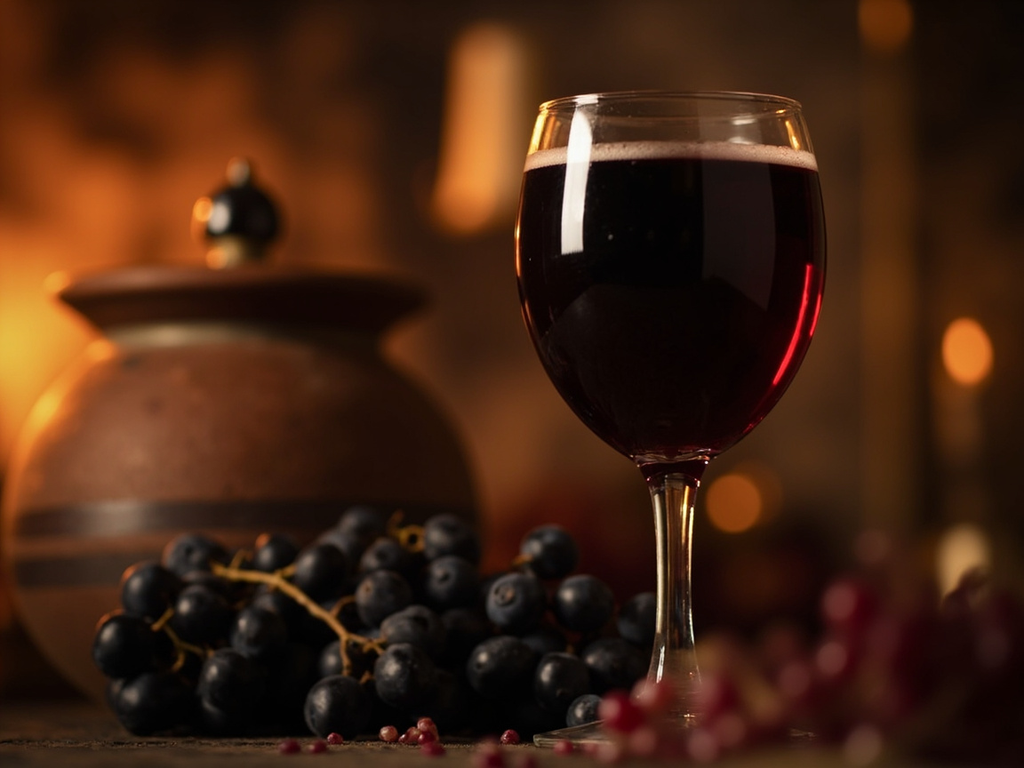
A dark, deep red wine, slightly sweet and fruity (black cherry, plum), made from the saperavi grape. Note here: we present the service and the toast ritual, not home winemaking — wine is a fermented product requiring months in the cellar and vintner's skill.
You don't drink to get drunk like a common soldier, comrade — you drink to toasts, and it's the tamada who decides. To the country, to home, to those no longer with us: at each word, you empty your glass, never half. Mine came from Kakheti, that thick, sweet red made in large buried jars. And I watched, yes, I watched well who held his glass and who talked too much: you learn a lot about a man at the end of a bottle.
- •Saperavi grapes from Kakheti — whole harvest (wine material)
- •Buried jar (qvevri) — 1 (traditional fermentation)
Kindzmarauli, the Semi-Sweet Red Wine of Kakheti
A dark, deep red wine, slightly sweet and fruity (black cherry, plum), made from the saperavi grape. Note here: we present the service and the toast ritual, not home winemaking — wine is a fermented product requiring months in the cellar and vintner's skill.
Why this dish? Kindzmarauli, a semi-sweet red made from the saperavi grape of Kakheti, is said to have been Stalin's favorite wine, which he had shipped from Georgia. During his late-night dinners, he urged his guests to drink toast after toast, watching who kept their composure — a power game as much as a Georgian hospitality tradition.
You don't drink to get drunk like a common soldier, comrade — you drink to toasts, and it's the tamada who decides. To the country, to home, to those no longer with us: at each word, you empty your glass, never half. Mine came from Kakheti, that thick, sweet red made in large buried jars. And I watched, yes, I watched well who held his glass and who talked too much: you learn a lot about a man at the end of a bottle.
Ingredients (period version)
- Saperavi grapes from Kakheti — whole harvest (wine material)
- Buried jar (qvevri) — 1 (traditional fermentation)
Ingredients
- One bottle of Kindzmarauli (saperavi, semi-sweet) — 1 (wine to serve)
- Stemmed glasses — according to guests (service)
- Decorative drinking horn (kantsi) — optional (toast ritual)
Method
- Serve Kindzmarauli slightly chilled, around 14-16 °C, to balance its sweetness.
- Appoint a tamada (toastmaster) who opens and paces the table.
- Propose toasts in traditional order: to peace, to the homeland, to the departed, to guests, to children.
- At each toast, raise the glass and do not set it down until after drinking — never clink glasses to the dead.
- Pair with khinkali and pkhali, whose fat and acidity respond to the wine's fruitiness.
How it was made : Georgia claims 8,000 years of winemaking, with the unique qvevri method: large clay jars buried underground where juice, skins, and stems ferment together. Kindzmarauli, semi-sweet, gets its softness from the natural arrest of fermentation by the cold of high-altitude cellars — no added sugar. (Drink in moderation, for adults only.)
The contemporary twist : Non-alcoholic version for the family table: saperavi grape juice (or bold dark grape juice) served in the same glasses, with the same toast ritual — the spirit of the supra without intoxication.
Joseph Stalin · Charactorium