 flip
flipAmazake — Fermented Rice Drink
Amazake — Fermented Rice Drink
Why this dish? Amazake, sweet and non-alcoholic, was drunk hot during the cold of winter and visits to shrines — Akiko frequented Kyoto and its temples (Kinkaku-ji, shrines). A "rainy day energy" drink reputed to be fortifying, it warmed both children and the poetess staying up late over her verses.
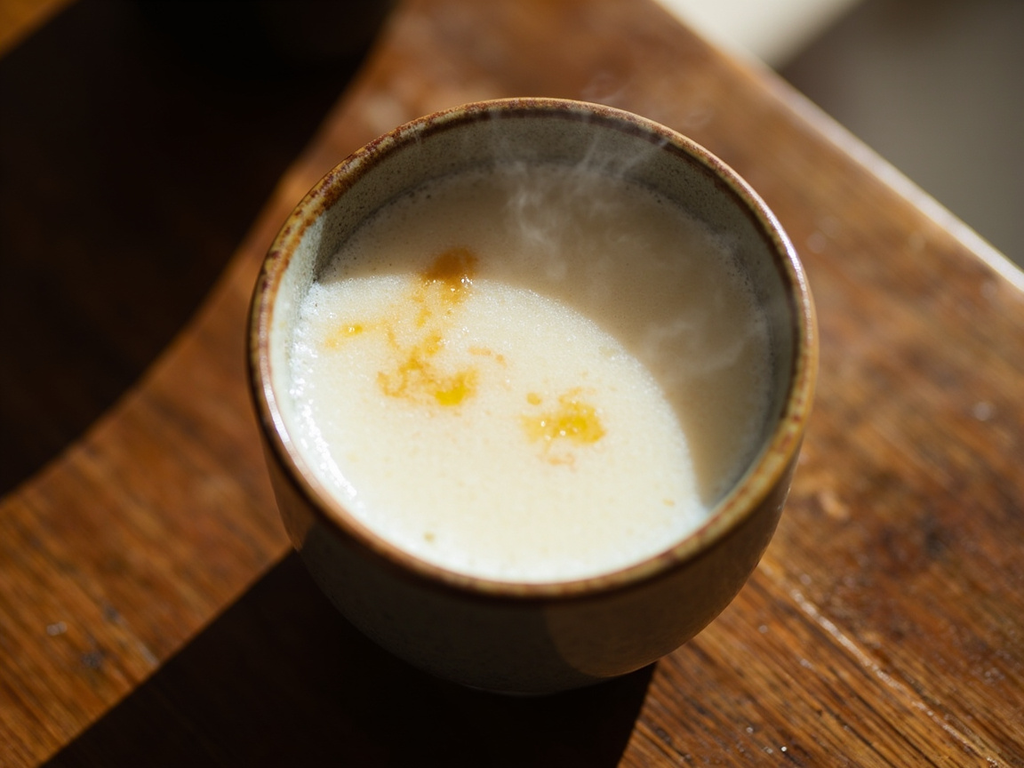
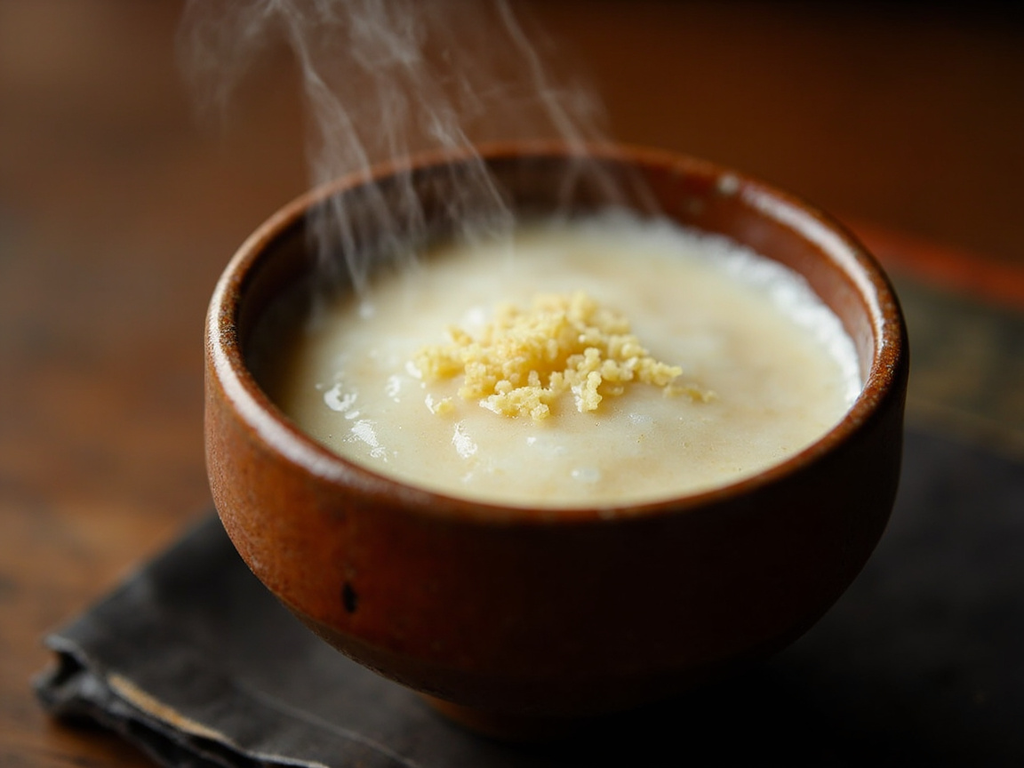
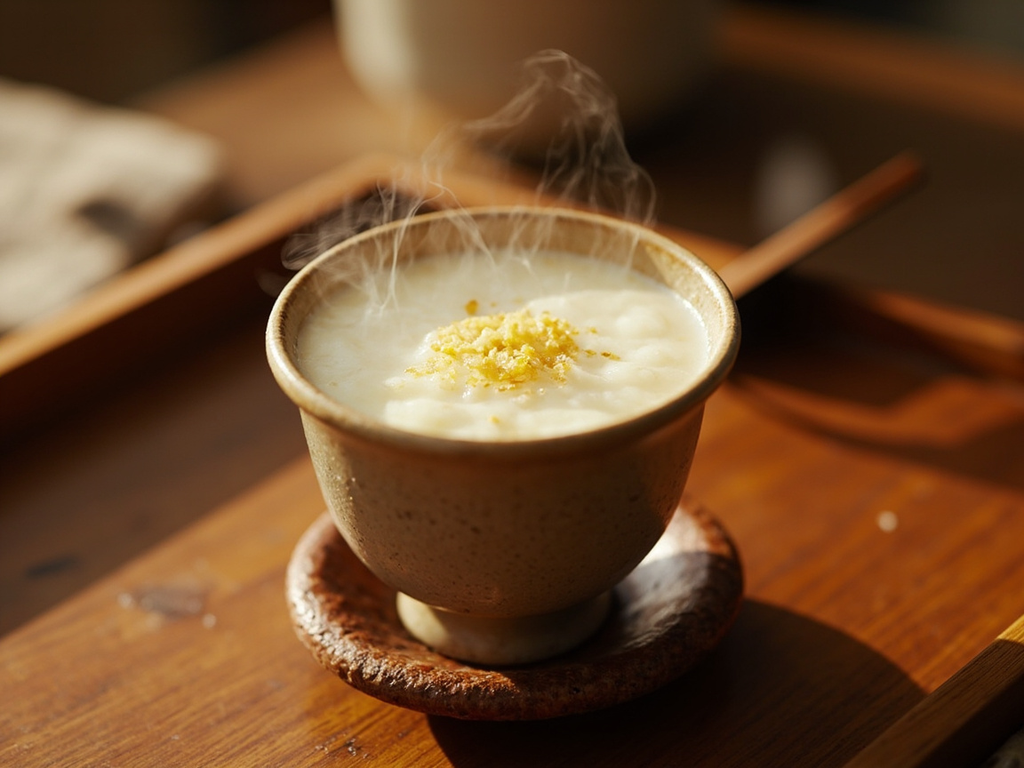
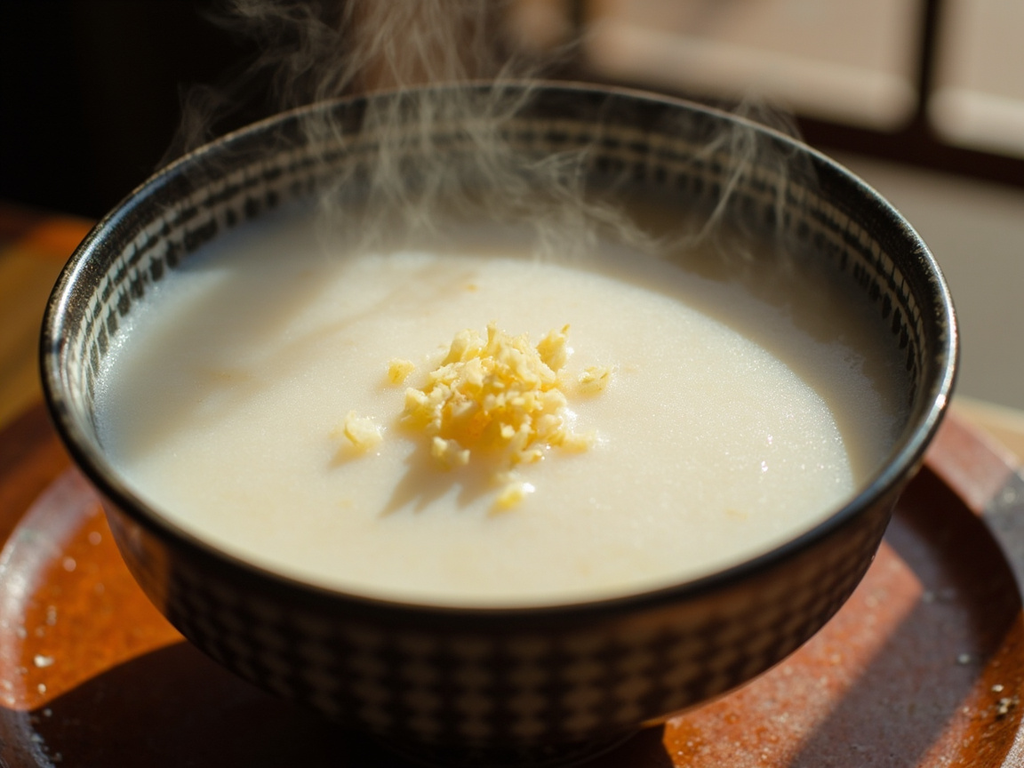
A thick, naturally sweet drink born from the fermentation of rice with kōji (the same ferment as sake), but without alcohol. Served piping hot, sometimes spiked with a touch of ginger, it is the comforting sweetness of Japanese winter.
On evenings when the cold creeps in through the paper partitions, nothing beats a steaming bowl of amazake held in both hands. The cooked rice married to kōji becomes sweet all on its own, without adding sugar — it is a small warm miracle that requires only patience and steady heat. Sometimes I grate a little ginger into it, which stings just enough to wake the spirit before taking up the brush again. Drink it slowly: it nourishes like a meal and consoles like a lullaby.
- •Cooked rice — two bowls (base)
- •Kōji (rice inoculated with ferment) — a good handful (sweetening fermentation agent)
- •Hot water — as needed for consistency (liquid)
- •Fresh ginger — a small piece (flavor (optional))
Amazake — Fermented Rice Drink
A thick, naturally sweet drink born from the fermentation of rice with kōji (the same ferment as sake), but without alcohol. Served piping hot, sometimes spiked with a touch of ginger, it is the comforting sweetness of Japanese winter.
Why this dish? Amazake, sweet and non-alcoholic, was drunk hot during the cold of winter and visits to shrines — Akiko frequented Kyoto and its temples (Kinkaku-ji, shrines). A "rainy day energy" drink reputed to be fortifying, it warmed both children and the poetess staying up late over her verses.
On evenings when the cold creeps in through the paper partitions, nothing beats a steaming bowl of amazake held in both hands. The cooked rice married to kōji becomes sweet all on its own, without adding sugar — it is a small warm miracle that requires only patience and steady heat. Sometimes I grate a little ginger into it, which stings just enough to wake the spirit before taking up the brush again. Drink it slowly: it nourishes like a meal and consoles like a lullaby.
Ingredients (period version)
- Cooked rice — two bowls (base)
- Kōji (rice inoculated with ferment) — a good handful (sweetening fermentation agent)
- Hot water — as needed for consistency (liquid)
- Fresh ginger — a small piece (flavor (optional))
Ingredients
- Cooked short-grain rice (warm porridge) — 300 g (base)
- Rice kōji — 200 g (sweetening fermentation)
- Water — 400 ml (liquid)
- Freshly grated ginger — 1 teaspoon (flavor (optional))
- Pinch of salt — 1 pinch (balance)
Method
- Mix the cooked rice cooled to about 60°C with crumbled kōji and warm water.
- Keep the mixture at 55–60°C for 6 to 10 hours (using a yogurt maker, rice cooker on "keep warm" with lid ajar, or monitored water bath): it will gradually become very sweet.
- Blend for a smooth texture, or leave as is for a grainier drink.
- Just before serving, dilute with a little water, heat without boiling (boiling kills the enzymes), and add a pinch of salt.
- Pour into a bowl and grate a little ginger on top if desired.
How it was made : Although its name means "sweet sake," amazake fermented with kōji contains no alcohol. Attested since Japanese antiquity, it was a street drink sold in winter during the Meiji era and a shrine drink at New Year; it was considered so fortifying that it was sometimes called "drinkable IV drip" for both summer and winter.
The contemporary twist : Serve it chilled in summer in a glass, like an ancestral smoothie: the Japanese of old actually drank it during the worst heat to keep going.
Sources : Naomichi Ishige, The History and Culture of Japanese Food, 2001
Akiko Yosano · Charactorium