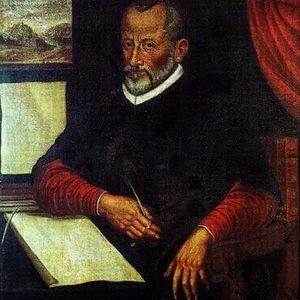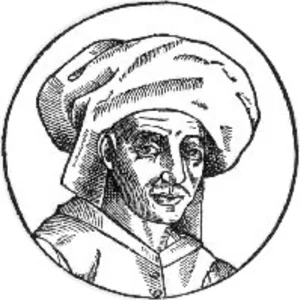

Josquin des Prez was a Franco-Flemish composer and a major figure of Renaissance polyphony. An undisputed master of vocal music, he brought the art of counterpoint to a peak of expressiveness and influenced musicians across all of Europe.
Josquin des Prez(1440 — 1521)
Josquin des Prés
France, Pays-Bas des Habsbourg
6 min read
Frequently asked questions
Key Facts
- Born around 1450-1455 in Hainaut (the Picard/Franco-Flemish region)
- Active in several Italian courts: Milan (the Sforza), Rome (the papal chapel), and Ferrara (the Este court) at the end of the 15th century
- Composed around 18 masses, including the Missa Pange lingua and the Missa L'homme armé
- Author of celebrated motets such as the Ave Maria... virgo serena and of many secular chansons
- Died on 27 August 1521 in Condé-sur-l'Escaut, where he was provost of the collegiate church
Works & Achievements
A Mass based on a Gregorian hymn, regarded as a pinnacle of his late style. It blends liturgical chant and free polyphony to admirable effect.
A Mass built on the most widely used secular song of the era, displaying dazzling contrapuntal virtuosity.
A Mass whose theme is drawn from the vowels in the name of the Duke of Ferrara: a coded musical tribute to his patron.
A Marian motet of celebrated purity, often cited as one of the masterpieces of Renaissance polyphony.
A vast penitential motet composed in Ferrara, of an expressive intensity that left a lasting mark on later composers.
A funeral lament composed on the death of his elder Johannes Ockeghem, blending a French text with the Latin chant of the requiem.
A light, imitative Italian frottola that reveals the composer's humour and his secular side.
Anecdotes
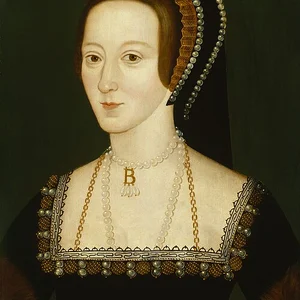
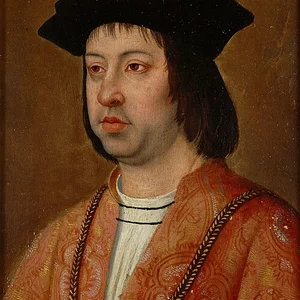
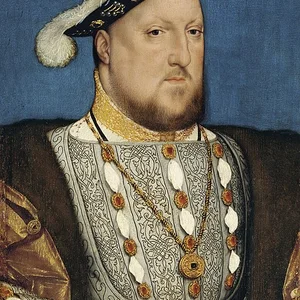
We don't even know for certain what Josquin looked like or when he was born: for a long time, several musicians with similar names were confused with one another. Historians had to reconstruct his life like a detective investigation, cross-referencing chapel records and cathedral archives.
The reformer Martin Luther, a great music lover, held Josquin in boundless admiration. He is said to have declared: “Josquin is the master of the notes: they must do what he wants; other composers must do what the notes want.”
After his death, Josquin became so famous that unscrupulous publishers put out mediocre works under his name to sell them better. A contemporary quipped: “Now that Josquin is dead, he is producing more works than when he was alive!”
Josquin knew how to slip humor into his learned music. In one piece, he is said to have repeated the same note tirelessly to remind his employer, King Louis XII, of the promised and forgotten salary, with Latin words meaning “remember your word to your servant.”
To compose his famous Mass “L'homme armé,” Josquin took a simple popular song that everyone was humming at the time and transformed it into a complex sonic architecture, proving that a street tune could become a cathedral of sound.
Primary Sources
Josquin composes better, but he composes when he feels like it and not when asked to ; and he demands 200 ducats in salary whereas Isaac is content with 120.
Josquin is the master of the notes : they must do what he wants ; the other composers must do what the notes want.
No one has better than Josquin expressed the affections of the soul through song ; none has equaled him in grace and ease.
Josquin des Prez may justly be called the prince of the musicians of his time.
Key Places
Town in Hainaut where Josquin ended his life as provost of the collegiate church of Notre-Dame. He died there on 27 August 1521 and was buried there.
Josquin was a singer in the pope's chapel during the 1480s and 1490s. His name can still be read carved there (“Josquinj”) on the wall of the singers' gallery.
In 1503 Josquin entered the service of Duke Ercole I d'Este, one of the most prestigious patrons in Italy. There he composed the Mass “Hercules Dux Ferrariae”.
In the service of the Sforza family, dukes of Milan, Josquin earned his first stripes as a musician in Renaissance Italy.
Josquin probably served the French king Louis XII, for whom he is said to have composed pieces. The court was a major artistic hub of the kingdom.
Typical Objects

Large book of scores placed on a lectern around which the singers of a chapel would gather. Each voice read its own part from it, written in large square notes.

A Renaissance system of musical writing that used diamond-shaped and square notes to indicate duration. Josquin mastered its subtleties to build intricate canons.

The first polyphonic scores printed with movable type, invented by Ottaviano Petrucci in Venice. They spread Josquin's music throughout Europe.

White liturgical garments worn by the singers of royal and papal chapels. Josquin donned them as a member of the papal chapel in Rome.

The pipe instrument of the great Renaissance churches, which sometimes dialogued with the voices. It accompanied the liturgy in which Josquin's motets resounded.

An income attached to an ecclesiastical office, granted to deserving musicians. Josquin obtained a prebend at the collegiate church of Condé-sur-l'Escaut, which provided for his final years.
School Curriculum
Vocabulary & Tags
Key Vocabulary
Daily Life
Morning
As a member of a chapel choir, Josquin rose early for the first religious services. The morning began with the sung Mass at the choir, where voices rose around the great chant book set on the lectern.
Afternoon
The afternoon could be devoted to composing new works and rehearsing with the other singers. A master like him also trained the young choristers in the difficult art of counterpoint.
Evening
The evening brought back the offices of Vespers and Compline, punctuated by motets. In the Italian courts, secular music was sometimes performed to entertain the prince after dinner.
Food
Meals followed the rhythm of the Church, with many lean days without meat when people ate fish, vegetables and bread. Bread, wine, cheese and soups made up the everyday fare of a well-off churchman.
Clothing
In the service of the Church, Josquin wore the white alb and the surplice during services. In town, he dressed soberly, like a cleric and a man of respectable standing.
Housing
Lodged near the cathedrals and palaces where he served, he occupied dwellings tied to his role as a canon or court musician. At the end of his life, his prebend secured him comfortable lodging in Condé.