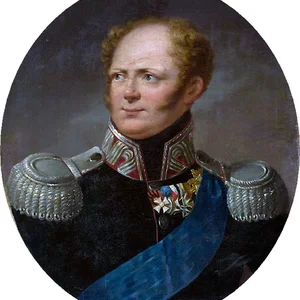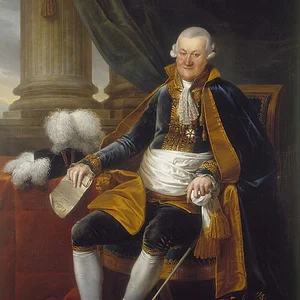

Justin de Viry (1773-1844) was a politician of Sardinian origin who became a naturalized French citizen. A prefect under the First Empire, he was appointed senator in 1813 by Napoleon I.
Justin de Viry(1736 — 1813)
Justin de Viry
France, royaume de Sardaigne
7 min read
Frequently asked questions
Key Facts
- Born in 1773 into a noble Sardinian family
- Appointed prefect under the First Empire
- Elevated to the rank of senator by Napoleon I in 1813
- Naturalized as a French citizen in service of the imperial administration
- Died in 1844
Works & Achievements
A collection of administrative reports written by Justin de Viry in the exercise of his duties as prefect, informing the central government on the state of the department — population, agriculture, public order, and the enforcement of conscription.
Regulatory acts issued by Justin de Viry in his capacity as prefect, covering local administration, administrative policing, the management of public works, and the enforcement of national laws within his department.
Deliberations and votes within the Sénat conservateur of the Empire, the upper chamber responsible for ratifying major legislative acts, including during the dramatic circumstances of the French campaign and Napoleon's first abdication.
Anecdotes
Justin de Viry, of Sardinian origin, was one of the many foreigners whom Napoleon Bonaparte integrated into the French imperial administration, illustrating the Napoleonic policy of openness toward European elites. His French naturalization opened the doors to a career at the highest levels of the state — proof that merit and loyalty to the Emperor mattered more than one's origins.
As a prefect under the First Empire, Justin de Viry was responsible for implementing Napoleon's decrees at the local level, managing tax collection, military conscription, and public order alike. This office, created in 1800 by the law of 28 Pluviôse Year VIII, made the prefect the true arm of the state within his department — a position as feared as it was admired.
His appointment to the Senate in 1813 by Napoleon I came at a particularly critical moment for the Empire, as the Napoleonic armies were retreating on all fronts following the disastrous Russian campaign of 1812. To be appointed senator that year was to join the Emperor's inner circle of loyalists at the very moment his star was beginning to fade.
Like many high-ranking officials of the Empire, Justin de Viry had to navigate between several political regimes over the course of his career, moving from Napoleonic structures to the Bourbon Restoration after 1814. This capacity for adaptation was characteristic of the *notables* who survived the great revolutionary and imperial upheavals by remaining indispensable to the administration of the country.
Primary Sources
Official gazette containing the imperial decrees appointing prefects and senators. Appointments such as that of Justin de Viry were published there to give them legal force and bring them to the attention of all imperial officials.
Minutes of the sessions of the Sénat conservateur, recording the votes and attendance of senators appointed by Napoleon I. These registers make it possible to trace the participation of senators such as Justin de Viry in the deliberations of the imperial upper chamber.
The reports and correspondence of the Empire's prefects constitute an essential source for understanding their day-to-day administrative work: the state of conscription, social tensions, and political reports addressed to the Minister of the Interior.
Annual official publication listing all the officials and dignitaries of the Empire, in which serving prefects and senators appeared with their titles, functions, and departmental assignments.
Key Places
The commune from which the de Viry family takes its name, located in present-day Haute-Savoie, then part of the Kingdom of Sardinia. This place of origin illustrates the longstanding ties between the Sardinian elite and neighboring France.
Seat of the Conservative Senate of the Napoleonic Empire, where Justin de Viry served following his appointment in 1813. This Parisian palace was the deliberative chamber of the imperial upper house, bringing together the Empire's most senior dignitaries.
Capital of the Napoleonic Empire and center of political power from which all instructions to prefects were issued. Justin de Viry resided here during his time in the Senate.
Capital of the Kingdom of Sardinia and the cultural and political reference point for noble Sardinian families such as the Virys. The Piedmont region was annexed by France between 1802 and 1814, facilitating the integration of local elites into the French imperial administration.
Typical Objects

The distinctive insignia of the prefect under the Empire, the tricolor sash (blue, white, red) worn across the chest symbolized the authority of the French state within the department. It was displayed during official ceremonies, military reviews, and inspection visits.

A large leather-bound register in which the prefect recorded decrees, official correspondence, and administrative reports. An everyday tool of Napoleonic bureaucracy, it reflected the intense regulatory activity of the imperial administration.

The official attire of senators under the Empire, embroidered in gold and adorned with Napoleonic bees — symbols of the new imperial dignity. This richly decorated uniform was worn during solemn sessions of the Conservative Senate at the Palais du Luxembourg in Paris.

The official seal used to authenticate the prefect's administrative documents, stamped with the arms of the prefecture and the Empire. Every decree or official correspondence had to be sealed to carry legal force.

The compendium of civil law promulgated by Napoleon I in 1804, an essential reference for any prefect or imperial administrator. Justin de Viry was responsible for enforcing its provisions throughout his department.

An enclosed four-wheeled carriage drawn by several horses, placed at the disposal of senior imperial officials for their formal travels throughout the department. The prefect was required to regularly inspect his territory, sometimes covering hundreds of kilometers.
School Curriculum
Vocabulary & Tags
Key Vocabulary
Daily Life
Morning
A prefect's day in the Empire began early, with the reading of gendarmerie reports and dispatches that had arrived from Paris overnight. Justin de Viry would summon his secretaries to dictate replies to ministerial instructions and sign the day's decrees before receiving visitors.
Afternoon
The afternoon was devoted to audiences: mayors from the department's communes, local dignitaries, merchants seeking permits, or officers requisitioning supplies for troops passing through. Overseeing military conscription and monitoring the political mood demanded constant vigilance.
Evening
The evenings of a senior imperial official were often taken up by official receptions or dinners with local notables — essential for maintaining networks of influence. Drafting the weekly political reports destined for the Minister of General Police rounded out these packed days.
Food
An imperial prefect's table reflected his social standing: elaborate meals with multiple courses, fine wines and choice dishes. Frequent official dinners served to cultivate local networks and project the splendor that Napoleon expected of his representatives.
Clothing
In the exercise of his duties, Justin de Viry wore the official prefect's uniform — a blue coat embroidered in silver, white breeches and a sword at his side — for ceremonies and reviews. In everyday life, he dressed in the sober yet refined manner of a gentleman of the era: a straight-collared frock coat, waistcoat and trousers.
Housing
Empire prefects resided in the *hôtel de préfecture*, the official building placed at their disposal by the State in the department's main town. These comfortable residences, often housed in former private mansions or convents requisitioned during the Revolution, stood as symbols of the central administration's authority.
Historical Timeline
Period Vocabulary
Liens externes & ressources
Références
Œuvres
Rapports préfectoraux au ministère de l'Intérieur
1800-1813
Arrêtés préfectoraux
1800-1813
Participation aux séances du Sénat conservateur
1813-1814