 flip
flipGastris — Honey, Nut, and Sesame Confection
Gastris — Honey, Nut, and Sesame Confection
Why this dish? Justinian, deeply devout, marked his reign with faith: Hagia Sophia, his fasts, his paten and eucharistic bread. On the great Christian feasts that punctuated the Byzantine year, honey sweets and dried fruits like *gastris* were shared—a pastry inspired by these moments of communion at court.
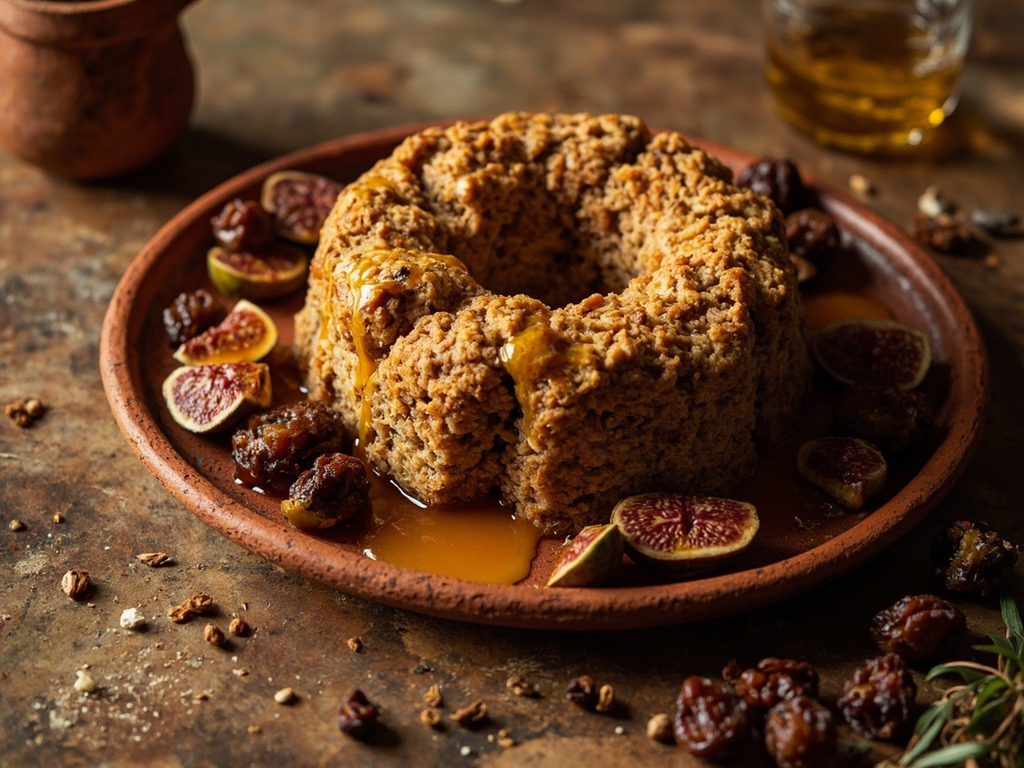
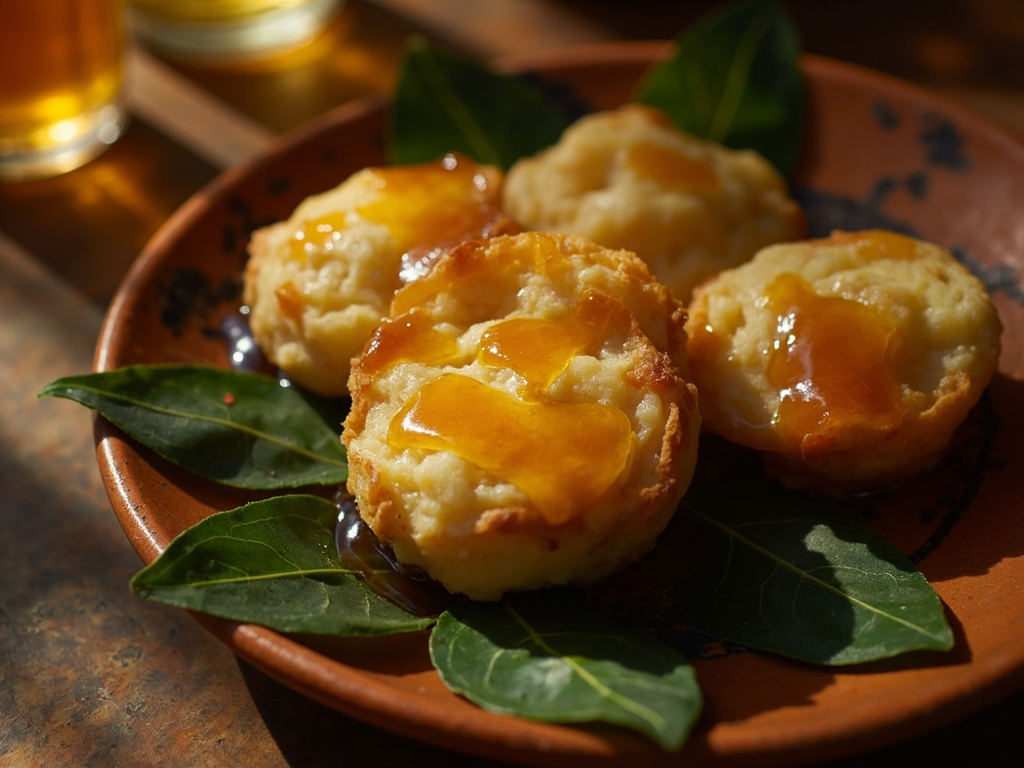
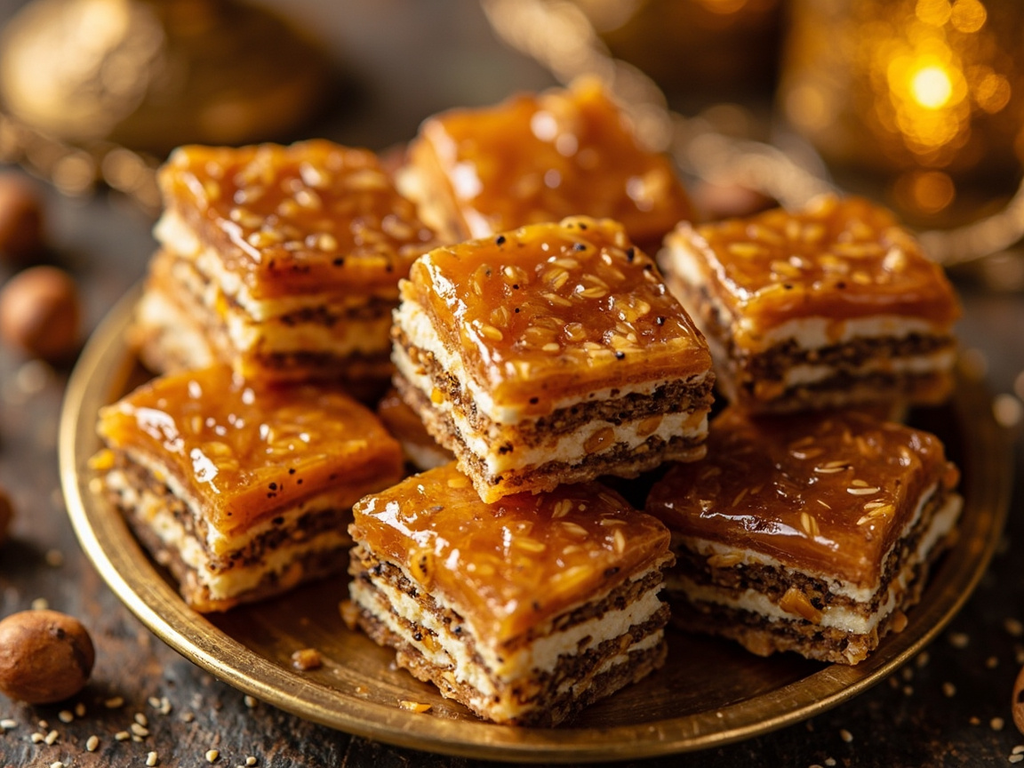
A layered confection: walnuts and almonds bound with honey caramelized, sandwiched between two layers of sesame and poppy seeds. Crunchy, fragrant, golden—the distant ancestor of nougat and baklava.
On feast days, when Hagia Sophia resounds with hymns, these honey and nut sweets are brought to the table. Listen how they are made: honey is thickened over the fire until it threads, then crushed nuts and almonds are mixed in, and the whole is imprisoned between two beds of sesame and poppy. It is firm under the tooth, and long in the mouth. I fast the rest of the year, yes—but a gift of God like honey deserves to be celebrated on holy days. Take a piece, and give thanks with me.
- •Honey — a good amount (binder and sweetener)
- •Walnuts — in proportion (filling)
- •Almonds — a little (filling)
- •Sesame seeds — a portion (crunchy layers)
- •Poppy seeds — a portion (aromatic layer)
- •Pepper — a pinch (warm note (optional))
Gastris — Honey, Nut, and Sesame Confection
A layered confection: walnuts and almonds bound with honey caramelized, sandwiched between two layers of sesame and poppy seeds. Crunchy, fragrant, golden—the distant ancestor of nougat and baklava.
Why this dish? Justinian, deeply devout, marked his reign with faith: Hagia Sophia, his fasts, his paten and eucharistic bread. On the great Christian feasts that punctuated the Byzantine year, honey sweets and dried fruits like *gastris* were shared—a pastry inspired by these moments of communion at court.
On feast days, when Hagia Sophia resounds with hymns, these honey and nut sweets are brought to the table. Listen how they are made: honey is thickened over the fire until it threads, then crushed nuts and almonds are mixed in, and the whole is imprisoned between two beds of sesame and poppy. It is firm under the tooth, and long in the mouth. I fast the rest of the year, yes—but a gift of God like honey deserves to be celebrated on holy days. Take a piece, and give thanks with me.
Ingredients (period version)
- Honey — a good amount (binder and sweetener)
- Walnuts — in proportion (filling)
- Almonds — a little (filling)
- Sesame seeds — a portion (crunchy layers)
- Poppy seeds — a portion (aromatic layer)
- Pepper — a pinch (warm note (optional))
Ingredients
- Honey — 250 g (binder and sweetener)
- Coarsely chopped walnuts — 150 g (filling)
- Chopped almonds — 80 g (filling)
- Sesame seeds — 120 g (crunchy layers)
- Poppy seeds — 60 g (aromatic layer)
Method
- Toast separately the sesame seeds, poppy seeds, walnuts, and almonds in a dry pan until fragrant.
- Heat the honey in a saucepan until it reaches the caramel stage (it threads and darkens slightly).
- Divide the honey in half; mix one half with the walnuts and almonds, and the other half divided between sesame and poppy seeds.
- On an oiled tray, spread a layer of honeyed sesame, then the nut layer, then the poppy layer.
- Press firmly between two oiled sheets, let set, then cut into diamonds.
How it was made : *Gastris* is described as early as Greek antiquity (Athenaeus) as a layering of dried fruits and seeds bound with honey, without sugar or puff pastry—still unknown in Byzantium. These sweets, *tragēmata*, closed meals and accompanied religious feasts, where honey symbolized abundance offered by God.
The contemporary twist : Cut into small glossy diamonds and arranged like chef's mignardises: a Byzantine nougat before its time.
Sources : Athenaeus of Naucratis, *The Deipnosophists*, Book XIV (*gastris*) · Andrew Dalby, *Flavours of Byzantium* (Prospect Books, 2003)
Justinian · Charactorium