 flip
flipʻAwa — kava root drink
ʻAwa — kava root drink
Why this dish? At the court of Kamehameha I, whose favorite wife and advisor was Kaʻahumanu, ʻawa accompanied the councils, oaths, and deliberations of chiefs: it was shared to seal decisions and calm spirits. A queen with immense political power — she ruled as kuhina nui (co-regent) — Kaʻahumanu knew those grave circles where the ʻawa cup circulated before the fate of the kingdom was decided.
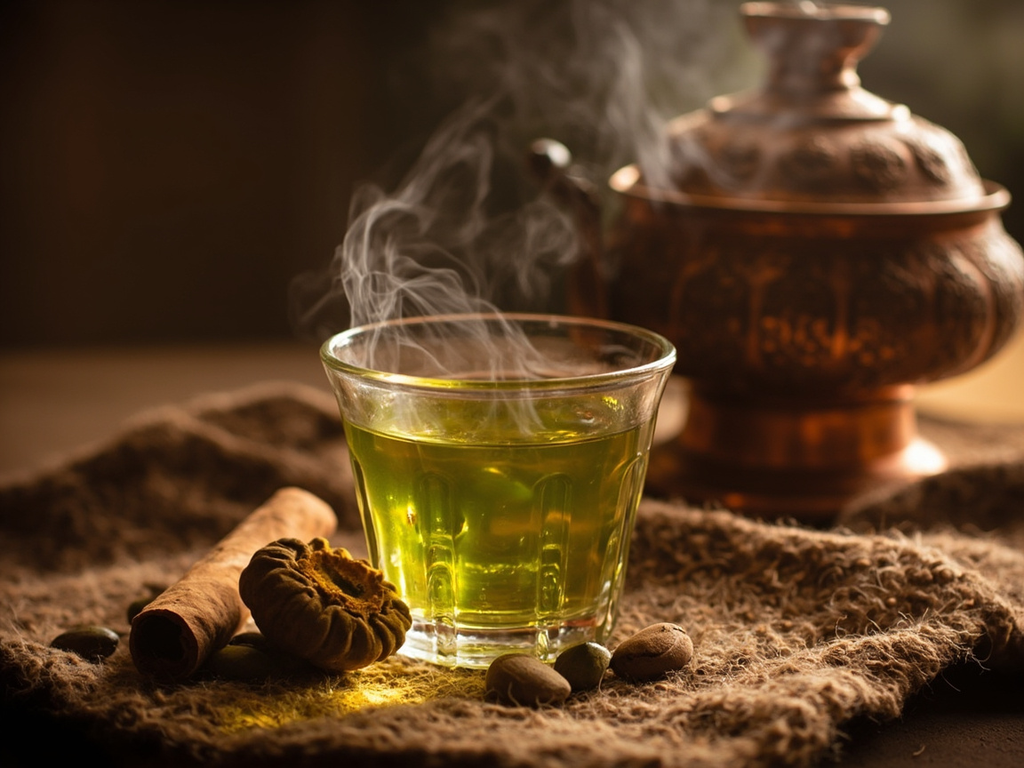
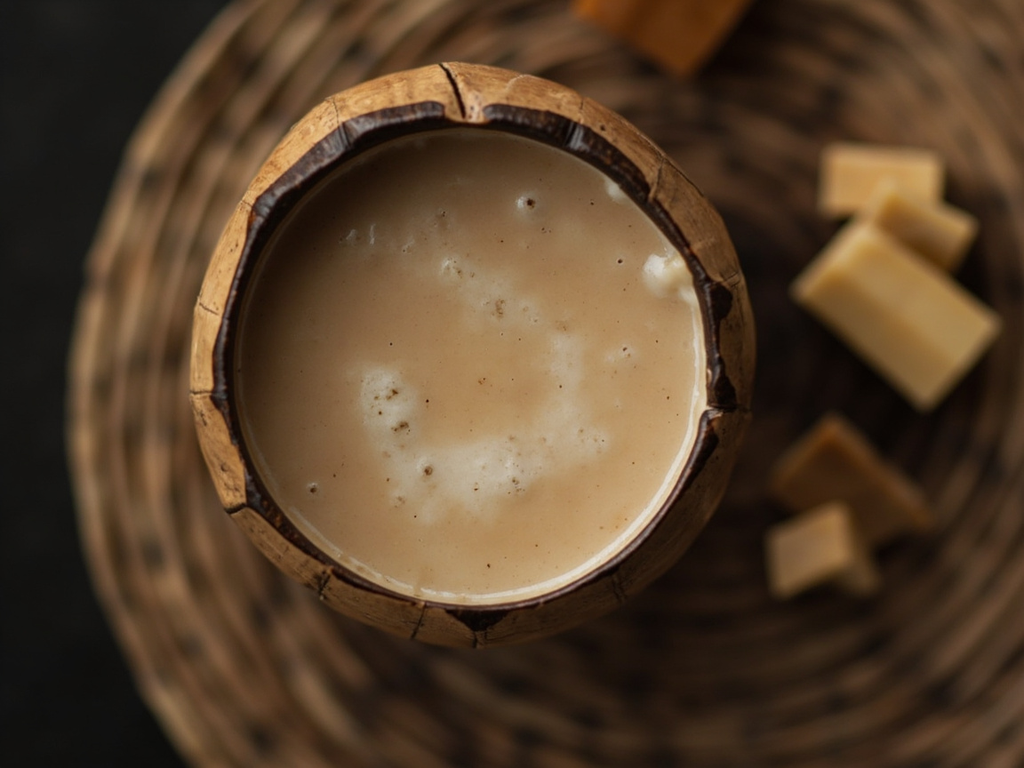
An earthy, gray drink with a frank bitterness, obtained by pressing ʻawa (kava) root in water. Slightly numbing to the tongue and lips, soothing, it was drunk from a shared cup during solemn moments. (Inspired by a Hawaiian ceremonial use, presented here with respect.)
Before the chiefs decided the fate of the islands, the cup was passed — this one. The ʻawa root, we work it long in the water until it yields its strength, then we strain and drink this bitter, cloudy brew. It numbs the tongue, calms the boiling blood, silences anger so that words may be wise. Drink slowly, in small sips: this is not a drink of thirst, it is a drink of reflection.
- •ʻAwa root (kava, Piper methysticum) — one good root (active principle and bitterness)
- •Fresh water — as needed (extraction)
ʻAwa — kava root drink
An earthy, gray drink with a frank bitterness, obtained by pressing ʻawa (kava) root in water. Slightly numbing to the tongue and lips, soothing, it was drunk from a shared cup during solemn moments. (Inspired by a Hawaiian ceremonial use, presented here with respect.)
Why this dish? At the court of Kamehameha I, whose favorite wife and advisor was Kaʻahumanu, ʻawa accompanied the councils, oaths, and deliberations of chiefs: it was shared to seal decisions and calm spirits. A queen with immense political power — she ruled as kuhina nui (co-regent) — Kaʻahumanu knew those grave circles where the ʻawa cup circulated before the fate of the kingdom was decided.
Before the chiefs decided the fate of the islands, the cup was passed — this one. The ʻawa root, we work it long in the water until it yields its strength, then we strain and drink this bitter, cloudy brew. It numbs the tongue, calms the boiling blood, silences anger so that words may be wise. Drink slowly, in small sips: this is not a drink of thirst, it is a drink of reflection.
Ingredients (period version)
- ʻAwa root (kava, Piper methysticum) — one good root (active principle and bitterness)
- Fresh water — as needed (extraction)
Ingredients
- Ground kava root (beverage grade, "noble kava") — 30 g (base)
- Water — 500 ml (extraction)
- Coconut water (optional) — 100 ml (soften bitterness)
Method
- Place ground root in a fine cloth or kava bag, immerse in lukewarm water.
- Knead and squeeze the bag vigorously in the water for 5 to 10 minutes, until the liquid becomes cloudy and beige.
- Wring out the cloth well to extract maximum liquid, then discard the pulp.
- Optionally soften with a little coconut water. Serve chilled, in a shared cup, to drink in small sips.
- Consume in moderation: kava has a relaxing and numbing effect; avoid with alcohol, certain medications, and not recommended for minors or pregnant women.
How it was made : Throughout the Pacific, ʻawa/kava was prepared by chewing or pounding the root, then kneading it in water before filtering through plant fibers. In Hawaii it was used for offerings to the gods, chief ceremonies, healing, and relaxation. Its bitterness and calming effect made it a serious drink, never frivolous.
The contemporary twist : Served over ice in a half coconut shell, with a splash of coconut water and lime: the Pacific "kava bar" reinvents the chiefs' cup.
Sources : E. S. Craighill Handy & Mary Kawena Pukui, The Polynesian Family System in Kaʻu, Hawaiʻi (1958)
Ka'ahumanu · Charactorium