 flip
flipThe Queen's tea, served in the Chinese fashion
The Queen's tea, served in the Chinese fashion
Why this dish? Anne was fond of tea, a drink so expensive at the time that it was kept under lock and key. Served in her Chinese porcelain service during codified court receptions, tea was at the heart of her social and feminine life, far from the bustle of Westminster affairs.
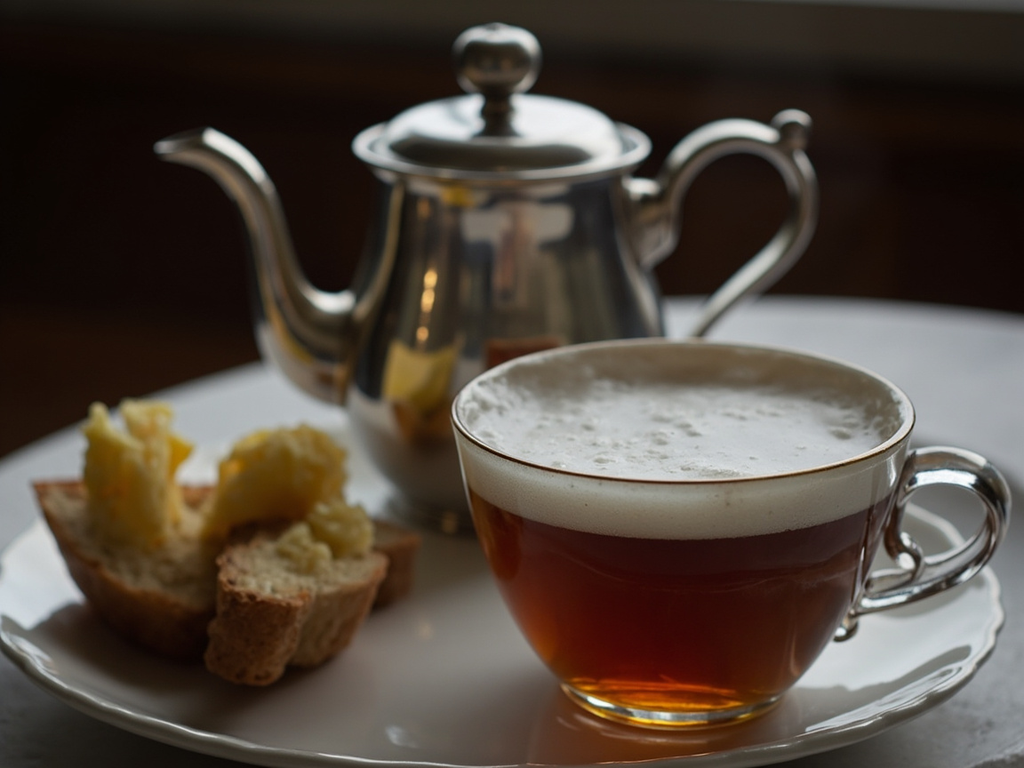
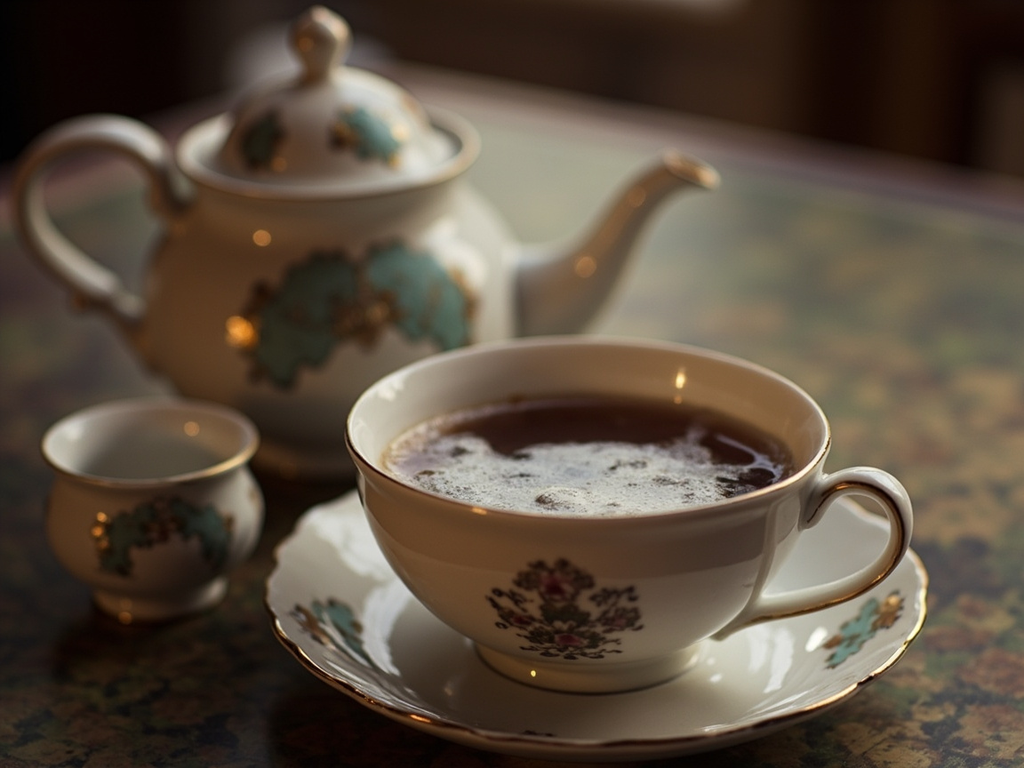
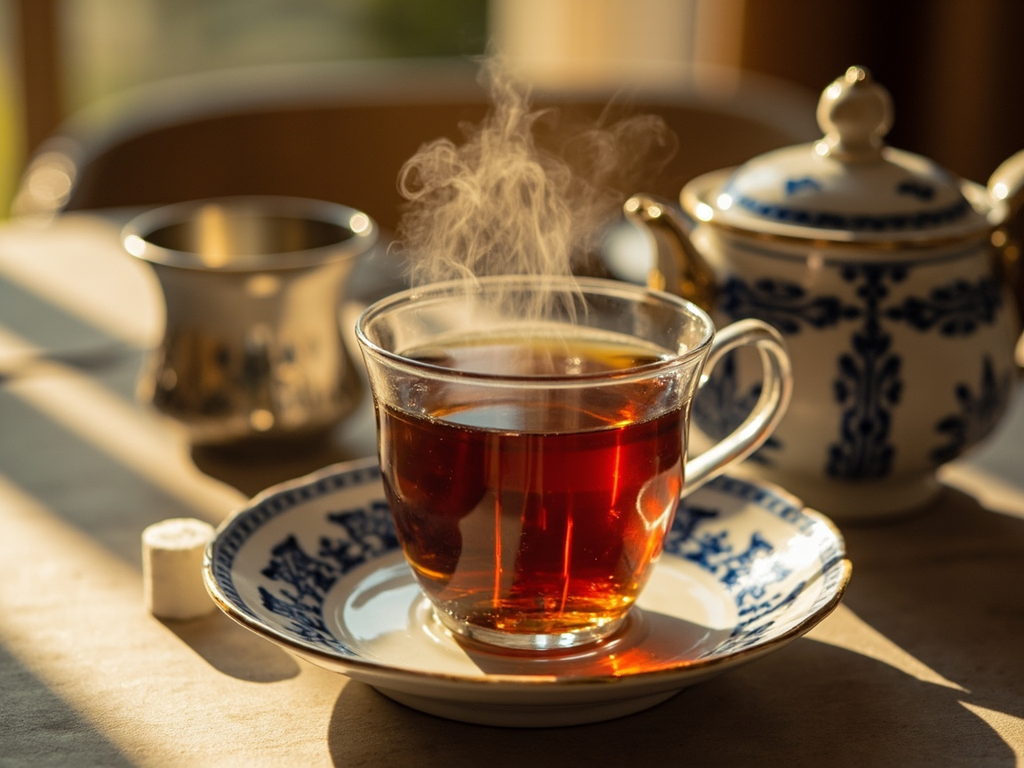
An infusion of green or black tea, still bitter and without milk at that time, served steaming hot in tiny porcelain cups, sometimes sweetened with a piece of sugar candy broken with sugar nips.
Come closer, and take your place at my tea table. See how these leaves, come from so far away on our East India ships, are worth their weight in silver: that is why we keep them locked up, and it is with my own hand that I measure the proper pinch. One pours the trembling water, not boiling, over the leaves, and waits until the liquor takes on its beautiful amber color. I take it clear and bitter, as is proper, though some ladies break a piece of sugar candy into it. This, believe me, is the most civilized pleasure a queen can grant herself.
- •Chinese tea leaves (green or bohea) — a measured pinch (aromatic base)
- •Spring water, just below boiling — as needed (infusion)
- •Sugar candy — to taste, broken with nips (optional sweetener)
The Queen's tea, served in the Chinese fashion
An infusion of green or black tea, still bitter and without milk at that time, served steaming hot in tiny porcelain cups, sometimes sweetened with a piece of sugar candy broken with sugar nips.
Why this dish? Anne was fond of tea, a drink so expensive at the time that it was kept under lock and key. Served in her Chinese porcelain service during codified court receptions, tea was at the heart of her social and feminine life, far from the bustle of Westminster affairs.
Come closer, and take your place at my tea table. See how these leaves, come from so far away on our East India ships, are worth their weight in silver: that is why we keep them locked up, and it is with my own hand that I measure the proper pinch. One pours the trembling water, not boiling, over the leaves, and waits until the liquor takes on its beautiful amber color. I take it clear and bitter, as is proper, though some ladies break a piece of sugar candy into it. This, believe me, is the most civilized pleasure a queen can grant herself.
Ingredients (period version)
- Chinese tea leaves (green or bohea) — a measured pinch (aromatic base)
- Spring water, just below boiling — as needed (infusion)
- Sugar candy — to taste, broken with nips (optional sweetener)
Ingredients
- Plain black tea leaves (Keemun type) or green tea — 1 tsp per cup (aromatic base)
- Filtered water — 200 ml per cup, at 85–90 °C (infusion)
- Sugar candy or brown sugar — 1 piece optional (sweetener)
Method
- Heat water without bringing it to a rolling boil (85–90 °C).
- First scald the empty teapot to warm it, then empty it.
- Place the tea and pour the hot water over it.
- Steep for 3 minutes for black tea, 2 minutes for green.
- Pour into small porcelain cups, without milk, and present sugar candy separately.
How it was made : In Anne's time, tea arrived via the East India Company and cost a fortune; it was served plain, in the Chinese manner, with milk added only later in the century. The lady of the house prepared the tea herself before her guests, a gesture of prestige, from a lockable tea caddy.
The contemporary twist : Serve it today in a fine translucent cup with a single square of amber sugar candy beside it: a minimalist nod to the queen's locked-up luxury.
Sources : Patrick Lamb, Royal Cookery: or, The Compleat Court-Cook (1710) · Markman Ellis, The Coffee House: A Cultural History (2004)
Anne of Great Britain · Charactorium