 flip
flipTea, British Style
Tea, British Style
Why this dish? The anchor says it: Smith appreciated tea, a beverage then fashionable throughout Britain. As an economist, he analysed precisely those colonial commodities — tea, sugar — whose rise transformed trade and habits. His cup was also an object of study.
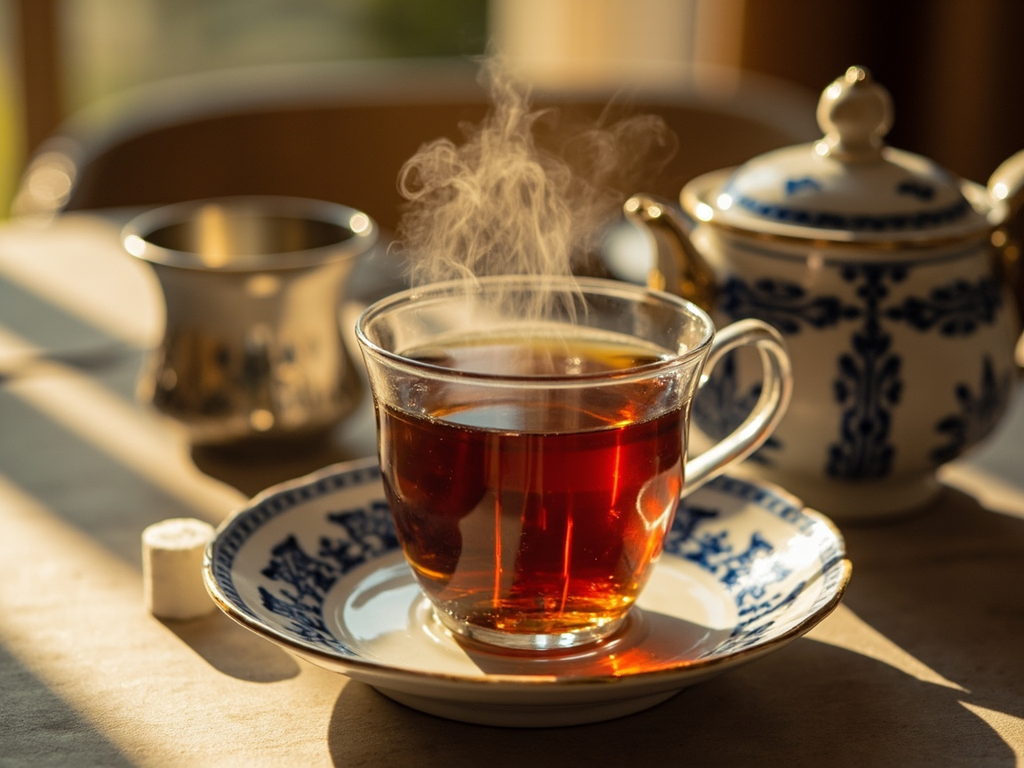
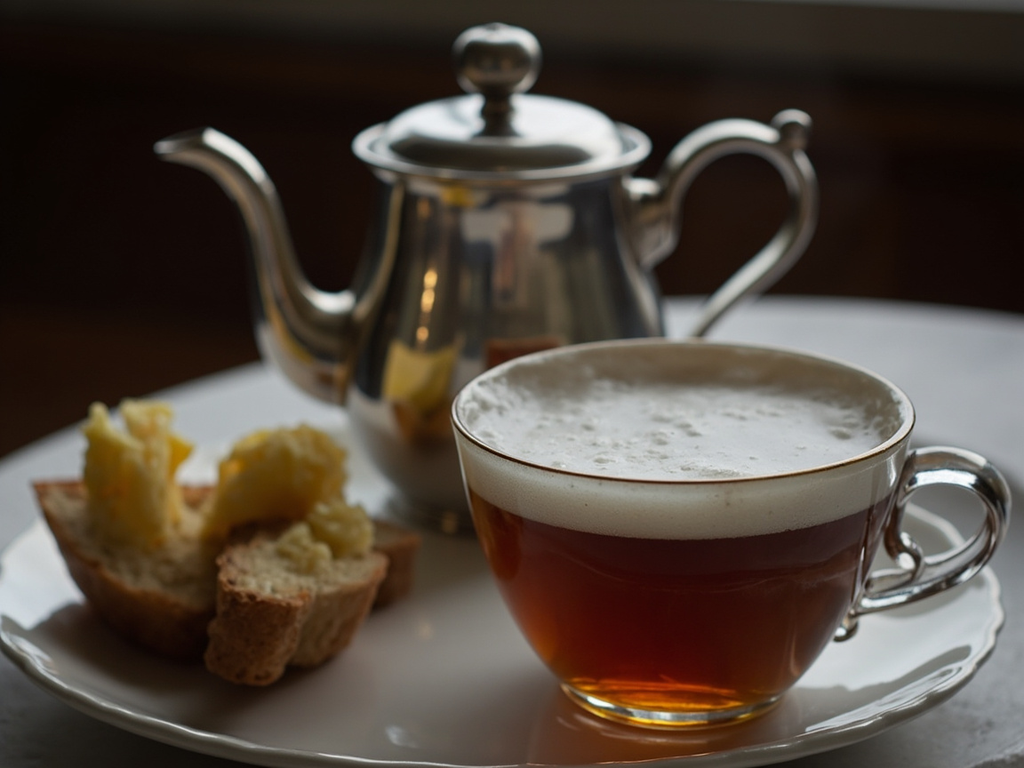
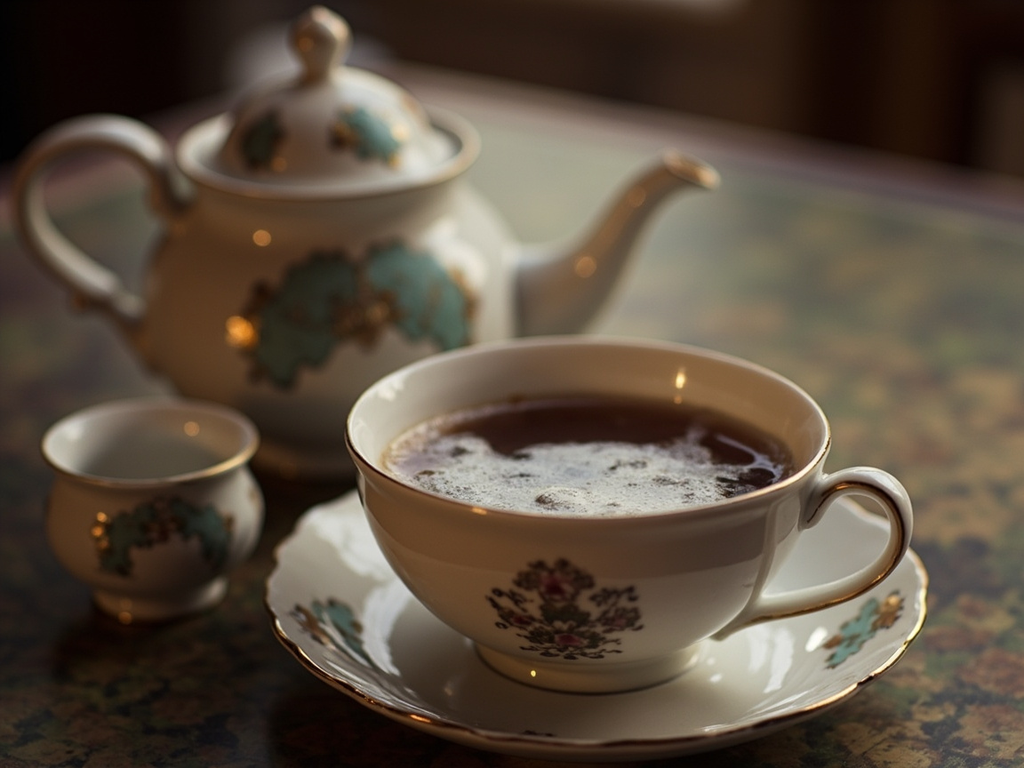
An infusion of black tea leaves imported by trading companies, served hot, optionally sweetened with a little West Indian sugar or lengthened with milk. The social drink of 18th-century Britain, around which conversations and clubs formed.
Here is a drink I cannot examine without thinking of the commerce that brings it to me. These leaves have crossed the seas from the Orient, the sugar that accompanies it comes from the American islands — think of the multitude of hands required for this cup to arrive before me. Boil the water freely, scald the teapot first, then let it steep for the time it takes to read a page. I add a cloud of milk; as for sugar, I use it with measure, for it costs men more trouble than one imagines.
- •Black tea leaves — one spoonful per cup (infusion)
- •Boiling water — according to number of cups (base)
- •Fresh milk — a cloud (softener)
- •West Indian sugar — with measure (optional sweetener)
Tea, British Style
An infusion of black tea leaves imported by trading companies, served hot, optionally sweetened with a little West Indian sugar or lengthened with milk. The social drink of 18th-century Britain, around which conversations and clubs formed.
Why this dish? The anchor says it: Smith appreciated tea, a beverage then fashionable throughout Britain. As an economist, he analysed precisely those colonial commodities — tea, sugar — whose rise transformed trade and habits. His cup was also an object of study.
Here is a drink I cannot examine without thinking of the commerce that brings it to me. These leaves have crossed the seas from the Orient, the sugar that accompanies it comes from the American islands — think of the multitude of hands required for this cup to arrive before me. Boil the water freely, scald the teapot first, then let it steep for the time it takes to read a page. I add a cloud of milk; as for sugar, I use it with measure, for it costs men more trouble than one imagines.
Ingredients (period version)
- Black tea leaves — one spoonful per cup (infusion)
- Boiling water — according to number of cups (base)
- Fresh milk — a cloud (softener)
- West Indian sugar — with measure (optional sweetener)
Ingredients
- Black tea leaves (Assam or Ceylon) — 1 tsp per cup + 1 for the pot (infusion)
- Freshly boiled filtered water — 200 ml per cup (base)
- Whole milk — 1 tbsp per cup (to taste) (softener)
- Sugar — to taste (optional sweetener)
Method
- Warm the teapot by rinsing it with boiling water, then empty it.
- Add the tea leaves (one spoonful per cup, plus one 'for the pot').
- Pour freshly boiled water over the leaves.
- Steep for 3 to 5 minutes depending on desired strength, then strain as you pour.
- Serve with a cloud of milk and, if desired, a little sugar.
How it was made : In the 18th century, tea remained expensive and heavily taxed; it was stored in lockable caddies. It was served in small handleless cups of imported porcelain. The debate 'milk first or tea first' dates from this era, linked to the fragility of porcelain against boiling water.
The contemporary twist : Present it as an 'Enlightenment tea ceremony': scalded teapot, butter shortbread on the side, and a sugar bowl to dip into sparingly — a nod to Smith mindful of the true cost of things.
Sources : Adam Smith, An Inquiry into the Nature and Causes of the Wealth of Nations (1776)
Adam Smith · Charactorium