 flip
flipSmørrebrød with Liver Pâté (Leverpostej)
Smørrebrød with Liver Pâté (Leverpostej)
Why this dish? A daughter of the Danish bourgeoisie, raised at Rungstedlund, Karen Blixen knew from childhood the ritual of the smørrebrød lunch. Leverpostej, liver pâté served hot or cold on rye bread, is the most everyday and most beloved of Danish open-faced sandwiches.
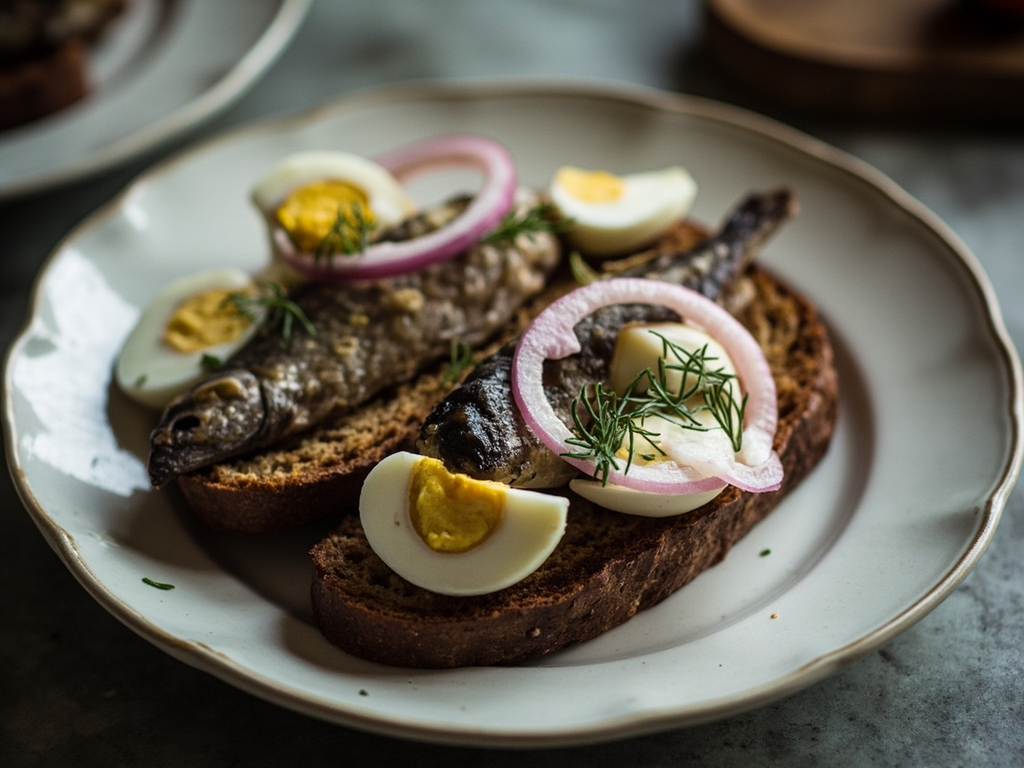
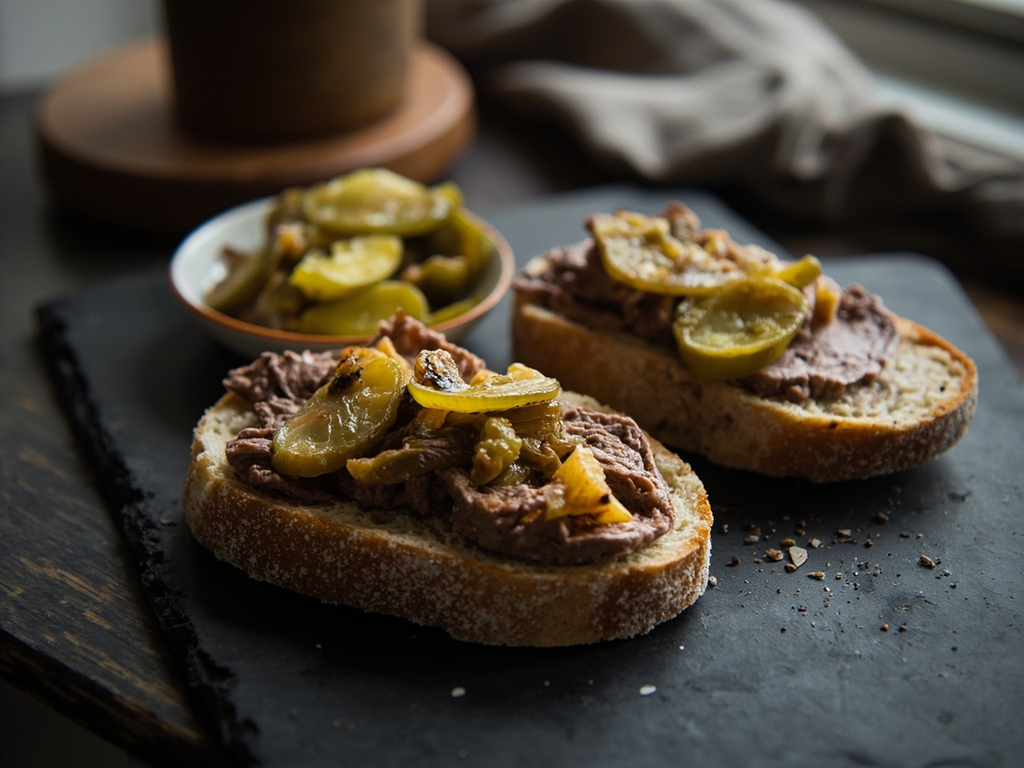
A slice of dense buttered rye bread topped with liver pâté, crowned with sautéed mushrooms and a pickle — the quintessential Danish open-faced sandwich, simple and nourishing.
At home in Denmark, we do not joke about rye bread: it must be dark, firm, and have bite. As a child at Rungstedlund, I spread my rugbrød with still-warm leverpostej, and placed on it a sliver of pickle and a mushroom browned in butter. It is a humble dish, but you see, it is these simple things one misses most when, come evening, one stands under the immense sky of Africa.
- •Danish rye bread (rugbrød) — thick slices (base)
- •Churned butter — generously (binder)
- •Pork liver pâté (leverpostej) — a generous layer (main topping)
- •Button mushrooms — a few, sautéed in butter (topping)
- •Sweet-and-sour pickle — slices (contrast)
Smørrebrød with Liver Pâté (Leverpostej)
A slice of dense buttered rye bread topped with liver pâté, crowned with sautéed mushrooms and a pickle — the quintessential Danish open-faced sandwich, simple and nourishing.
Why this dish? A daughter of the Danish bourgeoisie, raised at Rungstedlund, Karen Blixen knew from childhood the ritual of the smørrebrød lunch. Leverpostej, liver pâté served hot or cold on rye bread, is the most everyday and most beloved of Danish open-faced sandwiches.
At home in Denmark, we do not joke about rye bread: it must be dark, firm, and have bite. As a child at Rungstedlund, I spread my rugbrød with still-warm leverpostej, and placed on it a sliver of pickle and a mushroom browned in butter. It is a humble dish, but you see, it is these simple things one misses most when, come evening, one stands under the immense sky of Africa.
Ingredients (period version)
- Danish rye bread (rugbrød) — thick slices (base)
- Churned butter — generously (binder)
- Pork liver pâté (leverpostej) — a generous layer (main topping)
- Button mushrooms — a few, sautéed in butter (topping)
- Sweet-and-sour pickle — slices (contrast)
Ingredients
- Dense rye bread — 4 slices (base)
- Salted butter — 40 g (binder)
- Liver pâté (or liver mousse) — 200 g (main topping)
- White mushrooms — 150 g (topping)
- Sweet-and-sour pickles — 4 (contrast)
- Watercress or parsley — a few sprigs (freshness)
Method
- Slice the mushrooms and sauté in butter until golden; lightly salt, set aside.
- Butter each slice of rye bread generously, right to the edges.
- Spread a thick layer of liver pâté.
- Arrange the warm mushrooms on top, then fan out pickle slices.
- Finish with a sprig of watercress and serve with fork and knife, never by hand.
How it was made : The smørrebrød was assembled on the cold lunch table, each guest composing their own. Leverpostej was cooked at home in a terrine, made from pork liver, bacon, and spices, then kept for several days in the cellar — hence its place in everyday Danish life.
The contemporary twist : Present the open-faced sandwich on a slate board, the pâté glazed with a blowtorch and the mushrooms arranged in a quincunx, for a contemporary Nordic bistro smørrebrød.
Sources : Kristine Marie Jensen, Frøken Jensens Kogebog, 1901
Karen Blixen · Charactorium