 flip
flipSmørrebrød with Pickled Herring (Sildemad)
Smørrebrød with Pickled Herring (Sildemad)
Why this dish? Lehmann grew up and worked in Copenhagen, a port city where pickled herring on rye bread is the most ordinary lunch open sandwich. This is exactly the kind of simple, nourishing meal a researcher could eat between two series of measurements at the Geodetic Institute.
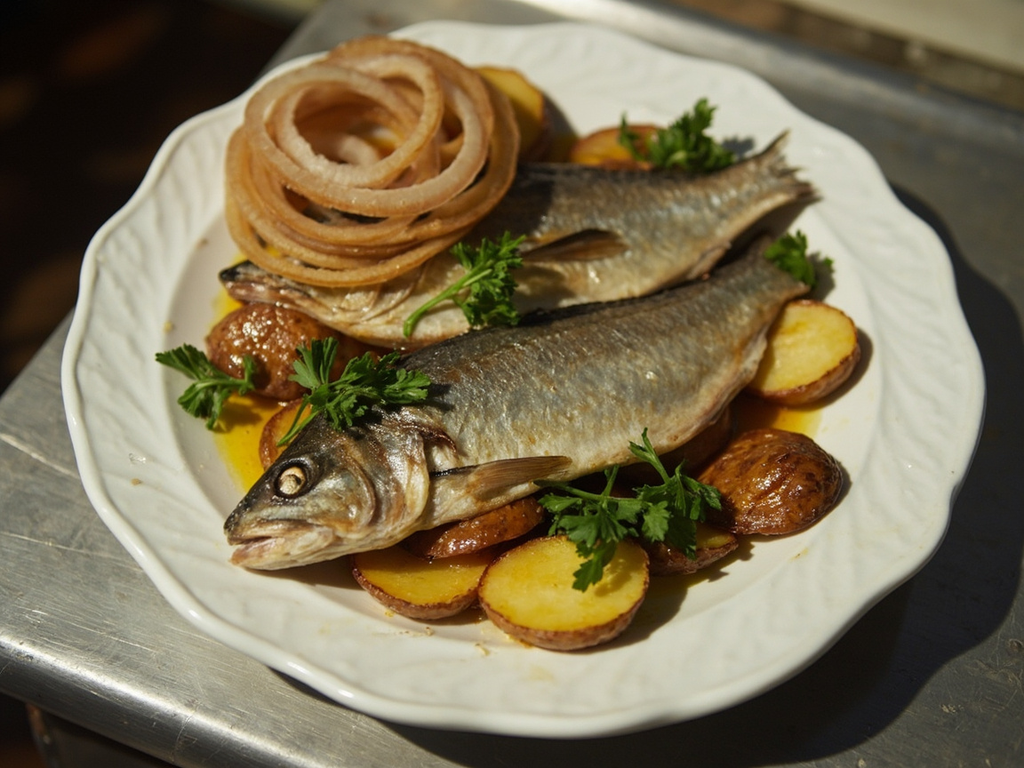
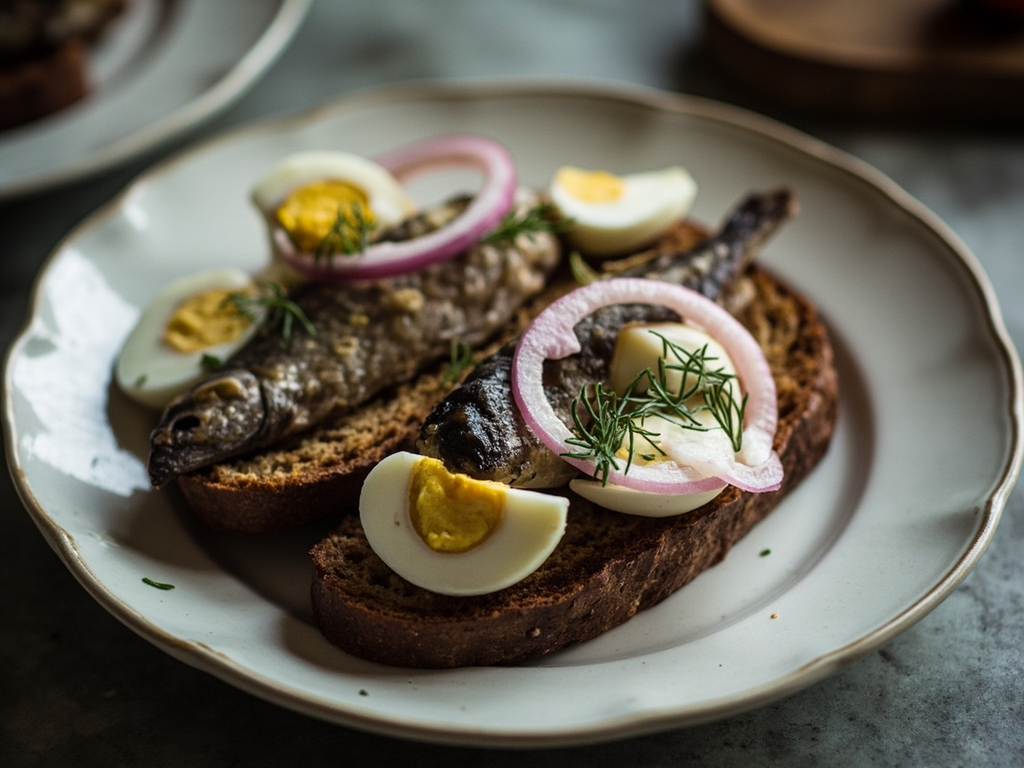
A slice of dark rye bread, generously buttered, topped with vinegar-cured herring fillets, red onion, and a ring of hard-boiled egg. The most classic base of the Danish lunch.
One does not trifle with the order of things: fish always comes first, that is the rule. I buttered my rugbrød well to the edges—a bare bread is a mistake—then I laid on the herring, a little onion, and ate it properly, with knife and fork, as one should. Believe me, after a morning reading seismograms, nothing sets the mind right like a good sildemad and a black coffee.
- •Dark rye bread (rugbrød) — 1 thick slice (base)
- •Vinegar-cured herring fillets — 2 fillets (main topping)
- •Danish butter — a generous layer (binding and richness)
- •Onion — a few thin rings (bite)
- •Hard-boiled egg — a few slices (softness)
- •Fresh dill — a few sprigs (aroma)
Smørrebrød with Pickled Herring (Sildemad)
A slice of dark rye bread, generously buttered, topped with vinegar-cured herring fillets, red onion, and a ring of hard-boiled egg. The most classic base of the Danish lunch.
Why this dish? Lehmann grew up and worked in Copenhagen, a port city where pickled herring on rye bread is the most ordinary lunch open sandwich. This is exactly the kind of simple, nourishing meal a researcher could eat between two series of measurements at the Geodetic Institute.
One does not trifle with the order of things: fish always comes first, that is the rule. I buttered my rugbrød well to the edges—a bare bread is a mistake—then I laid on the herring, a little onion, and ate it properly, with knife and fork, as one should. Believe me, after a morning reading seismograms, nothing sets the mind right like a good sildemad and a black coffee.
Ingredients (period version)
- Dark rye bread (rugbrød) — 1 thick slice (base)
- Vinegar-cured herring fillets — 2 fillets (main topping)
- Danish butter — a generous layer (binding and richness)
- Onion — a few thin rings (bite)
- Hard-boiled egg — a few slices (softness)
- Fresh dill — a few sprigs (aroma)
Ingredients
- Whole-grain rye bread (pumpernickel style) — 1 slice (base)
- Pickled herring fillets (jarred) — 2 fillets (main topping)
- Salted butter — 15 g (binding)
- Red onion — 1/4, thinly sliced (bite)
- Hard-boiled egg — 1, sliced (softness)
- Fresh dill — 1 tbsp chopped (aroma)
Method
- Butter the rye bread generously, right to the edges.
- Arrange the drained herring fillets along the length of the slice.
- Add the egg slices and a few thin rings of red onion.
- Sprinkle with chopped dill. Serve fresh, eat with knife and fork.
How it was made : Herring, abundant and cheap in the North Sea and Baltic, was preserved by salting then vinegar pickling—a vital technique before refrigeration. Around the turn of the 20th century, sildemad was the daily open sandwich of all Danish classes.
The contemporary twist : A touch of sour cream with mild mustard under the herring, and you have a contemporary Copenhagen bistro smørrebrød.
Inge Lehmann · Charactorium