 flip
flipBarley Maza with Honey and Olive Oil
Barley Maza with Honey and Olive Oil
Why this dish? They say Heracles ate "for ten men": maza, an unleavened barley cake or paste, was precisely the bread of the people, cowherds and soldiers — the kind you devour in quantity, unceremoniously, just as the hero does between labors.
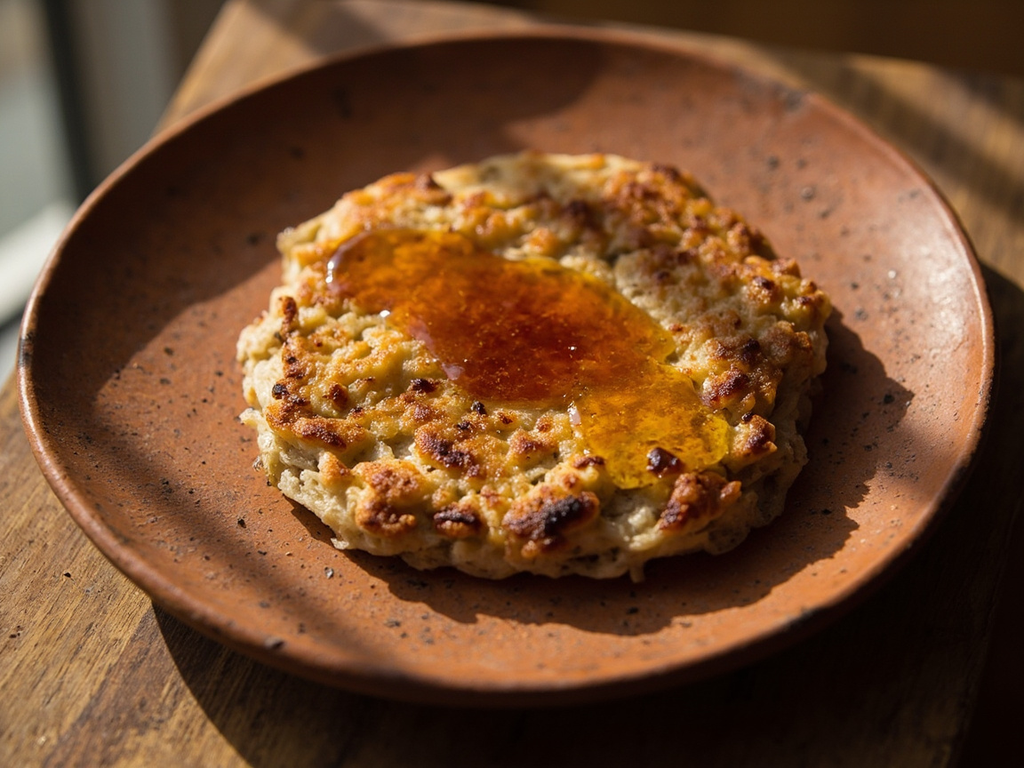
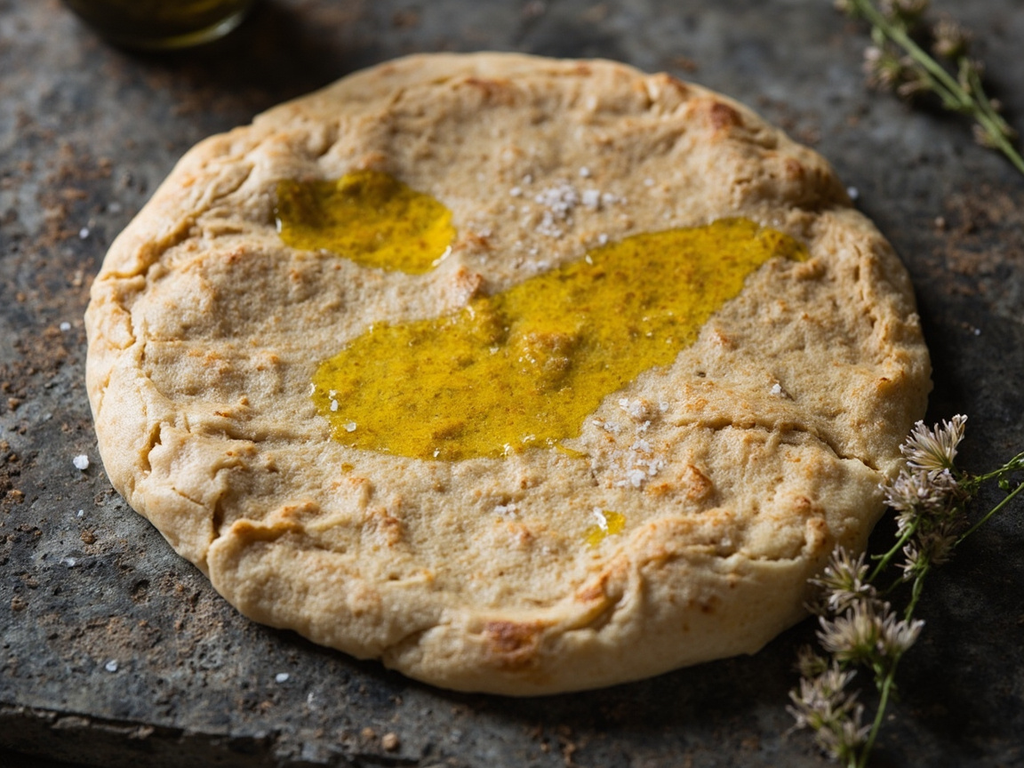
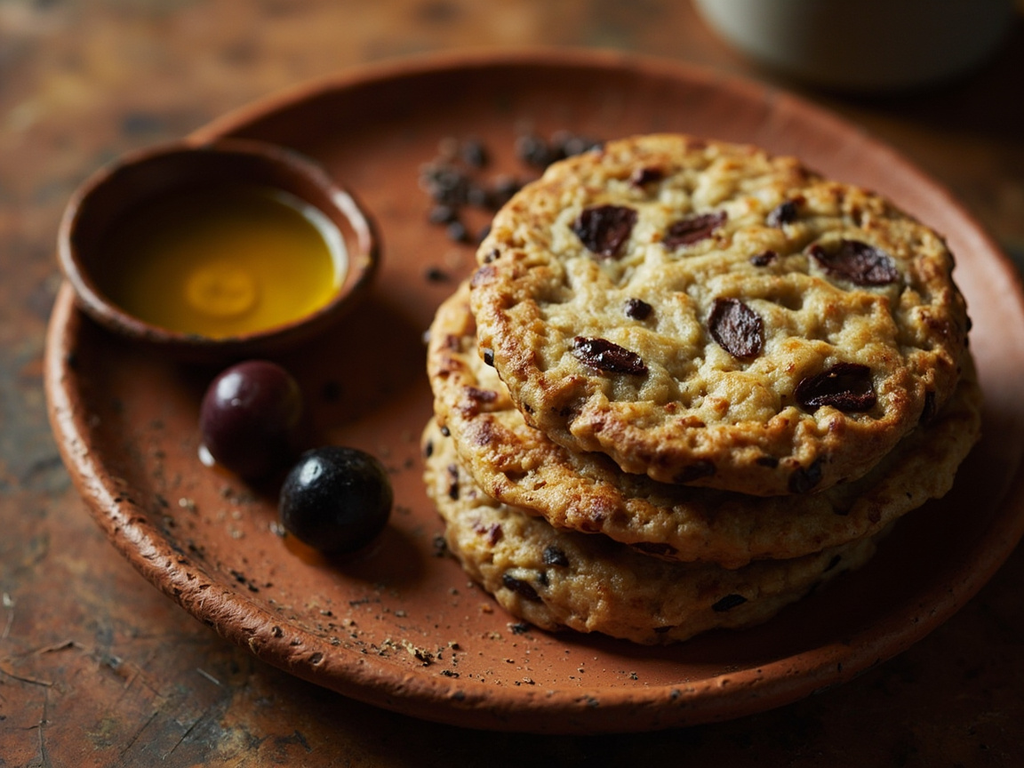
A thick paste of toasted ground barley, kneaded with water, a drizzle of olive oil and a little honey. Neither quite bread nor quite porridge: the silent, nourishing heart of the Greek meal, shaped into a ball or flat cake.
Listen, you who are hungry. When I had slain the lion or cleaned the stables, it was not delicate dishes I dreamed of, but good barley maza, the kind that stays in the belly of a son of Zeus. You take the toasted barley, you mold it, you knead it by hand with a little water, a stream of oil and the honey of bees — and you eat as much as ten cowherds together. That is the food of the strong: rough, simple, and it never betrays the arm that toils.
- •Toasted barley flour (alphita) — as much as you like, in abundance (base)
- •Spring water — enough for the dough (binder)
- •Olive oil — a drizzle (softness)
- •Honey — a spoonful (sweetness)
Barley Maza with Honey and Olive Oil
A thick paste of toasted ground barley, kneaded with water, a drizzle of olive oil and a little honey. Neither quite bread nor quite porridge: the silent, nourishing heart of the Greek meal, shaped into a ball or flat cake.
Why this dish? They say Heracles ate "for ten men": maza, an unleavened barley cake or paste, was precisely the bread of the people, cowherds and soldiers — the kind you devour in quantity, unceremoniously, just as the hero does between labors.
Listen, you who are hungry. When I had slain the lion or cleaned the stables, it was not delicate dishes I dreamed of, but good barley maza, the kind that stays in the belly of a son of Zeus. You take the toasted barley, you mold it, you knead it by hand with a little water, a stream of oil and the honey of bees — and you eat as much as ten cowherds together. That is the food of the strong: rough, simple, and it never betrays the arm that toils.
Ingredients (period version)
- Toasted barley flour (alphita) — as much as you like, in abundance (base)
- Spring water — enough for the dough (binder)
- Olive oil — a drizzle (softness)
- Honey — a spoonful (sweetness)
Ingredients
- Barley flour (or blended barley flakes) — 200 g (base)
- Warm water — 120 to 150 ml (binder)
- Olive oil — 2 tbsp (softness)
- Honey — 1 tbsp (sweetness)
- Salt — 1 pinch (seasoning)
Method
- Toast the barley flour in a dry pan over low heat for a few minutes until it smells nutty (skip if flour is already toasted).
- In a bowl, mix the flour, salt and honey.
- Add the oil, then gradually the warm water, kneading by hand until you get a thick, smooth dough.
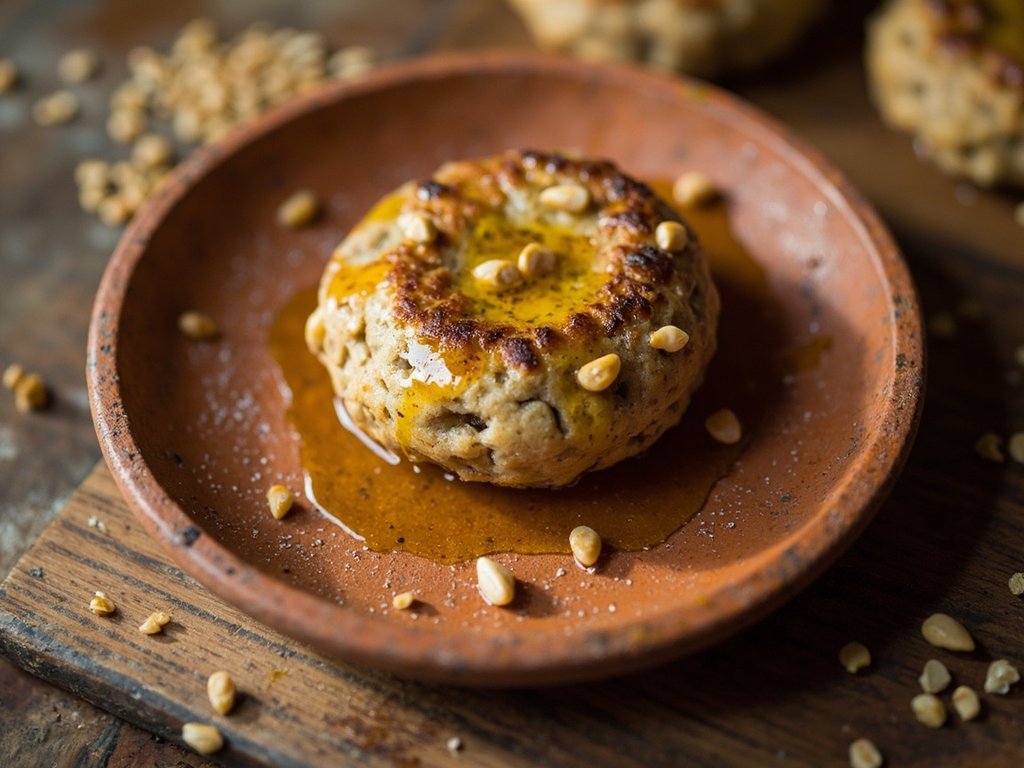
- Shape into balls or flat cakes. Eat as is, or cook on a hot stone/pan for 8-10 minutes for a light crust.
How it was made : Maza was often eaten raw, simply kneaded, because barley does not rise well for bread. It was the daily sitos for most Greeks; wheat bread was rarer and more prestigious. It was adapted as needed: with water, wine, milk, honey or herbs.
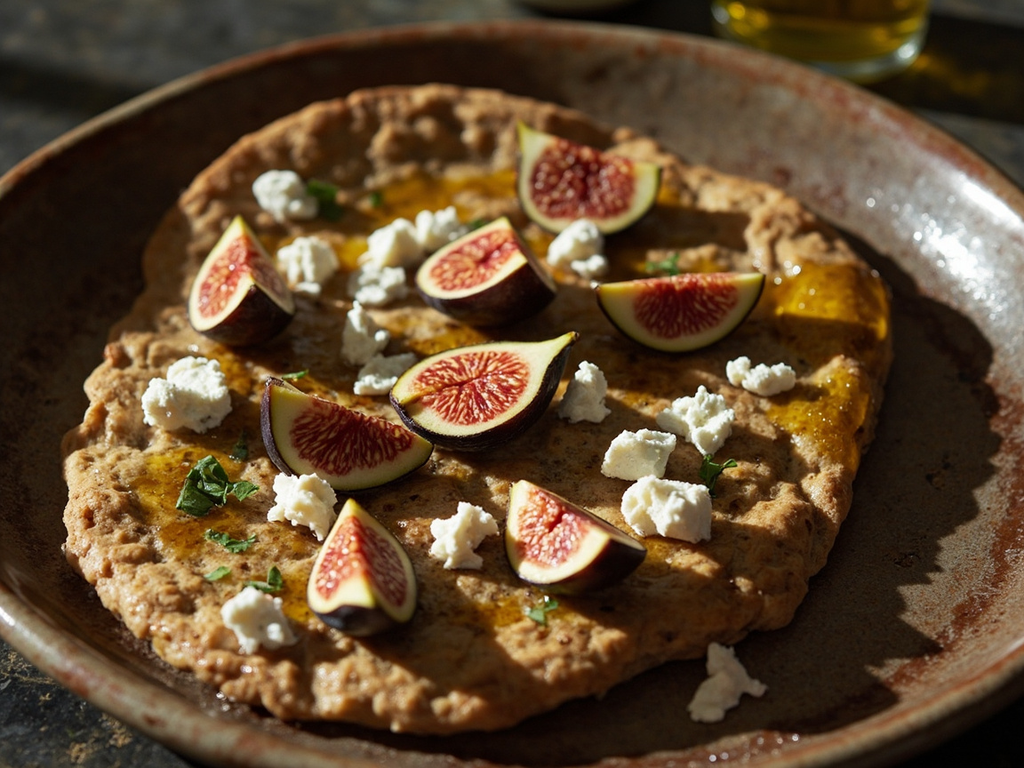
The contemporary twist : Served as small balls rolled in sesame seeds, like "hero energy balls," with a drizzle of thyme honey on top.
Sources : Andrew Dalby, Siren Feasts: A History of Food and Gastronomy in Greece, Routledge, 1996 · Athenaeus of Naucratis, The Deipnosophists (Book III, on maza)
Hercules · Charactorium