 flip
flipMaza of the Argonauts (Barley Flatbread with Cheese and Honey)
Maza of the Argonauts (Barley Flatbread with Cheese and Honey)
Why this dish? Barley maza was the staple of the ordinary Greek and especially the sailor: robust, quickly made, it nourished the crew of the Argo between ports. Jason, leader of men on a long quest, had to feed his companions with this simple bread, kneaded by hand without an oven on deck.
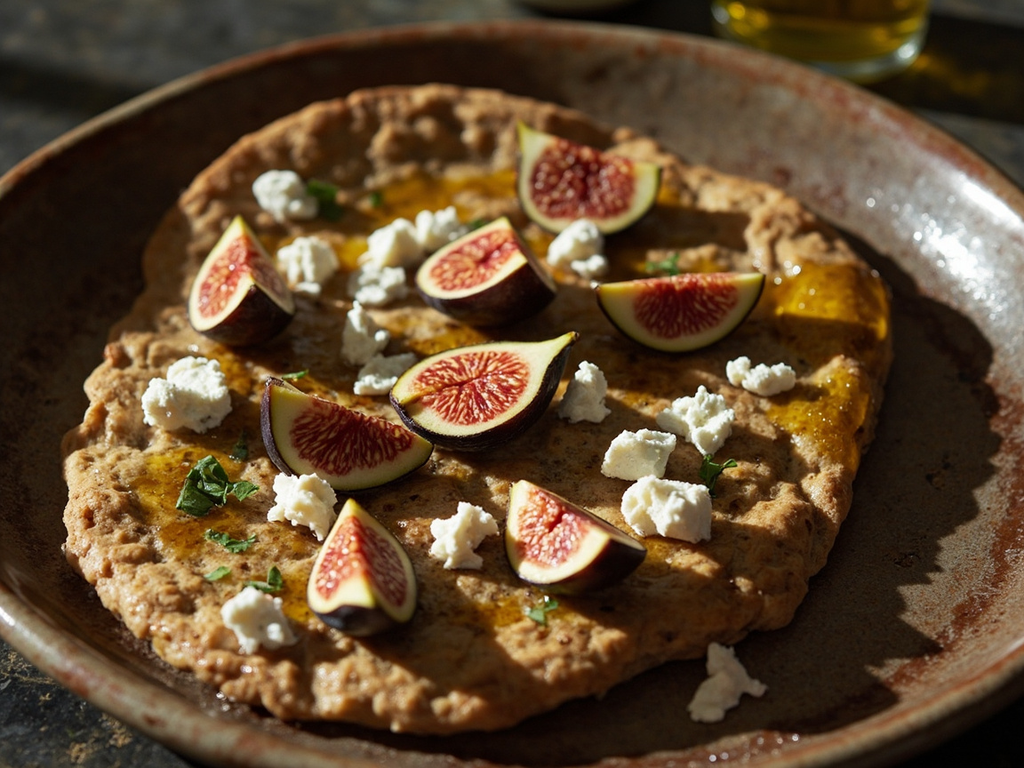
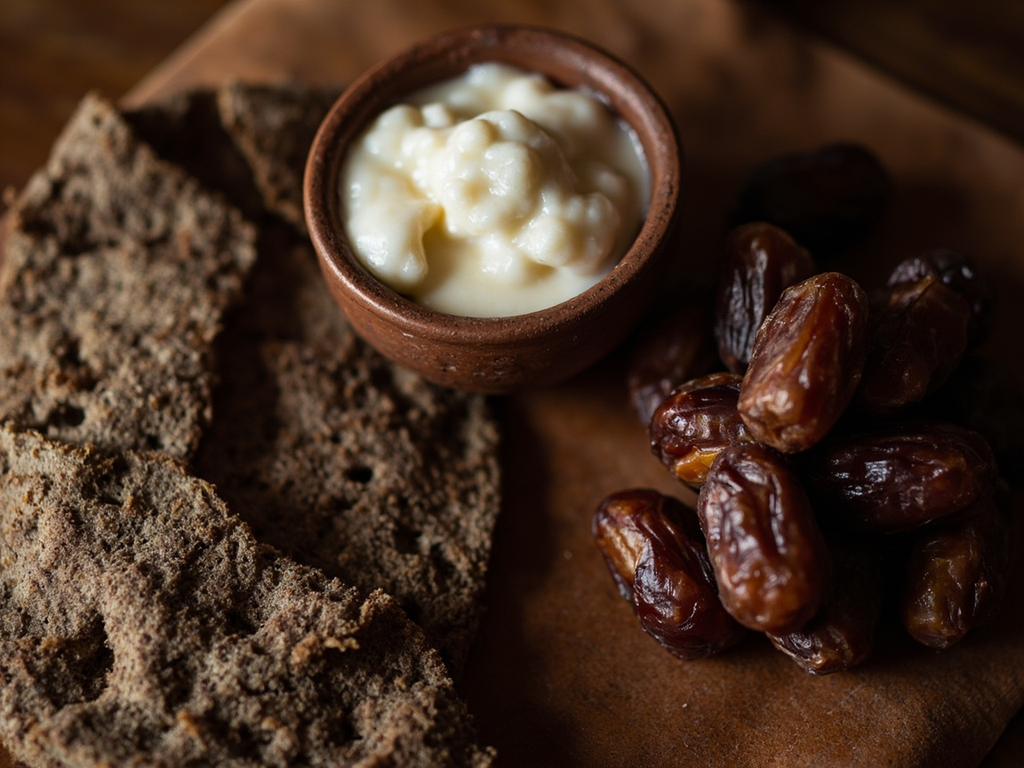
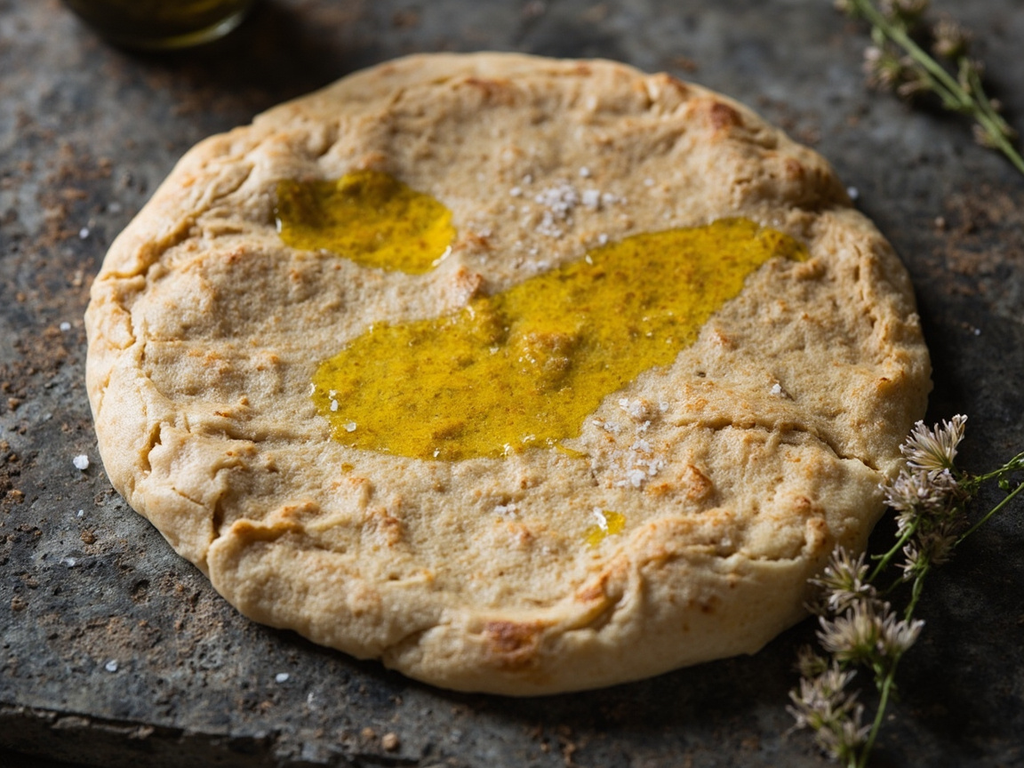
A thick flatbread of barely leavened barley flour, barely cooked, eaten spread with fresh cheese or dipped in honey. It is the bread of the people and sailors: no oven, no leaven, just flour, water, and fire.
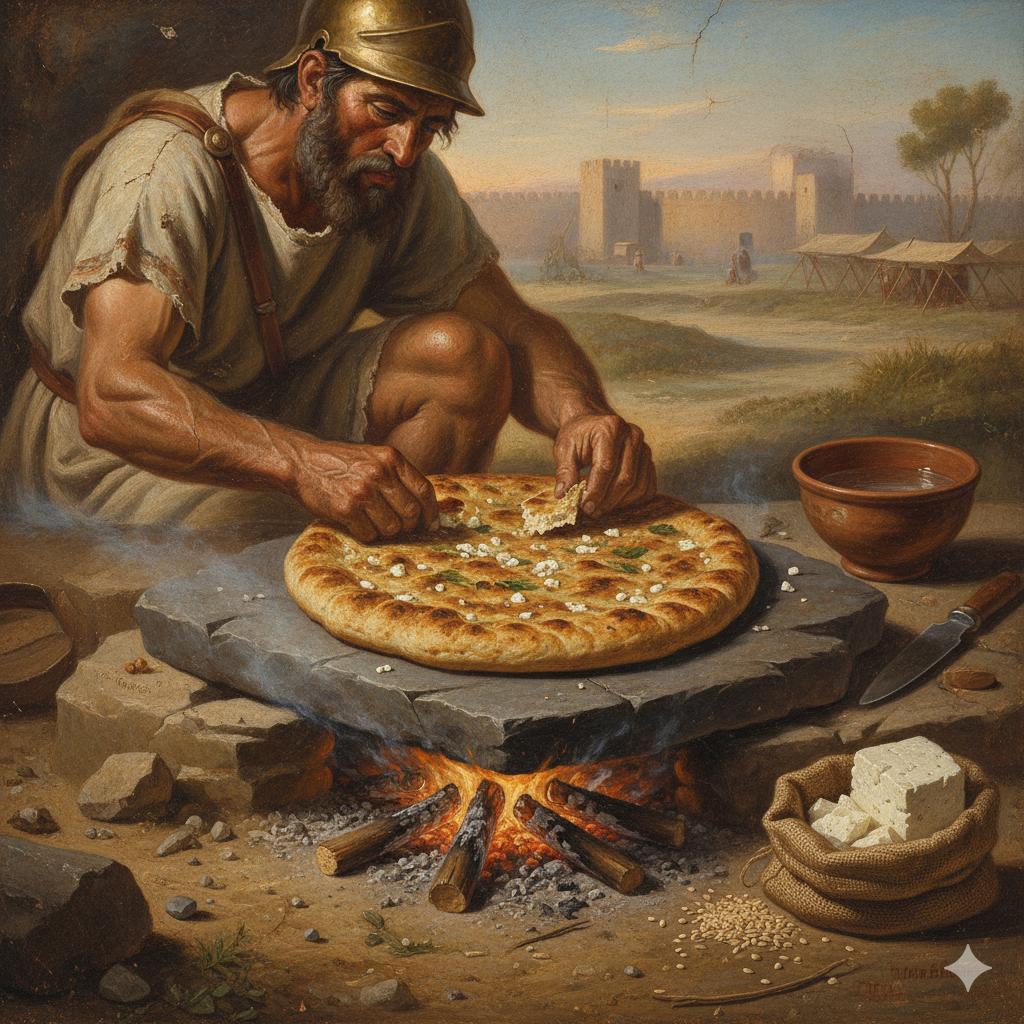
Listen to me, you who have never held an oar. When the Argo split the swell and hunger bit my companions, it was this barley flatbread I broke with my hands. You knead it on a stone, you cook it on the embers, and whoever has cheese puts it on top, whoever has honey dips it in. A hero is nothing without bread in his belly — even Heracles ate his in silence before taking up the oar again.
- •Toasted barley flour — a good handful per man (base)
- •Spring water — enough to bind (binder)
- •Fresh goat cheese — as much as you like (savory accompaniment)
- •Honey — a drizzle (sweetness)
- •Sea salt — a pinch (seasoning)
Maza of the Argonauts (Barley Flatbread with Cheese and Honey)
A thick flatbread of barely leavened barley flour, barely cooked, eaten spread with fresh cheese or dipped in honey. It is the bread of the people and sailors: no oven, no leaven, just flour, water, and fire.
Why this dish? Barley maza was the staple of the ordinary Greek and especially the sailor: robust, quickly made, it nourished the crew of the Argo between ports. Jason, leader of men on a long quest, had to feed his companions with this simple bread, kneaded by hand without an oven on deck.
Listen to me, you who have never held an oar. When the Argo split the swell and hunger bit my companions, it was this barley flatbread I broke with my hands. You knead it on a stone, you cook it on the embers, and whoever has cheese puts it on top, whoever has honey dips it in. A hero is nothing without bread in his belly — even Heracles ate his in silence before taking up the oar again.
Ingredients (period version)
- Toasted barley flour — a good handful per man (base)
- Spring water — enough to bind (binder)
- Fresh goat cheese — as much as you like (savory accompaniment)
- Honey — a drizzle (sweetness)
- Sea salt — a pinch (seasoning)
Ingredients
- Barley flour — 250 g (base)
- Warm water — 150 ml approx. (binder)
- Salt — 1 tsp (seasoning)
- Olive oil — 1 tbsp (dough elasticity)
- Fresh goat cheese (e.g., brousse) — 150 g (savory topping)
- Liquid honey — 3 tbsp (sweet topping)
Method
- Mix barley flour and salt, gradually add warm water and oil, until a soft, non-sticky dough forms.
- Let rest 20 min under a cloth.
- Divide into palm-sized rounds, flatten to 1 cm thickness.
- Cook dry on a cast-iron pan (or hot stone) 3-4 min per side, until golden spots appear.
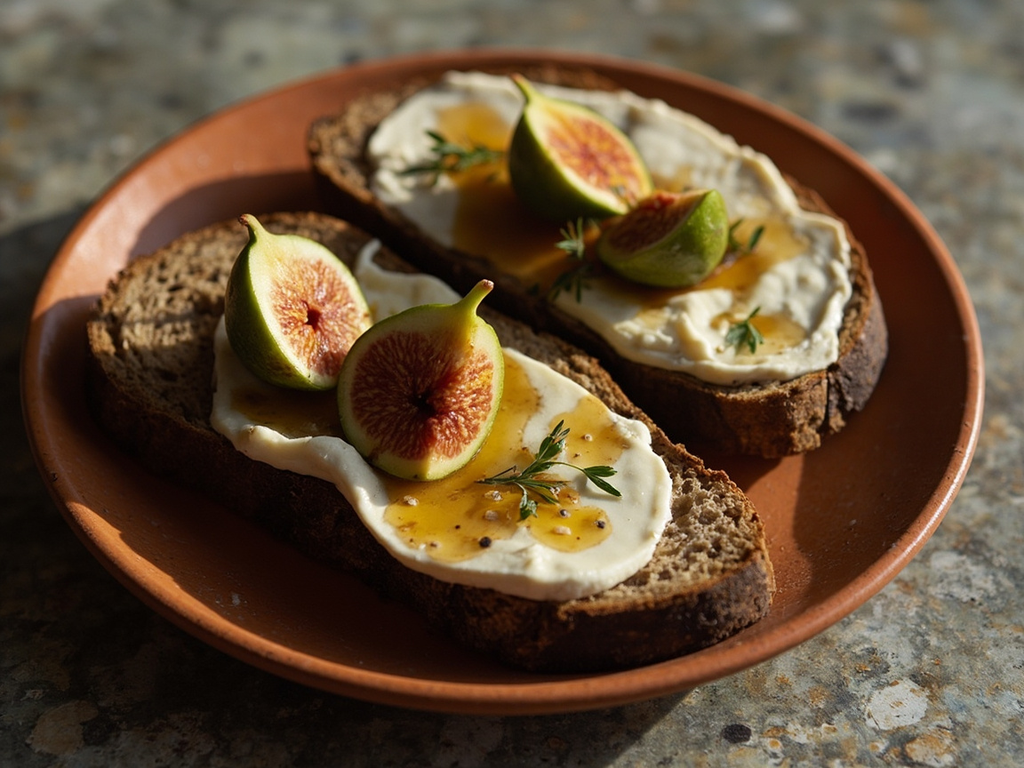
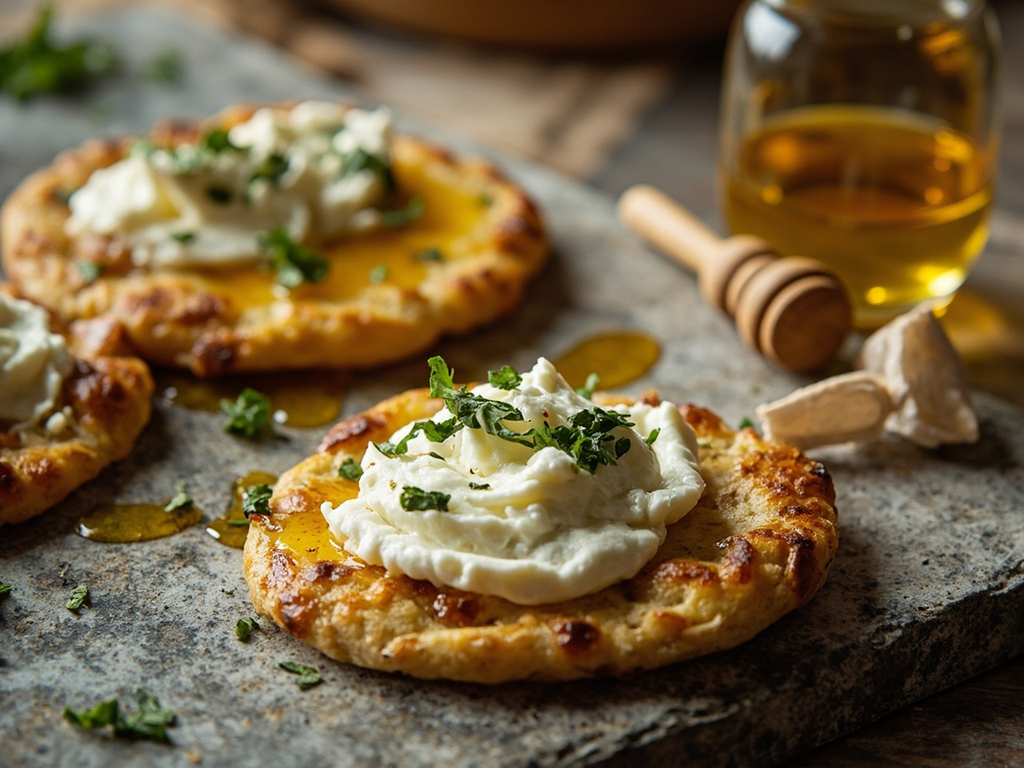
- Serve warm: half the flatbreads spread with goat cheese, the other half drizzled with honey.
How it was made : The Greeks distinguished artos (wheat bread, oven-baked, rarer and prestigious) from maza (barley flatbread, simply kneaded and cooked on a griddle or embers). Barley grew more easily than wheat in Greek soil: it was the everyday grain of commoners and soldiers. On board, without an oven, only flatbread was possible.
The contemporary twist : Serve as a duo on a slate board: a 'Iolcos savory' flatbread with goat cheese and thyme, and a 'Golden Fleece' flatbread drizzled with golden honey and a few toasted sesame seeds.
Jason · Charactorium