 flip
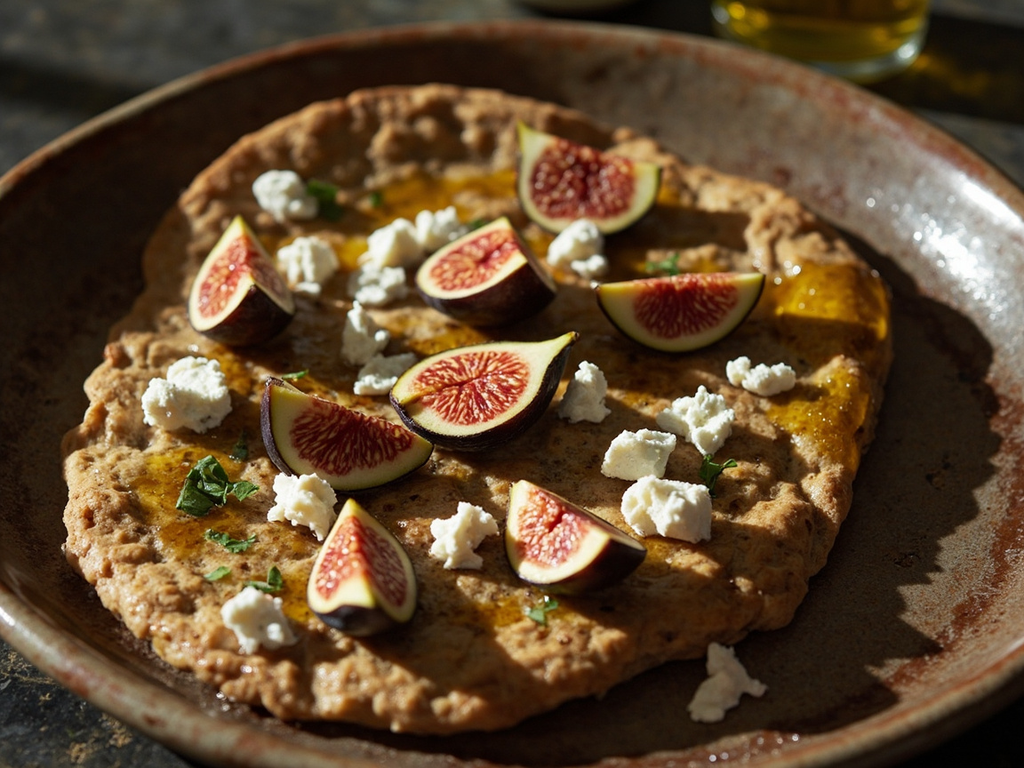
flipAugustus's frugal plate: coarse bread, fresh cheese, and green figs
Augustus's frugal plate: coarse bread, fresh cheese, and green figs
Why this dish? Suetonius describes in his *Life of Augustus* the emperor's deliberately modest table: he liked coarse bread, small fish, hand-pressed cheese, and especially green figs. This dish is literally what Augustus ate, he who nibbled according to his capricious appetite rather than feasting.
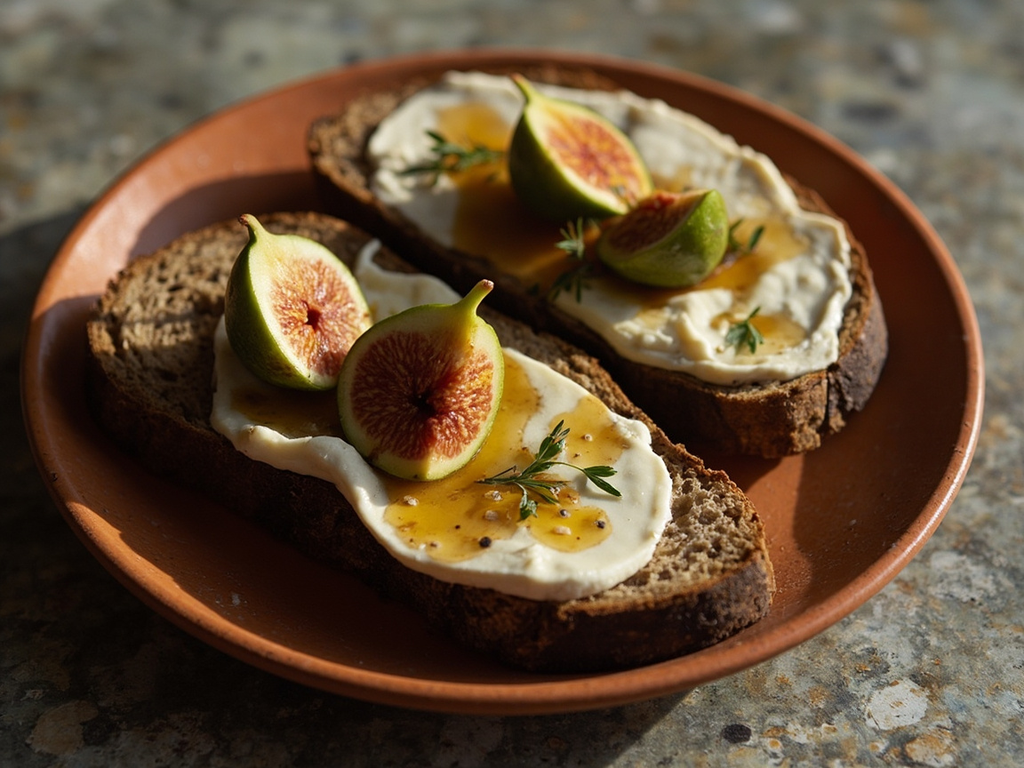
A plate of deliberate simplicity: still-warm coarse bread, drained fresh cheese, a few split green figs, and a drizzle of honey. Sobriety made into a meal, in the image of the most powerful man in Rome who ate like a peasant from Latium.
Let no one seek at my table the lavishness that weighs upon the powerful: a coarse bread, a little cheese pressed between my fingers, a few green figs picked from the garden suffice me amply. I have always held that moderation suits the prince more than anyone, and I gladly nibble, here a fig, there a crust, as hunger takes me. Romulus was content with less; I am not ashamed to follow the ancients. Taste this, you who read me, and you will know that true greatness has no need of complicated sauces.
- •Coarse leavened bread (panis secundarius) — a few thick slices (rustic base of the meal)
- •Fresh pressed sheep's cheese — a good piece (creamy, mild fat)
- •Ripe green figs — a handful (fruity sweetness)
- •Honey — a drizzle (sweet binder)
- •Garum (liquamen) — a few drops (salty and umami touch on the cheese)
Augustus's frugal plate: coarse bread, fresh cheese, and green figs
A plate of deliberate simplicity: still-warm coarse bread, drained fresh cheese, a few split green figs, and a drizzle of honey. Sobriety made into a meal, in the image of the most powerful man in Rome who ate like a peasant from Latium.
Why this dish? Suetonius describes in his *Life of Augustus* the emperor's deliberately modest table: he liked coarse bread, small fish, hand-pressed cheese, and especially green figs. This dish is literally what Augustus ate, he who nibbled according to his capricious appetite rather than feasting.
Let no one seek at my table the lavishness that weighs upon the powerful: a coarse bread, a little cheese pressed between my fingers, a few green figs picked from the garden suffice me amply. I have always held that moderation suits the prince more than anyone, and I gladly nibble, here a fig, there a crust, as hunger takes me. Romulus was content with less; I am not ashamed to follow the ancients. Taste this, you who read me, and you will know that true greatness has no need of complicated sauces.
Ingredients (period version)
- Coarse leavened bread (panis secundarius) — a few thick slices (rustic base of the meal)
- Fresh pressed sheep's cheese — a good piece (creamy, mild fat)
- Ripe green figs — a handful (fruity sweetness)
- Honey — a drizzle (sweet binder)
- Garum (liquamen) — a few drops (salty and umami touch on the cheese)
Ingredients
- Sourdough country bread (whole wheat or rye) — 4 slices (rustic base of the meal)
- Brousse or sheep's milk ricotta — 150 g (creamy, mild fat)
- Fresh figs — 4 to 6 (fruity sweetness)
- Liquid honey — 1 tbsp (sweet binder)
- Fish sauce (nuoc-mâm, substitute for garum) — 3-4 drops (salty and umami touch)
Method
- Warm the bread slices in the oven for a few minutes to revive the crust.
- Drain the brousse, spread it generously on the bread, and add 3 or 4 drops of fish sauce on the cheese.
- Cut the figs crosswise and arrange them beside the bread, cut side up.
- Drizzle everything with honey and serve without ceremony, eating with your hands.
How it was made : Ordinary Roman bread was often coarse (panis secundarius), less white and more rustic than that of the rich. Fresh cheese was pressed by hand or in wicker molds, and figs, fresh in summer or dried the rest of the year, were a staple of all classes. The combination of salty (garum) and sweet was typically Roman.
The contemporary twist : An ancient seasonal toast: spread the brousse in an 'emperor's tartine' style and stick a sprig of thyme into the fig, a nod to the Palatine garden.
Sources : Suetonius, *Life of Augustus* (*Lives of the Twelve Caesars*), § 76-77 · Cato the Elder, *De agricultura* (recipes for cheese and bread)
Augustus · Charactorium