
La Llorona is a ghost from Latin American folklore, the figure of a woman who, according to legend, drowned her own children and has since wandered weeping along rivers and lakes. This legend, deeply rooted in Mexico and Latin America, blends pre-Hispanic and Spanish colonial influences.
La Llorona
La Llorona
8 min read
Frequently asked questions
Key Facts
- The legend of La Llorona appears as early as the 16th century, in the aftermath of the Spanish conquest of Mexico (1519–1521)
- Some scholars connect La Llorona to Cihuacōātl, an Aztec goddess associated with women who died in childbirth and with lamentation
- The legend spread throughout Latin America with local variations in Mexico, Colombia, Guatemala, and beyond
- La Llorona is considered one of the most iconic legends in Mexico's intangible cultural heritage
- The figure is interpreted by some historians as a metaphor for La Malinche (Malintzin), a symbol of the trauma of colonial conquest
Works & Achievements
A bilingual ethnographic encyclopedia written with Aztec informants, and the earliest written source documenting the myths of the weeping Cihuacóatl, direct ancestor of La Llorona.
A colonial chronicle recording the omens of the Spanish Conquest, including the white-clad woman weeping through the streets of Tenochtitlan — a founding text of the written tradition of La Llorona.
A Mexican Romantic poem that brought La Llorona into national literature, transforming this folkloric ghost into a literary symbol of mestizo Mexican identity.
The first Mexican cinematic adaptation of the myth, marking La Llorona's entry into mainstream popular culture and her spread to international audiences.
A collection of legends by the future Guatemalan Nobel Prize winner in Literature, placing La Llorona within the Maya-colonial folklore of Central America.
A contemporary reimagining of the myth by the Guatemalan filmmaker, using La Llorona as a metaphor for the trauma inflicted by twentieth-century Latin American dictatorships.
Anecdotes
La Llorona is closely linked to Cihuacóatl, the Aztec goddess of motherhood and war. The Florentine Codex, compiled by Friar Sahagún in the 16th century, records that she wandered the night uttering piercing cries. This assimilation illustrates how Spanish conquerors reinterpreted indigenous beliefs, giving rise to a hybrid myth that has endured across the centuries.
According to the chronicler Fray Diego Durán, a woman dressed in white was seen weeping in the streets of Tenochtitlan on the nights before the Spanish arrival in 1519, crying out 'Oh my children, we are lost!' This vision was interpreted as one of eight omens foretelling the fall of the Aztec empire, showing how the legend is rooted in major historical events.
The legend of La Llorona varies by region: in Mexico, the woman drowns her children in a lake or river; in Central America, the story is often tied to a romantic betrayal. These variations show how a myth adapts to local cultural contexts while retaining a common narrative core — a fascinating phenomenon for folklorists.
In the 19th century, Mexican Romantic poet Ignacio Rodríguez Galván wove La Llorona into national literature with his poem 'La profecía de Guatimoc' (1839). In doing so, he transformed an oral folk tale into a literary symbol of Mexican grief and cultural mestizaje, helping to forge a national identity through folklore.
During the 1930s and 1940s, ethnologists such as Higinio Vázquez Santa Ana collected testimonies from rural Mexican communities reporting sightings of La Llorona. These fieldwork surveys revealed the legend's vitality across all social classes, confirming her role as a central figure in Mexican popular culture well beyond mere superstition.
Primary Sources
Cihuacóatl often appeared dressed in white, roaming the streets at night weeping and wailing, an omen of wars and misery for the people of Mexico-Tenochtitlan.
Among the omens that foretold the coming of the Spanish, it was said that a woman wept in the streets of Tenochtitlan by night, crying out: 'O my children, we are lost!'
The goddess Cihuacóatl, the Serpent Woman, wanders through the darkness uttering laments, calling out for her lost children and foretelling the misfortunes to come upon the people.
And La Llorona crosses the deserted streets, her cry tearing through the silence of the night, weeping for those she has lost and who will never return.
Key Places
An ancient lake at the heart of which Tenochtitlan, the Aztec capital, was founded. La Llorona is deeply connected to the waters of Lake Texcoco, where legend places the drowning of her children and her first nightly wanderings.
A network of pre-Hispanic canals in the south of Mexico City, listed as a UNESCO World Heritage Site. Nighttime boat rides along the trajineras are associated with sightings of La Llorona in popular tradition.
The ancient Aztec capital, now Mexico City. Colonial chronicles place the first appearances of the weeping woman in white — crying out for her children in the night — in its streets and along its canals.
One of the great rivers of central Mexico, frequently cited in regional versions of the legend as a favored place of wandering and nocturnal appearances of La Llorona.
Typical Objects

La Llorona is invariably depicted wearing a long white dress, an ambivalent symbol of both purity and mourning in Mexican and Latin American traditions.

Her face is often hidden beneath a white or black veil, reinforcing her ghostly appearance and her role as a liminal figure between the worlds of the living and the dead.

Some versions of the legend associate her with an empty cradle or swaddling clothes that she rocks, a poignant symbol of her tragic motherhood and the irreversible loss of her children.

Bodies of water — rivers, lakes, canals — form La Llorona's natural habitat; she always appears near water, the site where her children drowned and where she wanders for eternity.

In some syncretic depictions, La Llorona carries a candle or taper, a reference to the Catholic tradition of funeral mourning introduced by the Spanish during the colonial period.

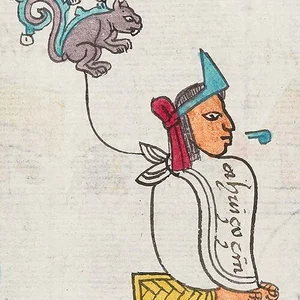
Pre-Hispanic codices document weeping mother goddesses such as Cihuacóatl, the iconographic ancestors of La Llorona and witnesses to the Aztec mythological substrate upon which the legend was built.
School Curriculum
Vocabulary & Tags
Key Vocabulary
Tags
Daily Life
Morning
With the first light of dawn, La Llorona vanishes into the morning mist and the waters of rivers. Legend holds that she can only be seen in darkness; by day, she wanders an invisible world, waiting for night to fall so she can resume her eternal lamentations.
Afternoon
In Mexican folklore, the afternoon marks La Llorona's silence. Mothers warn their children not to approach bodies of water at dusk — the moment when, according to the cosmology inherited from the Aztecs, the world of the living and the world of the dead draw dangerously close.
Evening
At twilight, La Llorona begins her eternal wandering along rivers, lakes, and canals. Her heart-rending cries — '¡Ay, mis hijos!' (Oh, my children!) — rise into the night, warning the living and striking terror into those unlucky enough to glimpse her or hear her voice.
Food
As a spirit of folklore, La Llorona does not eat in any physical sense. Within Mexican cultural syncretism, floral or food offerings are sometimes left for her near bodies of water — a practice blending indigenous traditions of spirit veneration with Catholic rituals of remembrance for the dead.
Clothing
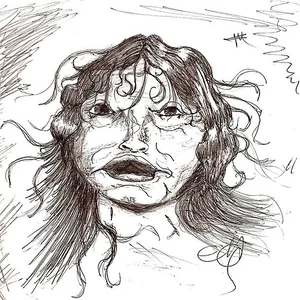
La Llorona is invariably dressed in a long, immaculate white gown — the color of mourning in Mesoamerican cultures. Her black hair hangs loose, and her face is sometimes hidden beneath a veil, evoking both Catholic funerary dress and the apparitions of Aztec goddesses described in the codices.
Housing
La Llorona has no fixed home; her domain is the water and the banks of rivers, lakes, and canals. She inhabits the threshold between the worlds of the living and the dead — the liminal spaces of riverbanks, bridges, and crossroads found in Mexican villages and colonial towns.
Historical Timeline
Period Vocabulary
Visual Style
Style baroque colonial mexicain avec clair-obscur dramatique, blanc spectral sur fond d'eaux noires et de nuit tropicale, mêlant iconographie aztèque et esthétique coloniale espagnole.
Sound Ambience
Ambiance nocturne et aquatique évoquant les rives obscures où erre La Llorona : sanglots portés par le vent, eaux frissonnantes, nuit tropicale et lointains clochers coloniaux.
Liens externes & ressources
Références
Œuvres
Codex florentin (Historia General de las Cosas de Nueva España) — Fray Sahagún
vers 1575-1577
Historia de las Indias de Nueva España — Fray Diego Durán
1581
La profecía de Guatimoc — Ignacio Rodríguez Galván
1839
Leyendas de Guatemala — Miguel Ángel Asturias
1930
La Llorona — film de Jayro Bustamante
2019