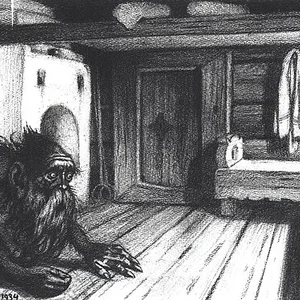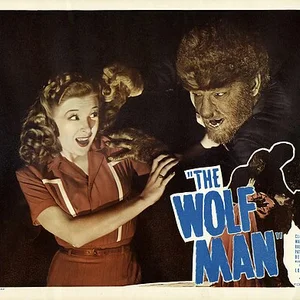

A hybrid creature, half-human and half-wolf, the werewolf is a mythological figure found across many cultures. Lycanthropy — the belief in human transformation into a wolf — is attested as far back as ancient Greece with the myth of Lycaon. During the Middle Ages, this belief intensified and led to actual trials for lycanthropy.
Werewolf
The Werewolf
9 min read
Frequently asked questions
Key Facts
- The myth of Lycaon, king of Arcadia transformed into a wolf by Zeus, is one of the earliest recorded accounts of lycanthropy (Ovid, Metamorphoses, 1st century AD)
- In the Middle Ages, the Church incorporated the werewolf into its demonology: the transformation was seen as a pact with the devil
- Trials for lycanthropy took place across Europe in the 16th and 17th centuries, most notably the trial of Gilles Garnier in 1573 in Franche-Comté
- The term 'werewolf' comes from Old English, combining 'wer' (man) and 'wulf' (wolf), from the Germanic *wer-wulf — the same root as the Old French 'garou' in 'loup-garou', attested in French from the 12th century
- The wolf, a feared animal in medieval rural life, became a focal point for collective anxieties and gave rise to the figure of the werewolf
Works & Achievements
Latin epic poem containing the founding myth of Lycaon, the first major literary source on the man-to-wolf transformation. This text was studied throughout the Middle Ages and the Renaissance, fueling belief in lycanthropy.
Latin novel containing one of the earliest accounts of an encounter with a werewolf, presented as a firsthand testimony. The text shows how the myth had become embedded in popular Roman culture.
Inquisitorial treatise that codified belief in lycanthropy as a manifestation of the diabolical pact. It served as a handbook for European courts and directly contributed to the wave of lycanthropy trials in the 16th and 17th centuries.
A work by Burgundian judge Henri Boguet compiling the major lycanthropy trials, including that of Gilles Garnier. A key historical source for understanding the judicial and social perception of werewolves in France.
A pioneering treatise offering a naturalistic explanation of lycanthropy through the hallucinogenic properties of certain plants. A landmark work of the rationalist shift that marked the end of the great lycanthropy trials.
A medieval lai in Old French telling the story of a Norman knight transformed into a benevolent werewolf. One of the earliest medieval literary texts to treat lycanthropy in a nuanced way, distinguishing the werewolf from a mere monster.
Anecdotes
In 1521, in the region of Poligny in Franche-Comté, three men — Pierre Burgot, Michel Verdun, and Philibert Mentot — were tried and sentenced to be burned at the stake after confessing to transforming into wolves and killing children. This trial is one of the most famous in the history of judicial lycanthropy in France.
One of the earliest written traces of the werewolf myth appears in Greek mythology: King Lycaon of Arcadia allegedly served human flesh to Zeus, who, enraged, transformed him into a wolf. Ovid recounts this story in his Metamorphoses, attesting to the ancient origins of the belief in human-to-wolf transformation.
In the sixteenth century, the case of Peter Stumpp (or Stumpf) in Germany became a truly European affair. Condemned in 1589, the man was accused of committing numerous murders in the form of a wolf over twenty-five years. His trial was widely circulated through printed pamphlets, illustrating how the printing press spread fear of the werewolf across the continent.
During the Middle Ages, physicians and theologians seriously debated the reality of lycanthropy. Medical treatises such as those of Jean de Nynauld (early seventeenth century) proposed natural explanations — including ointments made from hallucinogenic plants — to account for these 'transformations,' reflecting an emerging rational approach to popular beliefs.
In the Landes and Périgord regions of France, there existed the figure of the 'lubins' or local werewolf: according to folk tradition, unbaptized children or men who had made a pact with the devil would transform into wolves at night to devour livestock. These regional beliefs persisted well into the nineteenth century, testifying to how deeply the myth was woven into French rural culture.
Primary Sources
He wished to test me […] he prepared a feast at which he served human flesh […] I, outraged, overturned the table […] he himself fled in terror, and in the silence of the countryside, he howled, tried in vain to speak, and his mouth filled with foam.
My companion stripped off his clothes at the roadside and laid them on the stones […] He became a wolf and began to howl. I tried to run, but his clothes had turned to stone.
The transformation into a wolf is a diabolical illusion that Satan imposes upon the minds of men to lead them into sin and perdition, even though their bodies remain in human form.
The ointment with which they anoint themselves contains herbs that disturb the senses and produce visions so powerful that the subject genuinely believes he is running and devouring in the form of a wolf, though he lies motionless all the while.
Key Places
Mountainous region of the Peloponnese where the founding myth of Lycaon, the first werewolf in Greek mythology according to Ovid, is set. In antiquity, Arcadia was renowned for its wild rituals connected to wolves.
Town where one of the first major French lycanthropy trials was held in 1521, resulting in Pierre Burgot and Michel Verdun being burned at the stake. This trial became a reference case for European inquisitors.
In 1573, the town of Dole officially authorized its population to hunt the werewolf Gilles Garnier, accused of devouring children. This official decree is one of the rare public documents attesting to a formal 'werewolf hunt'.
Region terrorized between 1764 and 1767 by the Beast of Gévaudan, a mysterious predator that killed more than 100 people and rekindled popular belief in werewolves across rural 18th-century France.
Dense woodland associated in Nordic medieval folklore with sightings of werewolves and wild creatures. These deep forests symbolized in the collective imagination the threshold between the human world and untamed wilderness.
Typical Objects

A plant-based preparation (belladonna, henbane, mandrake) that those accused of lycanthropy confessed to rubbing on their bodies to trigger their transformation. Seventeenth-century physicians saw it as the true cause of the hallucinations and abnormal behavior reported in such cases.

A ritual object believed to bring about transformation according to medieval folk beliefs and trial testimonies. Wearing a wolf's skin was considered a sign of a pact with the devil.

An inquisitorial treatise published in 1489, used as a handbook by ecclesiastical and civil courts to identify and condemn werewolves and witches during the major European witch trials.

According to folk tradition, only a bullet or blade made of silver could kill a werewolf. This belief, well documented in European folklore, reflects the supernatural and invulnerable nature attributed to these creatures.

Christian protective objects used to ward off werewolves according to medieval popular belief, highlighting the religious interpretation of lycanthropy as a manifestation of the devil.

An ambiguous talisman worn sometimes to protect against wolves, sometimes associated with the magical practices of alleged werewolves. Trial records regularly mention such objects as pieces of evidence.
School Curriculum
Vocabulary & Tags
Key Vocabulary
Tags
Daily Life
Morning
In medieval myth, the werewolf returns to human form at dawn, often exhausted and covered in mud or blood. He attempts to lead an ordinary life as a peasant or knight, sometimes unaware of what he did during the night. His neighbors watch his nightly absences and strange behavior with growing suspicion.
Afternoon
During the day, the werewolf was indistinguishable from other men — he worked the fields, attended religious services, and lived within society. It was precisely this hidden dual nature that, in trials, served as proof of diabolical deceit: the werewolf concealed his crimes behind the appearance of an ordinary man.
Evening
With the setting of the sun, and especially at the full moon, the transformation was believed to occur. The man would withdraw into the forest, rub himself with an ointment or don a wolf's skin, and become a wild beast until dawn. Trial testimonies describe frenzied runs through the woods and attacks on livestock or isolated children.
Food
In animal form, the werewolf was accused of devouring domestic animals and, in the most serious cases tried before a court, human beings — particularly children. This symbolic cannibalism represented the ultimate crime in medieval Christian society and justified sentences of death by burning.
Clothing
In human form, the werewolf wore clothing suited to his social station — a peasant's rough tunic, a shepherd's garments, or a knight's attire depending on his rank. The transformation involved tearing or discarding these clothes, which were later found at the site of the change. Possession of a wolf-skin belt or pelt was considered damning evidence during trials.
Housing
The werewolf lived among others, in the village or manor, with no outward distinguishing signs. But those accused in trials were often social outsiders — solitary shepherds, wanderers, individuals on the margins of the community — whose isolation only deepened suspicion. The dense forest, a wild and diabolical space in the medieval imagination, was regarded as his true nocturnal domain.
Historical Timeline
Period Vocabulary
Visual Style
Style gravure sur bois médiévale allemande et manuscrit enluminé gothique, avec un clair-obscur dramatique et une palette nocturne évoquant la terreur et le mystère des croyances en la lycanthropie.
Sound Ambience
Ambiance forestière médiévale nocturne mêlant hurlements de loups, vent dans les frondaisons et tension sonore d'une nuit de pleine lune, évoquant l'univers sombre des croyances populaires en la lycanthropie.
Liens externes & ressources
Références
Œuvres
Métamorphoses (Ovide)
vers 8 apr. J.-C.
Satyricon (Pétrone)
vers 60 apr. J.-C.
Malleus Maleficarum (Heinrich Kramer)
1489
Discours de la lycanthropie (Henri Boguet)
1602
De la lycanthropie, transformation et extase des sorciers (Jean de Nynauld)
1615
Bisclavret (Marie de France)
fin XIIe siècle