 flip
flipGame Pie in a Crust for the Quest
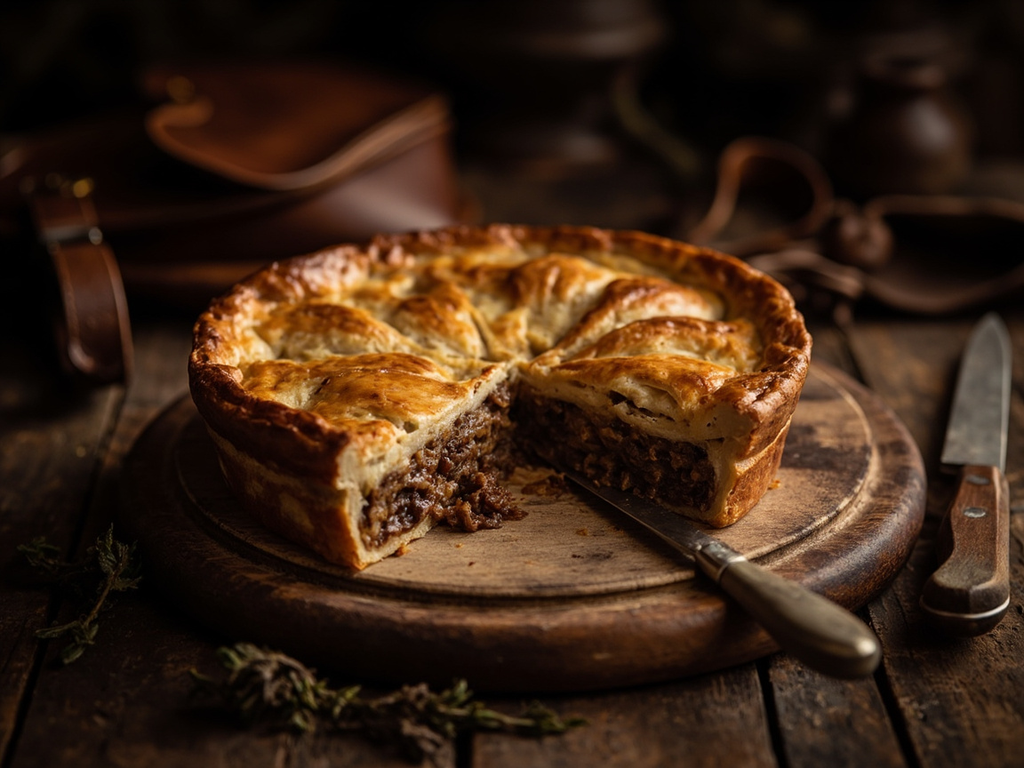
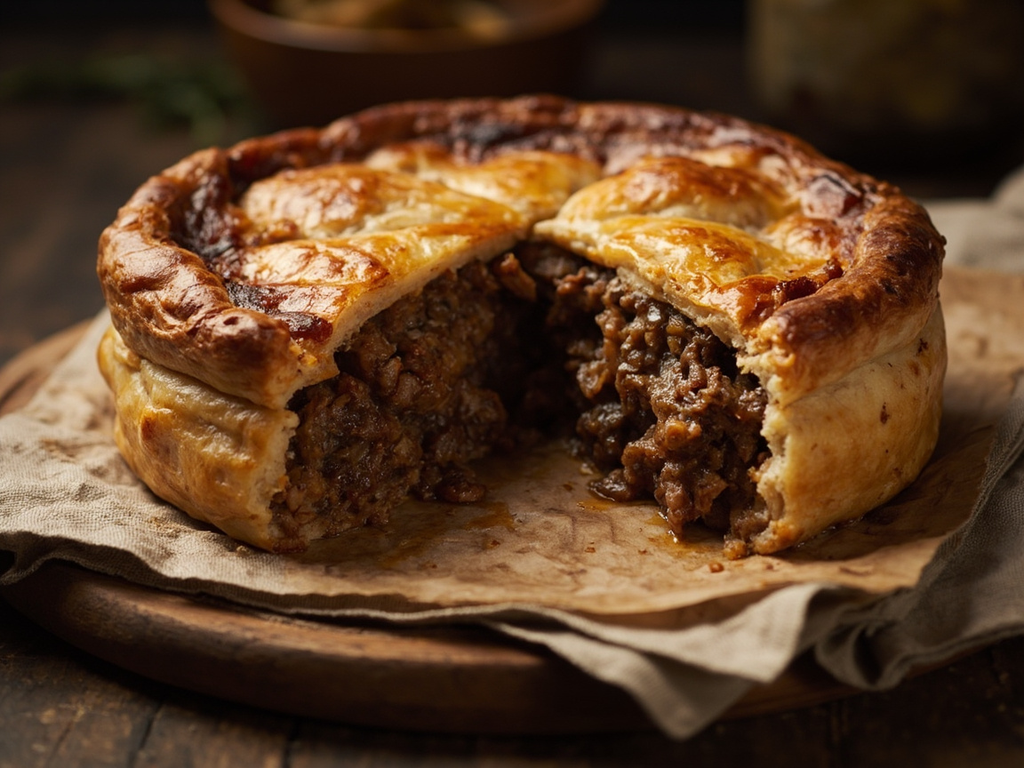
Game Pie in a Crust for the Quest
Why this dish? Lancelot's life is a long wandering: the quest for the Grail, rides from castle to castle. The pie enclosed in a firm crust can be carried in a saddlebag and keeps for several days — the knight's 'meat box' on the road.
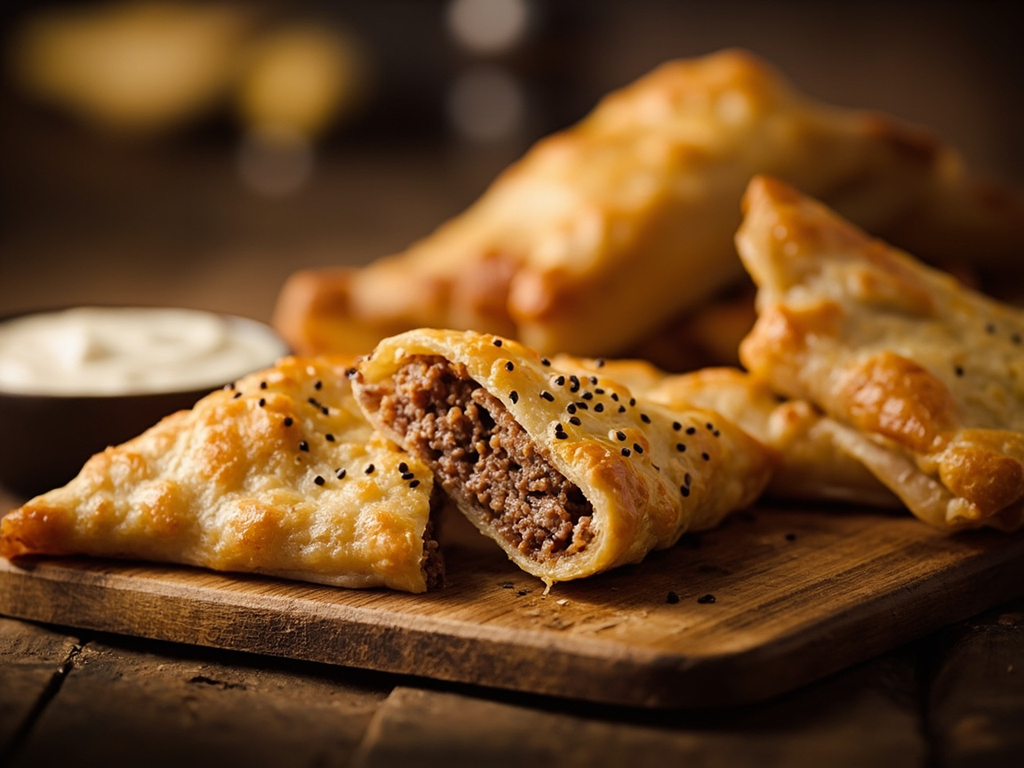
Spiced game mince enclosed in a thick, compact crust ('coffin'), baked for travel and eaten cold, slice after slice, on the roads of the quest.
Know that the wandering knight finds no tavern under every oak. Therefore I have the minced and spiced game meat enclosed in a hard dough like a little chest, which we aptly call a 'coffin'. Baked, sealed with its jellied juices, this pie has fed me many a day through the forests without the meat turning. Slice it on your knee, drink a draught of spring water, and take up the quest with a steady heart.
- •Game meat (venison, boar) — finely minced (filling)
- •Bacon or pork fat — minced (fat binder and preservative)
- •Rye and wheat flour — for the hard dough ('coffin' crust)
- •Long pepper, ginger, saffron — to taste (spices and color)
- •Salt — generous (preservation)
Game Pie in a Crust for the Quest
Spiced game mince enclosed in a thick, compact crust ('coffin'), baked for travel and eaten cold, slice after slice, on the roads of the quest.
Why this dish? Lancelot's life is a long wandering: the quest for the Grail, rides from castle to castle. The pie enclosed in a firm crust can be carried in a saddlebag and keeps for several days — the knight's 'meat box' on the road.
Know that the wandering knight finds no tavern under every oak. Therefore I have the minced and spiced game meat enclosed in a hard dough like a little chest, which we aptly call a 'coffin'. Baked, sealed with its jellied juices, this pie has fed me many a day through the forests without the meat turning. Slice it on your knee, drink a draught of spring water, and take up the quest with a steady heart.
Ingredients (period version)
- Game meat (venison, boar) — finely minced (filling)
- Bacon or pork fat — minced (fat binder and preservative)
- Rye and wheat flour — for the hard dough ('coffin' crust)
- Long pepper, ginger, saffron — to taste (spices and color)
- Salt — generous (preservation)
Ingredients
- Pork shoulder + venison (or wild boar) — 600 g total (filling)
- Pork belly / fat — 200 g (moisture and binder)
- Wheat flour — 400 g (pie dough)
- Rye flour — 100 g (rustic crust)
- Lard + hot water — 150 g / 20 cl (hot water crust)
- Pepper, ginger, saffron — 1 tsp mixed (spices)
- Salt — 2 tsp (seasoning and preservation)
Method
- Chop the meats by knife or coarse grind, mix with fat, salt, and spices; refrigerate.
- Prepare a hot water crust: melt lard in hot water, pour over the salted flours and knead into a supple dough while still warm.
- Line a springform pan (or shape a 'coffin' by hand), fill with well-packed filling, cover with a dough lid and seal the edges.
- Pierce a steam hole, glaze, and bake at 170 °C for 1 h 30 until internal temperature reaches 70 °C.
- Cool completely: the crust hardens and seals the pie. Slice cold.
How it was made : Medieval pies were baked in a thick, hard crust called a 'coffin' (coffin), often not meant to be eaten but to serve as an airtight container. This technique allowed meat, a precious commodity, to be preserved and transported on long journeys — a true packaging avant la lettre.
The contemporary twist : Pour a little port-spiced jelly through the steam hole once the pie has cooled: a 'game en croûte' version worthy of a knight's halt... with cutlery.
Sources : The Forme of Cury, England, c. 1390 · Le Ménagier de Paris, c. 1393
Lancelot du Lac · Charactorium