 flip
flipHypocras, Spiced Wine for the Departure from Table
Hypocras, Spiced Wine for the Departure from Table
Why this dish? At the end of every noble banquet, hypocras was brought, a hot spiced wine reputed to aid digestion. When Lancelot feasts at Camelot or Joyeuse Garde, it is this golden brew that is poured to close the meal and honor the company.
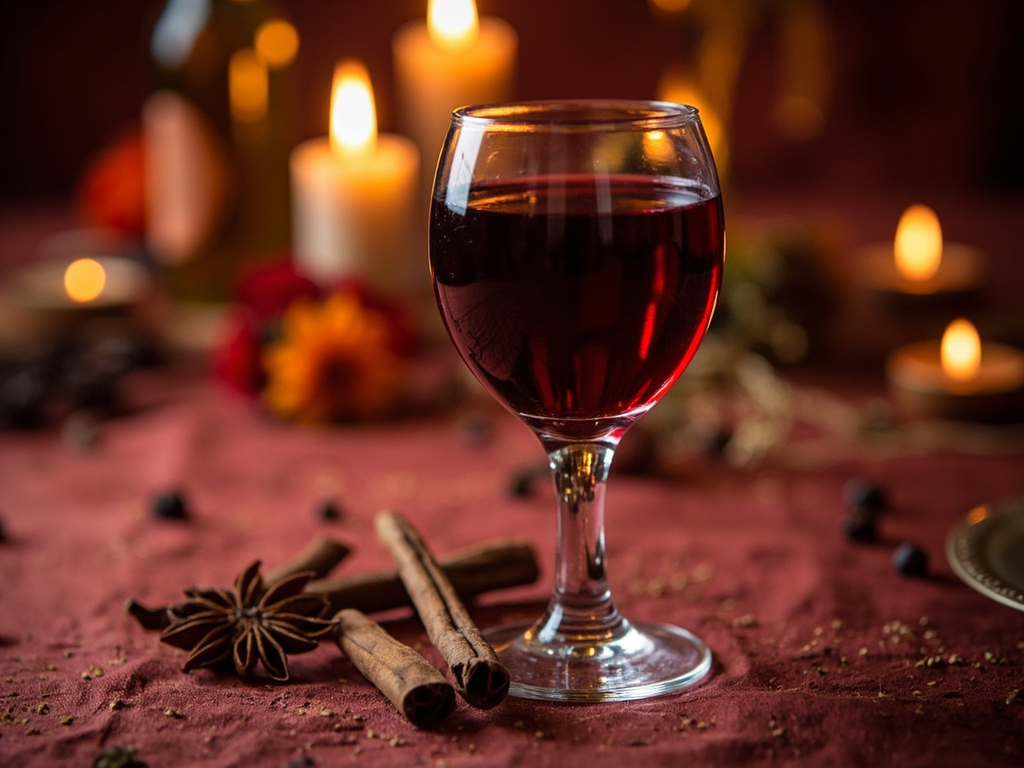
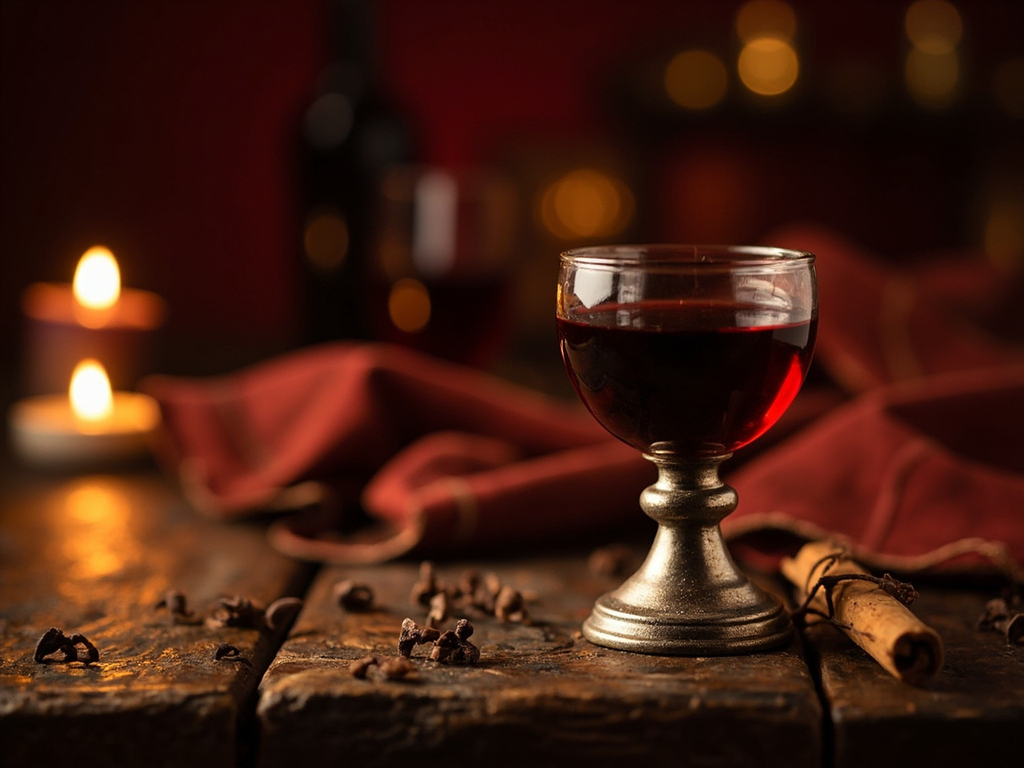
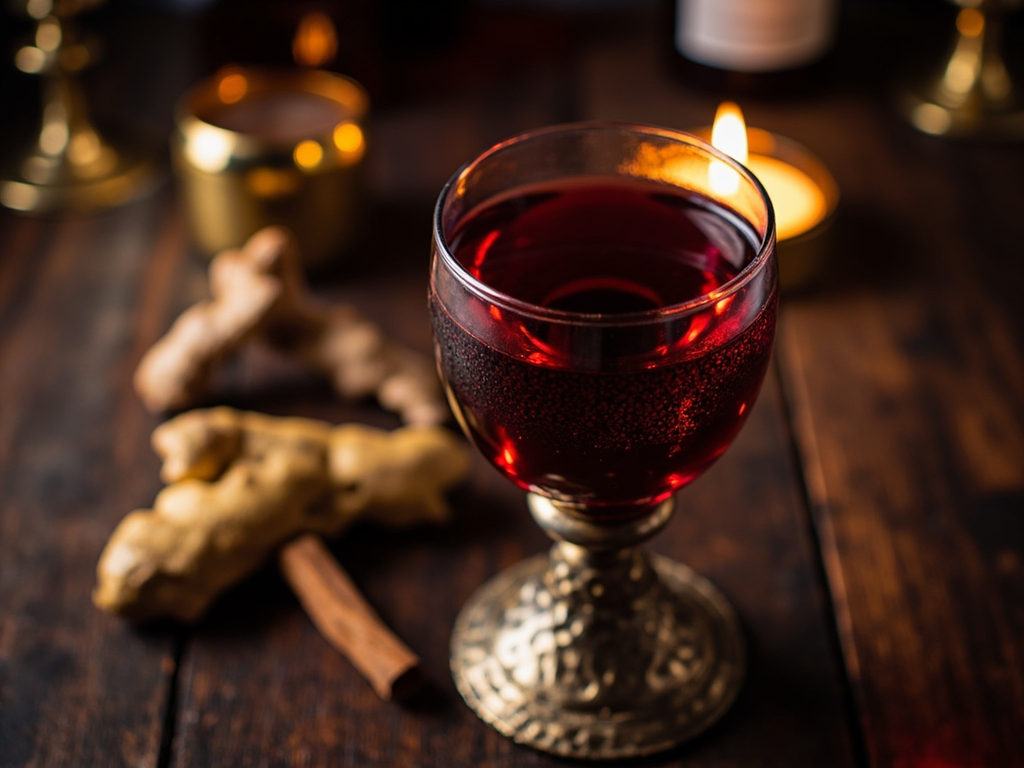
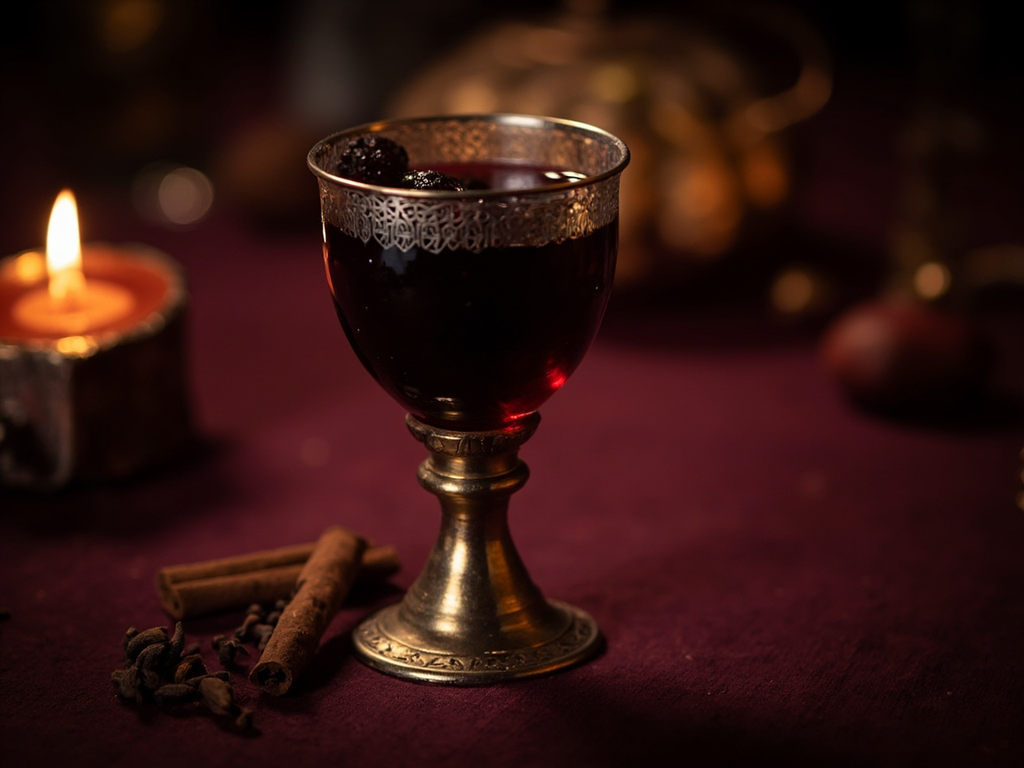
Red wine infused with cinnamon, ginger, and other spices, sweetened with honey or sugar, filtered until clear — the ceremonial digestif of the medieval nobility.
Now then, when the cloths are lifted, let hypocras have its place! I have my good wine steeped with cinnamon, ginger, and sugar, then strained through a cloth until it is clear as ruby. They say it is a friend to the stomach and a companion to the heart; I drink it to my lady and my king. Hold your cup with a steady hand, gentle reader, and drain it to the health of the Round Table.
- •Good red wine — a pitcher (base)
- •Cinnamon — one stick (master spice)
- •Ginger — a piece (warmth)
- •Grains of paradise or long pepper — a few grains (noble heat)
- •Honey or sugar — to taste (sweetness)
Hypocras, Spiced Wine for the Departure from Table
Red wine infused with cinnamon, ginger, and other spices, sweetened with honey or sugar, filtered until clear — the ceremonial digestif of the medieval nobility.
Why this dish? At the end of every noble banquet, hypocras was brought, a hot spiced wine reputed to aid digestion. When Lancelot feasts at Camelot or Joyeuse Garde, it is this golden brew that is poured to close the meal and honor the company.
Now then, when the cloths are lifted, let hypocras have its place! I have my good wine steeped with cinnamon, ginger, and sugar, then strained through a cloth until it is clear as ruby. They say it is a friend to the stomach and a companion to the heart; I drink it to my lady and my king. Hold your cup with a steady hand, gentle reader, and drain it to the health of the Round Table.
Ingredients (period version)
- Good red wine — a pitcher (base)
- Cinnamon — one stick (master spice)
- Ginger — a piece (warmth)
- Grains of paradise or long pepper — a few grains (noble heat)
- Honey or sugar — to taste (sweetness)
Ingredients
- Fruity red wine — 75 cl (base)
- Cinnamon stick — 1 (signature spice)
- Fresh ginger — 4 thin slices (warmth)
- Cloves — 3 (fragrance)
- Grains of paradise or a few black peppercorns — 1 pinch (heat)
- Honey — 4 to 6 tbsp (sweetness)
- Grated nutmeg — 1 pinch (roundness)
Method
- Gently heat the wine without boiling (it should not simmer strongly).
- Add cinnamon, ginger, cloves, nutmeg, and pepper; let infuse off the heat for 1 hour, covered.
- Stir in honey and taste: adjust sweetness to your liking.
- Filter twice through a fine cloth (the medieval 'chausse') until the wine is clear.
- Serve warm or cool, in small amounts, to close the meal.
How it was made : Hypocras takes its name from Hippocrates, alluding to the 'Hippocratic sleeve', the conical cloth bag used to filter the wine. Prepared cold or hot depending on the recipe, sweetened with honey and later sugar when it became available, it was drunk at the end of the meal for its digestive virtues attributed to the spices, which were luxury goods.
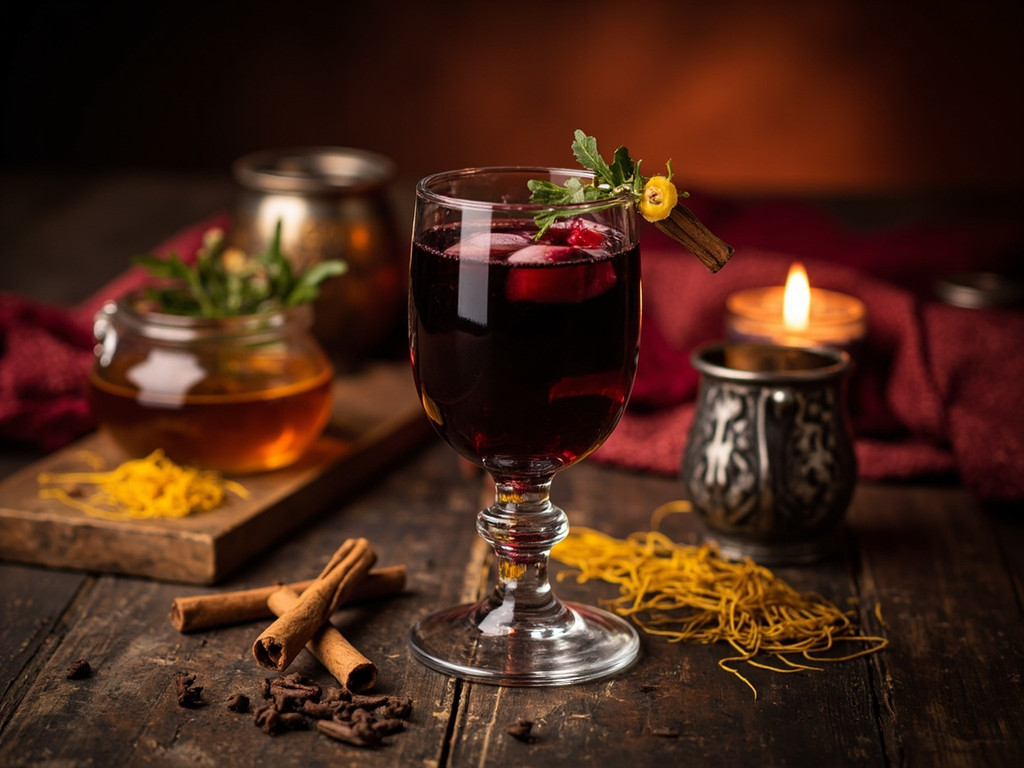
The contemporary twist : Serve it chilled in summer as 'iced hypocras', in small glasses, with a strip of bitter orange peel — a nod to sangria avant la lettre.
Sources : Le Ménagier de Paris, c. 1393 · Taillevent (attr.), Le Viandier, 14th century
Lancelot du Lac · Charactorium