 flip
flipHippocras with Aquitaine wine
Hippocras with Aquitaine wine
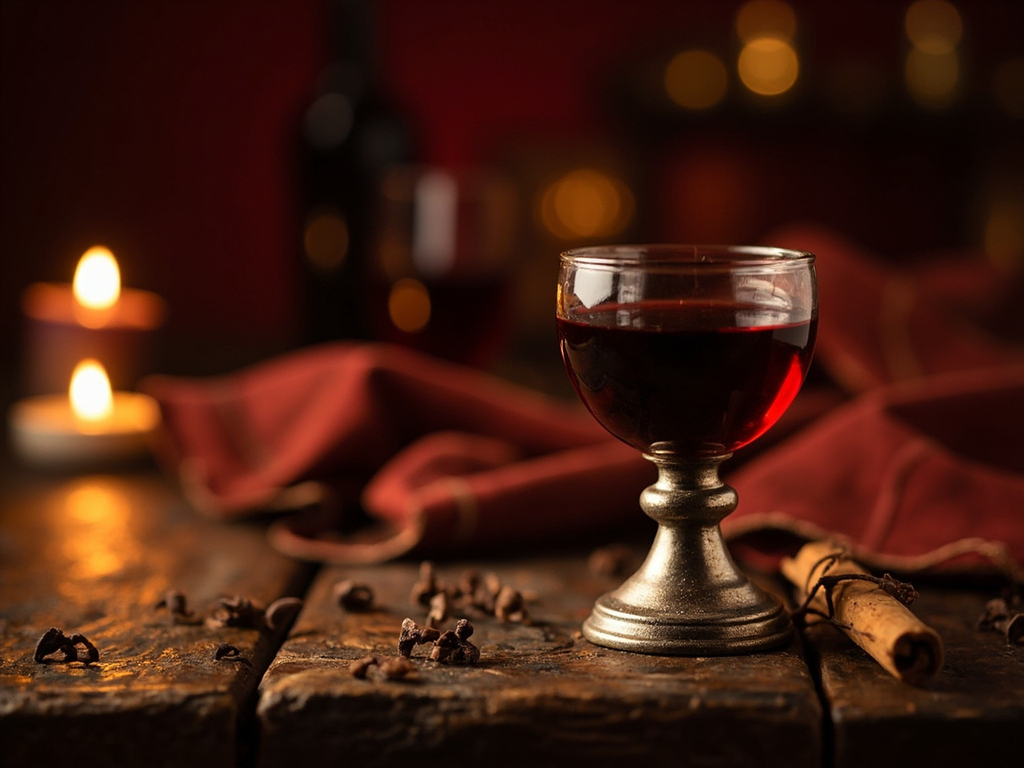
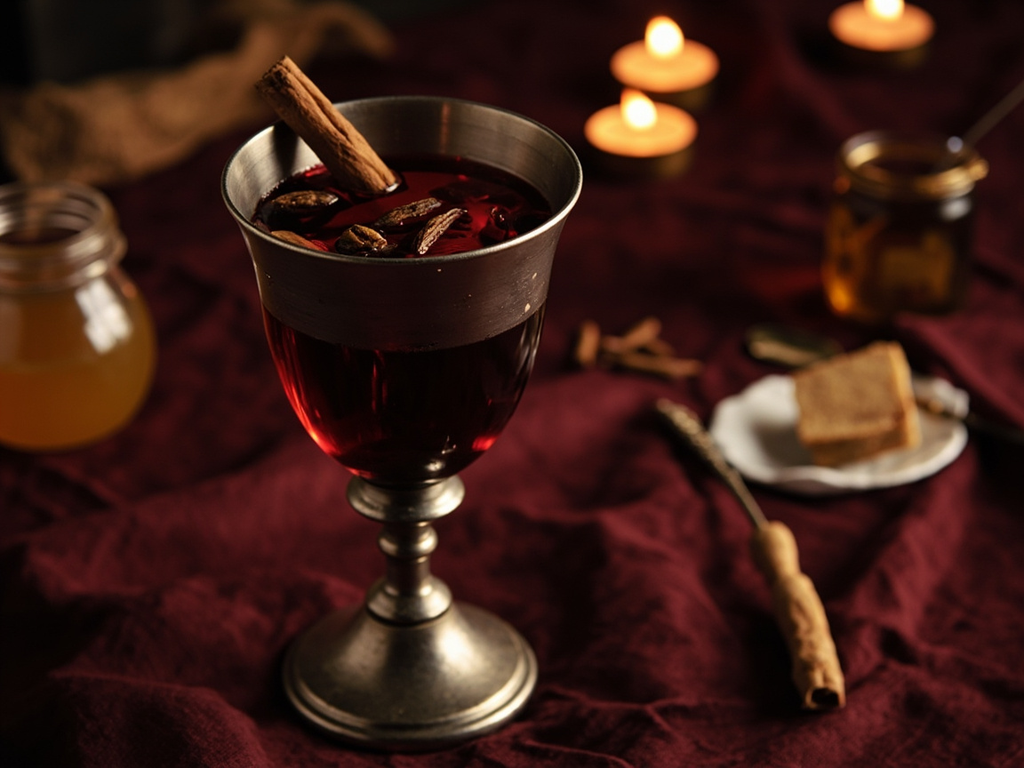
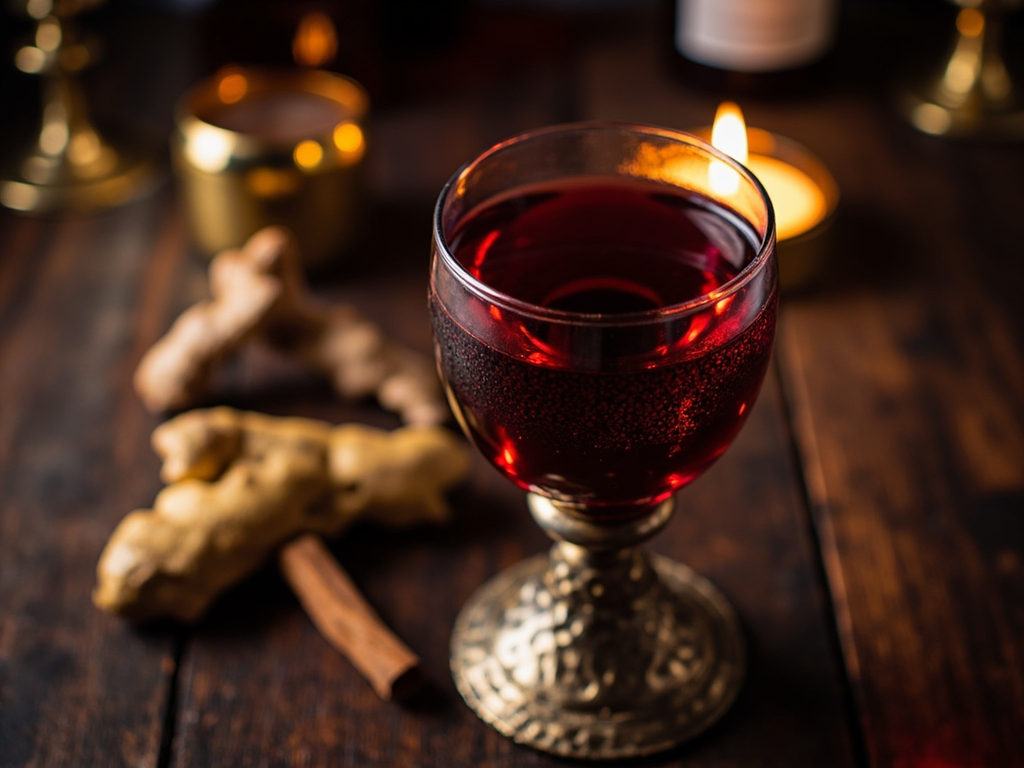
Why this dish? Eleanor was Duchess of Aquitaine, land of great wines — her dowry and her pride. The high-quality wine she drank turned, at the end of feasts, into hippocras: this sweet spiced mulled wine served as the 'boute-hors', to aid digestion and close the meal beautifully.
A red (or white) wine infused with noble spices — cinnamon, ginger, grains of paradise — and sweetened with honey or sugar, then filtered until clear through a 'Hippocrates sleeve'. Warm and fragrant, it is the nectar that concludes the banquet.
When the cloths are lifted, I have the hippocras poured, and no one leaves my table without tasting it. Take a good wine from my vineyards, throw in cinnamon, ginger and grains of paradise, sweeten with honey, and let the spices steep overnight. In the morning, it is run through the sleeve again and again until it is clear as ruby. They say it warms the blood and aids digestion — I see in it especially the last sweetness of a fine evening.
- •Aquitaine wine — a full pitcher (base)
- •Cinnamon — one stick (master spice)
- •Ginger — a little (warmth)
- •Grains of paradise (or long pepper) — a few grains (noble pungency)
- •Honey — to your taste (sweetness)
- •Clove — two or three (fragrance)
Hippocras with Aquitaine wine
A red (or white) wine infused with noble spices — cinnamon, ginger, grains of paradise — and sweetened with honey or sugar, then filtered until clear through a 'Hippocrates sleeve'. Warm and fragrant, it is the nectar that concludes the banquet.
Why this dish? Eleanor was Duchess of Aquitaine, land of great wines — her dowry and her pride. The high-quality wine she drank turned, at the end of feasts, into hippocras: this sweet spiced mulled wine served as the 'boute-hors', to aid digestion and close the meal beautifully.
When the cloths are lifted, I have the hippocras poured, and no one leaves my table without tasting it. Take a good wine from my vineyards, throw in cinnamon, ginger and grains of paradise, sweeten with honey, and let the spices steep overnight. In the morning, it is run through the sleeve again and again until it is clear as ruby. They say it warms the blood and aids digestion — I see in it especially the last sweetness of a fine evening.
Ingredients (period version)
- Aquitaine wine — a full pitcher (base)
- Cinnamon — one stick (master spice)
- Ginger — a little (warmth)
- Grains of paradise (or long pepper) — a few grains (noble pungency)
- Honey — to your taste (sweetness)
- Clove — two or three (fragrance)
Ingredients
- Full-bodied red wine from Southwest France — 75 cl (base)
- Cinnamon stick — 1 (master spice)
- Fresh ginger — 1 slice (warmth)
- Grains of paradise or long pepper — 5 grains (pungency)
- Honey — 3 to 4 tbsp (sweetness)
- Cloves — 2 (fragrance)
Method
- Pour the wine into a container, add all the crushed spices and honey.
- Let infuse cold for at least 2 hours (ideally overnight) to respect the period method, or gently heat without boiling to speed up.
- Filter carefully through a fine cloth (the equivalent of the 'Hippocrates sleeve') until clear.
- Serve warm in small cups. (For adults only; for children, use the same spices and honey in warm grape juice.)
How it was made : Hippocras takes its name from the Greek physician Hippocrates, alluding to the conical cloth filter ('sleeve') used to clarify it. Blending medicine and pleasure, it belonged to the theory of humors: 'hot' spices were thought to balance the body. It was drunk at the end of a feast, during the 'chamber spices' and the boute-hors.
The contemporary twist : In a non-alcoholic version for the whole family: hot red grape juice, same spices and a dash of verjuice for brightness — a 'children's hippocras'.
Eleanor of Aquitaine · Charactorium